
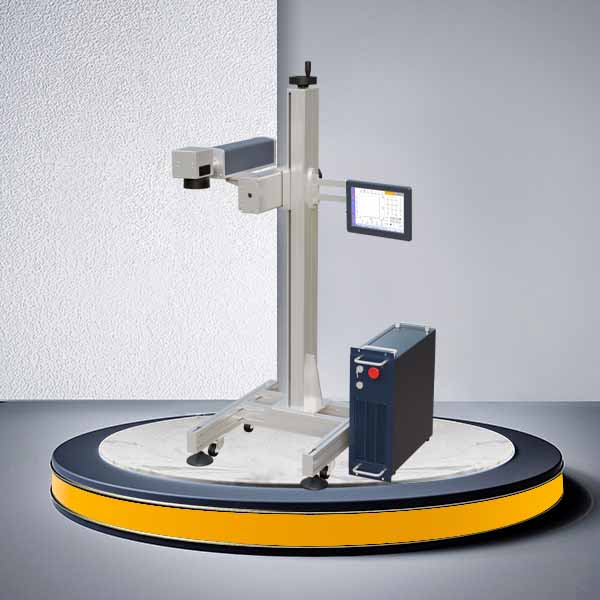
Discover the FF | FC | FU Series flying laser marking machine for production lines. Compatible with fiber, CO₂, and UV lasers, it delivers fast, non-contact marking up to 189m/min for industries like packaging, electronics, and food.
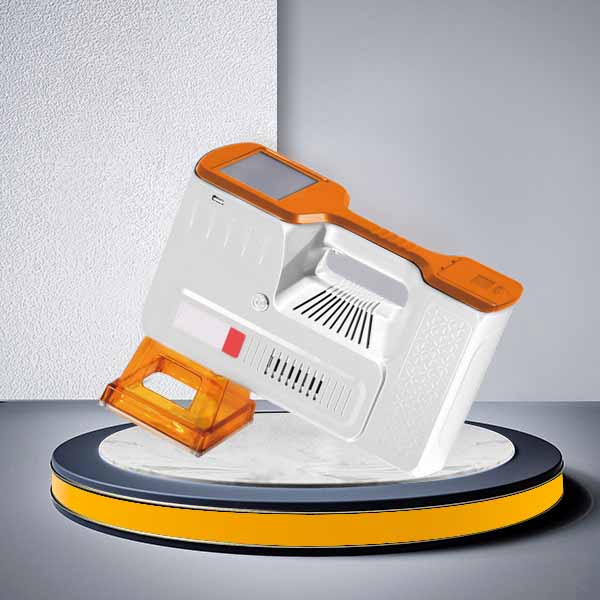
Explore the HF-A-18W-S handheld fiber laser marking machine with ergonomic design, 7000mm/s speed, and intelligent red light alignment. Ideal for industrial part marking, electronics, and tools.
Discover JCZ’s high-precision handheld fiber laser marking system for industrial metals. Ideal for marking large or heavy parts with logos, codes, and serial numbers across industries like automotive, aerospace, and manufacturing.
Explore our compact handheld fiber laser marking machine for precise, permanent marking on metals and plastics. Optional built-in battery makes it ideal for mobile and field applications.
A compact all-in-one fiber laser machine designed for precision marking and engraving on metals, glass, and plastics. Easy to use, highly durable, and ideal for a wide range of industrial applications.
AIO A1 is a compact all-in-one fiber laser marking machine designed for high-speed, high-precision engraving on metals and plastics. Lightweight and portable, it integrates laser, control, and software in a single unit, ideal for industrial and mobile marking applications.
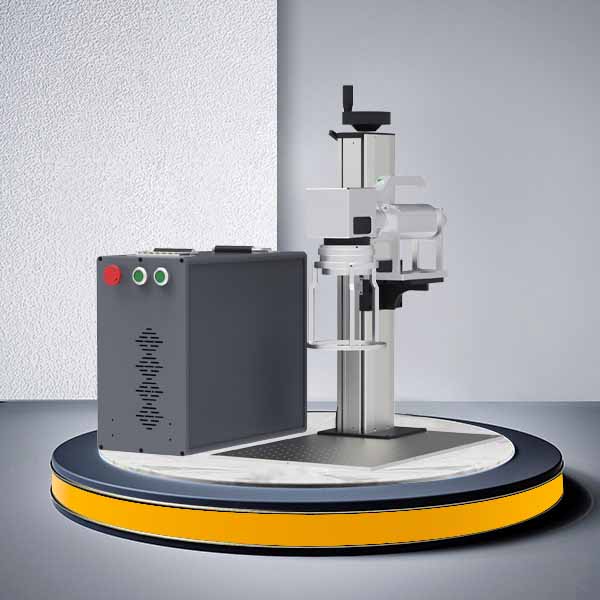
The ETF-M20/30 Desktop Fiber Laser Marking Machine offers efficient, high-quality marking on a variety of materials. Its compact design and powerful 1064nm fiber laser make it ideal for small-scale production and precise applications across multiple industries.
The Mini Type Laser Marking Machine offers fiber and UV lasers for precise, durable markings on metals, plastics, and glass. Its compact design is ideal for space-limited environments.
The Large Closed Laser Marking Machine offers precise, efficient marking on metals, plastics, and ceramics. With fiber, CO2, or UV laser options, it ensures safety and reliability for high-volume industries like automotive and aerospace.
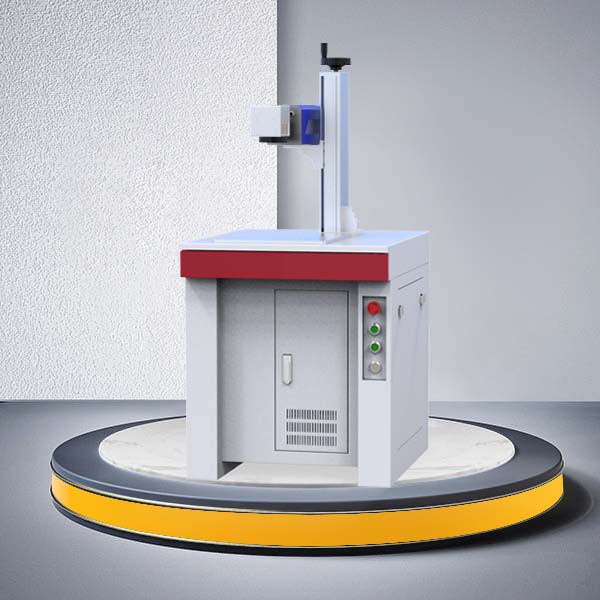
The Small Closed Fiber Laser Marking Machine delivers precise, high-speed metal engraving in a compact, enclosed design. Ideal for small spaces, it ensures safety, reliability, and top-tier marking on metals like stainless steel, aluminum, and brass.
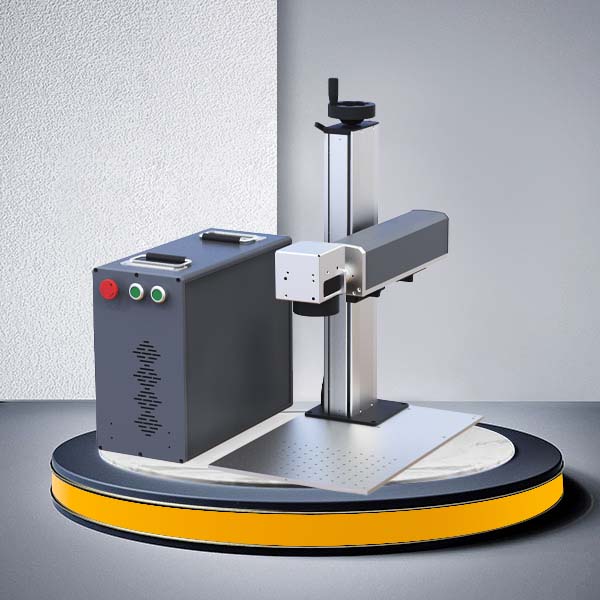
The Table Laser Marking Machine delivers high-precision engraving on metals, plastics, and ceramics. With fiber, CO2, and UV laser options, it ensures accuracy for intricate designs. Its stable table design, user-friendly interface, and advanced cooling system provide efficient, durable performance for industrial applications.
Discover the Portable Laser Marking Machine with fiber, CO2, and UV lasers for precise engraving on metals, plastics, glass, and ceramics. Compact and portable, it ensures fast, high-quality results, ideal for on-site applications.


Laser Marking Machine Manufacturer
JCZ provides industrial laser marking machines for permanent product identification, traceability, engraving, coding and production-line marking. Available configurations include fiber, MOPA fiber, UV and CO2 technologies together with tabletop, all-in-one, handheld, portable, enclosed and flying machine structures.
The correct laser marking machine should be selected according to the material, required marking effect, workpiece dimensions, production mode, marking field, cycle time and automation requirements rather than simply choosing the highest laser power.
Use the selection guide below to narrow down the right machine architecture before requesting a quotation.
Compare JCZ Laser Marking Machine Types
| Machine Type | Best For | Main Selection Advantage | Typical Production Environment |
|---|---|---|---|
| Tabletop Laser Marking Machine | Small and medium parts repeatedly loaded at one workstation | Stable structure, wide laser-source and marking-field options | Workshops, component production, batch marking |
| All-in-One Laser Marking Machine | Compact production stations and space-limited installations | Laser, control and marking system integrated into one compact machine | Electronics, workshops, engineering stations |
| Handheld Fiber Laser Marking Machine | Large, heavy or installed metal parts | Operator brings the marking head to the workpiece | Machinery, automotive parts, structures, maintenance |
| Portable Laser Marking Machine | Mobile marking and flexible workshop use | Easier relocation between work areas | Fabrication plants, repair and equipment identification |
| Compact Enclosed Laser Marking Machine | Small parts requiring a contained workstation | Compact enclosure and controlled processing area | Electronics, precision parts and traceability stations |
| Large Enclosed Laser Marking Machine | Larger components, industrial fixtures and standardized factory production | Larger internal loading space and enclosed workstation | Automotive, aerospace, medical and electronics |
| Flying Laser Marking Machine | Products moving continuously on a conveyor | Online, non-contact marking without stopping production | Packaging, food, beverage, cable and electronics |
Choose Fiber, MOPA, UV or CO2 Laser Marking Technology
The first technical decision is normally the laser technology.
| Material / Marking Requirement | Recommended Starting Direction | Why |
|---|---|---|
| Stainless steel, carbon steel, aluminum | Fiber | Efficient industrial metal marking |
| General metal serial numbers / QR codes | Q-Switched Fiber | Practical for standard permanent identification |
| Stainless steel color marking | MOPA Fiber | Wider pulse-control range |
| Deep metal engraving | Higher-power Fiber / MOPA | Greater material-removal capability |
| Sensitive engineering plastics | UV / MOPA | Better control of heat and surface response |
| Fine plastic marking | UV | Small spot and reduced thermal impact |
| Glass | UV | Better starting point for fine marking than conventional fiber |
| Electronics / PCB components | UV | Fine features and reduced thermal influence |
| Wood, acrylic, leather, paper | CO2 | Strong absorption in many organic and non-metal materials |
| Packaging and films | CO2 / UV depending on material | Select according to substrate and required mark |
| Moving production-line products | Fiber / UV / CO2 Flying System | Laser type is selected according to product material |
Which Machine Structure Should You Choose?
| Your Production Situation | Better Starting Point |
|---|---|
| Small components loaded repeatedly by hand | Tabletop Laser Marking Machine |
| Small workstation with limited floor space | All-in-One or Compact Enclosed |
| Large/heavy part that cannot easily be moved | Handheld or Portable |
| Machinery frame or installed equipment | Handheld / Portable |
| Small components requiring a contained marking area | Compact Enclosed |
| Larger workpieces or fixtures requiring an enclosed cell | Large Enclosed |
| Continuous conveyor production | Flying Laser Marking Machine |
| Higher safety / standardized workstation requirement | Enclosed Machine |
| Frequent movement between work areas | Portable Machine |
Choose Laser Power by Marking Requirement, Not Wattage Alone
For fiber laser marking machines, common configurations in the current JCZ range include 20 W, 30 W, 50 W and higher-power MOPA options depending on machine structure.
| Power Direction | Typical Buying Situation |
|---|---|
| 20 W | Standard product identification, logos, serial numbers and light surface marking |
| 30 W | General industrial marking requiring somewhat higher throughput |
| 50 W | Faster production or stronger engraving / material removal |
| 60 W+ MOPA | Higher processing capacity combined with wider pulse-control requirements |
| 100 W+ | Application-specific higher-throughput or deeper processing; confirm material and result first |
Choose the Correct Marking Field
JCZ’s current machines support multiple marking-field options depending on model and optical configuration.
- 70 × 70 mm
- 100 × 100 mm
- 150/160 × 150/160 mm
- 200 × 200 mm
- 300 × 300 mm
Tabletop Laser Marking Machine for Repeatable Workstation Production
A Tabletop Laser Marking Machine is a practical choice when small or medium parts are repeatedly loaded at one fixed station.
JCZ’s current tabletop range includes Q-switched fiber, MOPA fiber, UV and CO2 configurations depending on the required material and process.
Current published tabletop configurations include fiber options from 20 W to 50 W, multiple MOPA options and marking fields from 70 × 70 mm up to 300 × 300 mm depending on lens configuration.
Choose a tabletop machine when workpieces can easily be brought to the station, repeatable fixture positioning is important, batch production is more important than mobility, or rotary fixtures and dedicated jigs may be required.
All-in-One Laser Marking Machines for Compact Integration
AIO systems integrate major laser marking components into a compact machine structure.
The current JCZ AIO A2 platform uses MOPA pulsed fiber technology with 20 W and 50 W configurations and integrates the laser source, control system and marking head into a compact machine.
This structure is appropriate when factory space is limited, the machine needs to be easy to install, a compact integrated workstation is preferred, or metal and selected plastic marking are the primary applications.
Handheld or Portable Laser Marking Machine for Large and Fixed Parts
Portable and handheld laser markers are useful when moving the part is more difficult than moving the marking equipment.
Typical workpieces include molds, castings, machine frames, vehicle components, steel structures, tools, installed equipment and large assemblies.
JCZ’s current handheld fiber systems include 20 W, 30 W and 50 W configurations with published marking fields up to 300 × 300 mm depending on optical configuration.
Open, Compact Enclosed or Large Enclosed?
Machine enclosure affects workflow, part loading, extraction and safety-system design.
Choose an Open / Tabletop Structure When:
- flexible part access is important;
- the machine will be integrated into another guarded cell;
- operators frequently change fixtures;
- the buyer will manage the final safety installation separately.
Choose a Compact Enclosed Machine
When:
- parts are relatively small;
- factory space is limited;
- a self-contained processing station is preferred;
- the application requires a more controlled marking area.
The current JCZ compact enclosed fiber platform supports Q-switched and MOPA configurations with 20–60 W options depending on model.
Choose a Large Enclosed Machine When:
- workpieces or fixtures are larger;
- floor-standing industrial equipment is preferred;
- the machine requires more internal part clearance;
- automated fixtures or production-line integration may be added.
JCZ’s current large enclosed platform includes fiber, UV and CO2 configurations and multiple marking-field options.
Stationary or Flying Laser Marking Machine?
| Production Mode | Better Machine |
|---|---|
| Operator loads one part and starts a job | Stationary Tabletop / Enclosed |
| Part is clamped in a fixture | Stationary |
| Product moves continuously on conveyor | Flying |
| Date / batch / QR code changes continuously | Flying often preferred |
| Bottles, packaging, cables, pipes moving on line | Flying |
| Large fixed machinery | Handheld / Portable |
Laser Marking Content and Traceability Requirements
Typical industrial marking content includes:
- serial numbers;
- date codes;
- lot / batch numbers;
- QR codes;
- Data Matrix codes;
- barcodes;
- UID codes;
- logos;
- graphics;
- product models;
- measurement scales;
- nameplates;
- variable database information.
If the machine must communicate with MES, databases, PLCs or factory traceability software, describe the complete data workflow before ordering.
Laser Marking Machine Selection Checklist
| Requirement | Information to Provide |
|---|---|
| Material | Exact material and surface coating |
| Marking Content | Logo / text / serial / QR / Data Matrix / barcode |
| Required Effect | Black / white / color / engraving / surface mark |
| Mark Depth | If engraving is required |
| Workpiece Size | Maximum L × W × H |
| Marking Area | Actual required field |
| Production Mode | Manual / batch / conveyor / automated |
| Cycle Time | Required seconds per part |
| Conveyor Speed | For flying marking |
| Daily Volume | Parts per day / shift |
| Laser Preference | Fiber / MOPA / UV / CO2 if already known |
| Machine Structure | Tabletop / handheld / portable / enclosed / flying |
| Rotary Requirement | Yes / no |
| Vision | Required / not required |
| Automation | PLC / sensor / encoder / MES / robot |
| Voltage | 110 V / 220 V / other |
| Destination | Country / region |
| Safety Requirement | Required machine standard / classification |
| OEM Requirement | Logo / color / enclosure / UI / packaging |
| Existing Equipment | Details if replacing or upgrading a machine |
Laser Marking Machine Manufacturer FAQ
Which laser marking machine is best for metal?
A fiber laser marking machine is the standard starting point for stainless steel, carbon steel, aluminum and many other metals. Choose Q-switched fiber for general identification and engraving, or evaluate MOPA when pulse-width control, color marking or sensitive surfaces are important.
Should I choose 20W, 30W or 50W fiber laser marking?
20W can handle many standard identification jobs. 30W provides additional production capacity, while 50W is more suitable when faster processing or stronger engraving is required. Material, depth, marking field and cycle time should be considered together.
What is the difference between MOPA and standard fiber marking machines?
MOPA provides a wider pulse-control range, which can improve process control for applications such as stainless-steel color marking, plastics and selected coatings. Standard Q-switched fiber remains a practical solution for many conventional metal marking applications.
Should I buy a tabletop or handheld marking machine?
Choose tabletop for parts repeatedly loaded at a workstation. Choose handheld or portable when the workpiece is large, heavy, installed or difficult to move.
When should I choose an enclosed laser marking machine?
An enclosed workstation is useful when a contained processing area, standardized production station or greater control of operator access is required. Select compact or large enclosed designs according to the workpiece envelope and fixture requirements.
When do I need a flying laser marking machine?
Use flying marking when products move continuously on a conveyor and should be marked without stopping. Conveyor speed, product spacing, marking content and encoder/trigger design determine the required configuration.
Can one laser marking machine mark both metal and plastic?
Potentially, but the result depends on the exact material and laser technology. Fiber or MOPA can mark many metals and selected plastics, while UV can be better for heat-sensitive plastics. Sample testing is recommended.
Can JCZ customize laser marking machines?
JCZ’s broader laser-system offering includes complete systems, customized modular units, OEM/ODM cooperation and system-integration capabilities. The exact customization scope for each laser marking machine project should be confirmed according to laser type, enclosure, automation, fixtures, software and production requirements.
Can JCZ integrate the machine with a conveyor, PLC or MES?
JCZ provides laser control hardware, software and SDK technologies that can support automation projects. Send the required PLC signals, data workflow, encoder, MES/database and production-line architecture for evaluation.
Can I send samples before ordering?
For an uncertain material or required marking result, sample validation is recommended before the final machine is selected. Confirm JCZ’s current sample-testing procedure, cost and turnaround when submitting your RFQ.
Does a larger marking area reduce marking quality?
A larger field requires a different optical configuration and can affect spot size and energy density. Select the field according to the actual marking dimensions rather than automatically choosing the largest available lens.
Choose the Machine
For standard small-part production, a tabletop or compact enclosed fiber marker may be sufficient. For large and fixed components, a handheld or portable machine can improve access. For continuous production lines, use a flying marking architecture. For standardized industrial cells, automation or higher safety requirements, evaluate enclosed or customized laser marking systems.
Send JCZ your material + workpiece size + marking content + required effect + cycle time + production mode for machine selection and quotation.


