
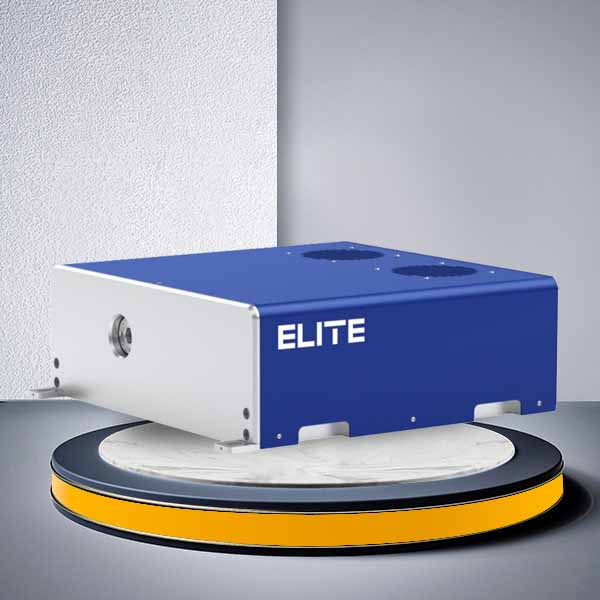
Elite Series nanosecond lasers feature compact all-in-one design, selectable IR, UV, Green, Red wavelengths, high beam quality (M² <1.2), and flexible repetition rates (50 kHz–5 MHz). Ideal for industrial marking, cutting, and precision processing.
AOFEMTO Series femtosecond lasers offer compact design, high versatility, integrated analog power control, external trigger support, intelligent diagnostics, and excellent optical performance. Available in UV, Green, and Red wavelengths for precision industrial applications.
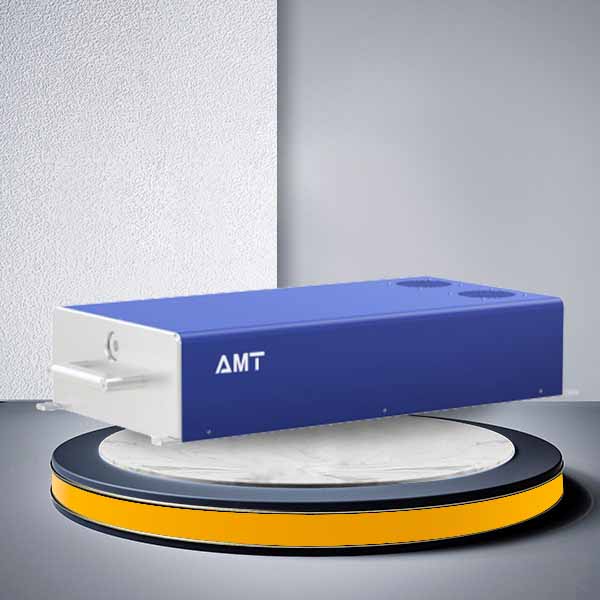
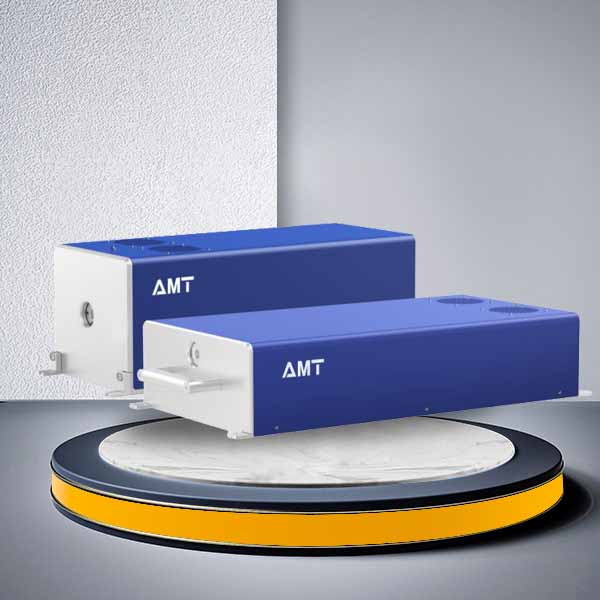
AMT Series picosecond lasers offer compact size, versatile integration, analog power control, external trigger support, intelligent diagnostics, and outstanding optical performance in UV, Green, and Red wavelengths for industrial applications.
AMARK series industrial picosecond lasers provide compact integration, POD function, BURST mode, and full status monitoring. Perfect for 3C marking, packaging marking, FPC/PCB marking, with 1064, 532, and 355nm wavelengths.
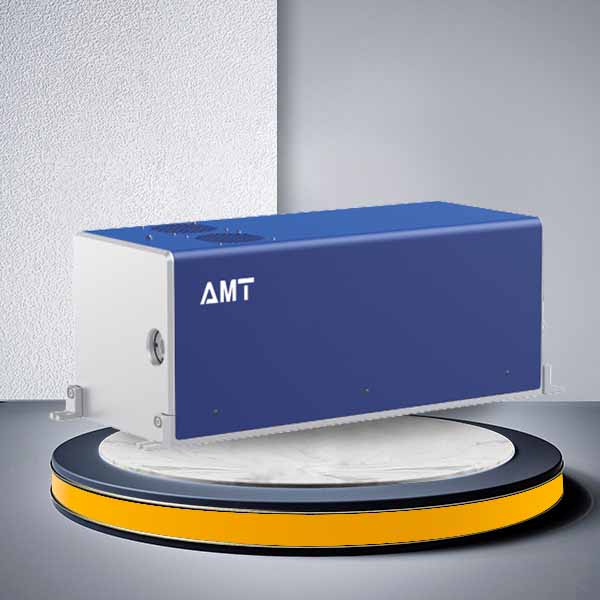
Discover the AMT Series UV picosecond lasers with 15W–50W power, customizable beam roundness >95%, M²<1.1, and intelligent control. Perfect for OLED cutting, FPC processing, and precision smartphone antenna applications.
High-stability 266nm picosecond UV laser with SYNC output and <3% power fluctuation. Ideal for semiconductor inspection, GaN lift-off, glass separation, and precision micromachining.
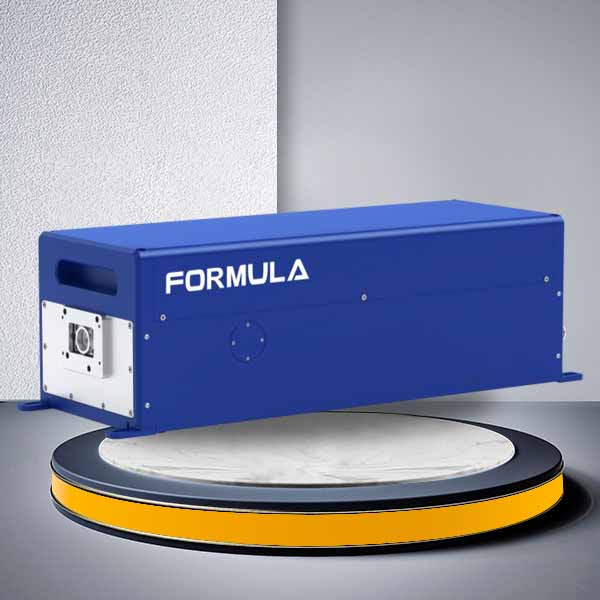
Discover FORMULA Ultra IP65 UV and green nanosecond Q-switched lasers featuring automatic crystal switching, CAS cavity cleaning system, intelligent mirror adjustment, and up to 90W green output for industrial precision applications.
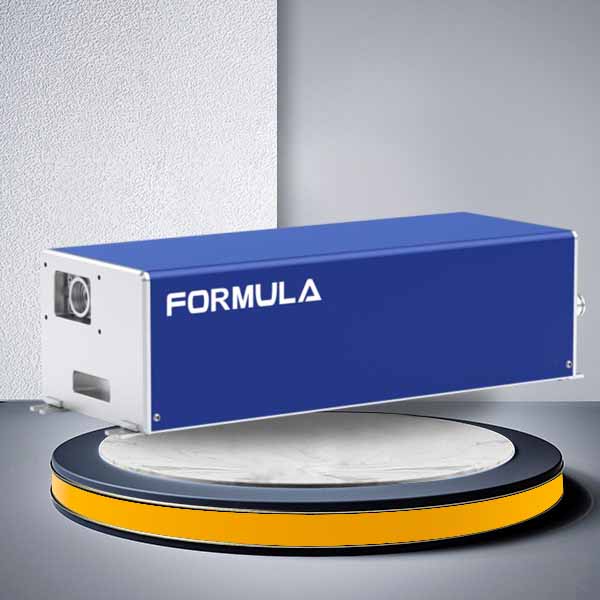
FORMULA series high-stability nanosecond Q-switched laser features compact design, superior beam quality, crystal auto-switching, smart power optimization, and real-time feedback. Ideal for UV and green laser applications including marking, engraving, and precision processing.
Discover FOTIA Pro UV nanosecond laser featuring automatic crystal switching, real-time power monitoring and IP65 protection. Built for long-term stability in high-end industrial applications.
Discover FOTIA ONE nanosecond UV and green laser with integrated design, stable output, M²<1.2 beam quality and 10ns pulse width. Air-cooled and water-cooled options for precision industrial processing.
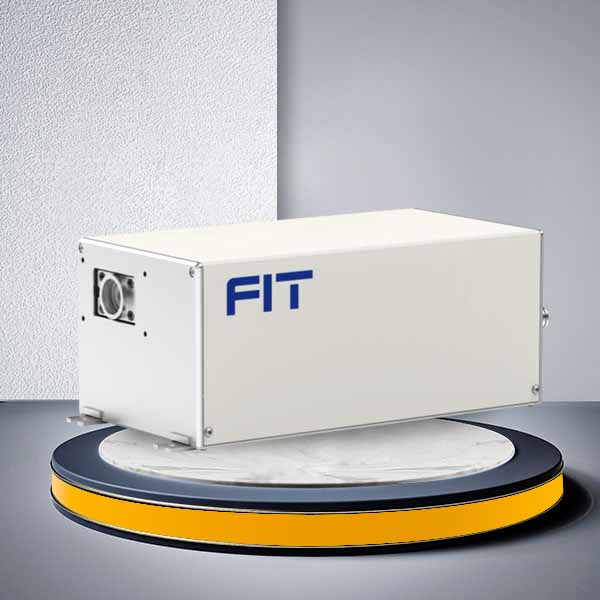
FIT UV nanosecond Q-switched laser with compact size, lightweight design, superior beam quality, and 30% power margin. Air-cooled and water-cooled options for industrial precision applications.
The high-power femtosecond laser series features a compact, integrated design combining optical, mechanical, and electrical systems. Available in IR, green, and UV models with power ranges up to 300W, the system is controlled via intuitive PC software, designed for industrial environments, and proven through 24/7 reliability testing.
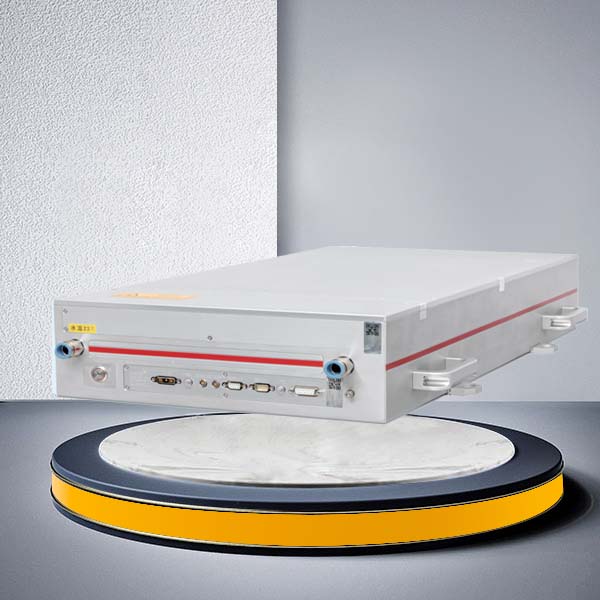
The high-power picosecond laser series combines fiber and solid-state amplification, offering up to 500W output across IR, green, and UV options. With adjustable repetition rates from 1 Hz to 6 MHz and high pulse energy, it supports flexible operation. Featuring compact integrated design and intuitive PC control, it’s built for 24/7 industrial reliability.
JPT LP series pulsed fiber lasers make use of master oscillator power amplifier (MOPA) configuration, and show excellent laser performance as well as high level of temporal pulse shaping controllability.
JPT M7 series high poweredpulsed fiber lasers make use of master oscillator power amplifier (MOPA) configuration, and show excellent laser performance as well as high level of temporal pulse shaping controllability.
The 20-100W Q-Switched Pulse Fiber Laser Series is the industrial marking and micromachining laser. Its marking process features lower cost and more stable performance compared with traditional laser.
High-power pulsed fiber laser series is the latest product . It has average output of (100-1000W), high single pulse energy , uniform spot energy distribution, easy to use and maintain.
The QCW fiber laser series ranges from 75W to 1500W, with higher electro-optical conversion efficiency, better optical quality and lower maintenance cost.
The single module CW fiber laser series not only can meet diversified demands of customers to the greatest extent,but also provide personal customization service.
The multi-module CW fiber laser series ranges from 1,500W to 20kW, with high electro optical conversion efficiency, high light beam quality, high energy density, high reliability, long service life and advantages.





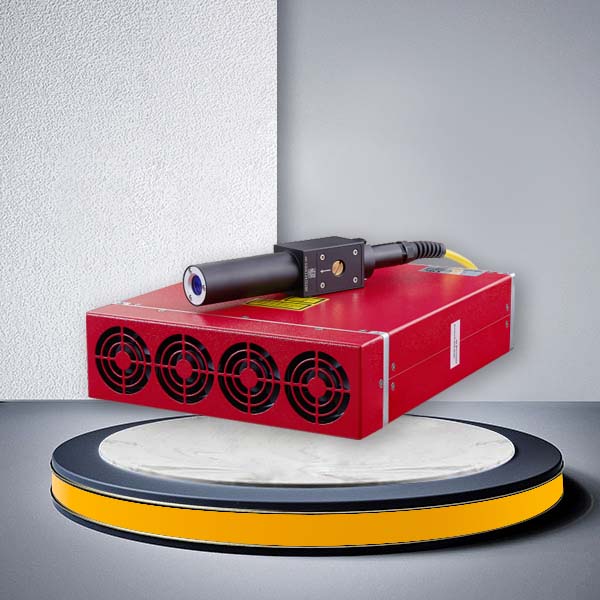


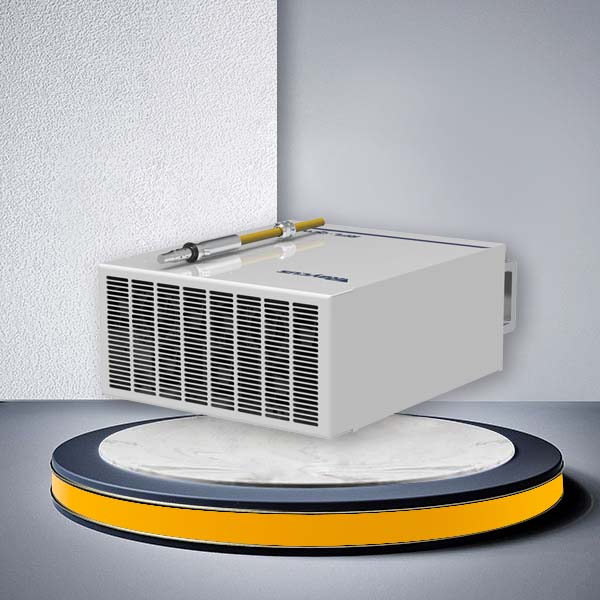


JCZ Laser Control Systems
JCZ supplies industrial laser sources for laser machine manufacturers, system integrators, automation companies, and manufacturers building or upgrading laser processing equipment.
Our laser source portfolio covers fiber, UV, CO2, nanosecond, picosecond, and femtosecond technologies, including Q-switched, MOPA, CW, QCW, and ultrafast laser configurations for marking, engraving, cutting, welding, cleaning, drilling, scribing, and precision micromachining.
Choosing an industrial laser source should start with the material and process, followed by wavelength, pulse regime, required process speed, pulse energy, average power, beam quality, cooling method, and machine-integration requirements.
Compare Industrial Laser Source Technologies
| Laser Source Type | Typical Wavelength Direction | Key Selection Characteristic | Typical Applications | When to Consider It |
|---|---|---|---|---|
| Q-Switched Fiber Laser | Around 1064 nm | Mature pulsed-fiber architecture, strong peak power, and practical industrial cost | Metal marking, engraving, coding, and general micromachining | Standard industrial metal marking and engraving |
| MOPA Fiber Laser | Around 1064 nm | Wider pulse-width and frequency control than fixed-pulse fiber sources | Color marking, plastics, coating removal, and precision metal processing | When pulse width is an important process variable |
| CW Fiber Laser | Around 1060–1080 nm | Continuous high average power | Metal cutting, welding, and surface processing | High-throughput cutting and welding |
| QCW Fiber Laser | Near-IR | High peak power with quasi-continuous operation | Welding, drilling, and precision high-energy processing | Processes requiring high peak power without continuous full-power operation |
| UV Nanosecond Laser | 355 nm | High absorption on many heat-sensitive materials and fine spot capability | Plastics, electronics, PCB/FPC, glass, and precision marking | Fine processing where IR creates excessive thermal effects |
| Green Nanosecond Laser | Around 532 nm | Intermediate wavelength with different material absorption from IR and UV | Electronics, metals, and specialty precision processing | Materials or processes benefiting from green-light absorption |
| CO2 Laser | Commonly 9.3–10.6 μm | Strong absorption by many organic and non-metallic materials | Wood, acrylic, leather, paper, film, packaging, and textiles | Non-metal cutting, engraving, and marking |
| Picosecond Laser | IR / Green / UV | Ultrashort pulse with substantially reduced heat input versus nanosecond processing | PCB/FPC, glass, OLED, semiconductor, and precision micromachining | High precision with a low heat-affected zone |
| Femtosecond Laser | IR / Green / UV | Extremely short pulse duration and very high peak intensity | Glass, sapphire, ceramics, semiconductor, OLED, and microstructure processing | Highest-precision processing where thermal damage must be minimized |
JCZ’s current portfolio extends beyond traditional fiber, UV, and CO2 sources and also includes industrial nanosecond, picosecond, and femtosecond laser platforms.
Choose a Laser Source by Processing Application
Start with the process you need to achieve rather than selecting a laser only by wattage.
| Processing Requirement | Laser Technology to Evaluate First | Main Parameters to Compare |
|---|---|---|
| General Metal Marking | Q-switched fiber | Power, pulse energy, frequency, and marking speed |
| High-Contrast Metal Marking | Fiber / MOPA fiber | Pulse width, frequency, peak power, and material response |
| Color Marking on Stainless Steel | MOPA fiber | Pulse-width range, frequency range, and process window |
| Plastic Marking | MOPA fiber / UV | Material absorption, heat sensitivity, and contrast requirement |
| Product Traceability | Fiber / UV / CO2 depending on material | Mark quality, cycle time, field size, and automation |
| Metal Engraving | Pulsed fiber / higher-power fiber | Pulse energy, power, process speed, and target depth |
| Metal Cutting | CW fiber | Output power, beam quality, fiber delivery, and cutting-head compatibility |
| Laser Welding | CW / QCW fiber | Power stability, beam delivery, process mode, and weld requirement |
| PCB / FPC Processing | UV / Picosecond | Wavelength, pulse duration, pulse energy, and heat-affected zone |
| OLED / Thin-Film Processing | Picosecond / Femtosecond | Pulse duration, wavelength, beam quality, and process speed |
| Glass Marking | UV / Picosecond / Femtosecond | Absorption, pulse energy, and required damage control |
| Glass Cutting / Separation | Picosecond / Femtosecond | Pulse duration, pulse energy, beam quality, and optics |
| Semiconductor Processing | Deep UV / Picosecond / Femtosecond | Feature size, thermal requirement, wavelength, and beam quality |
| Ceramic Micromachining | Picosecond / Femtosecond | Pulse energy, repetition rate, and edge-quality requirement |
| Wood / Acrylic / Leather | CO2 | Wavelength, output power, and processing speed |
| Precision Micro-Drilling | Picosecond / Femtosecond | Pulse energy, pulse duration, repetition rate, and spot size |

Choose by Wavelength and Material Response
Wavelength determines how effectively a material absorbs laser energy and is therefore one of the first parameters to select.
| Wavelength Direction | Common Laser Technology | Typical Material / Process Direction |
|---|---|---|
| Around 1064 nm | Fiber / MOPA / Q-switched | Metals, coated metals, industrial marking, engraving, and general processing |
| Around 1030 nm | Picosecond / Femtosecond | Precision micromachining and ultrafast processing |
| 532 / 515 nm Green | Nanosecond / Picosecond / Femtosecond | Specialty metals, electronics, glass-related, and precision applications |
| 355 / 343 nm UV | Nanosecond / Picosecond / Femtosecond | Plastics, PCB/FPC, electronic components, glass, and heat-sensitive materials |
| 266 nm Deep UV | Picosecond and specialty UV systems | Semiconductor, GaN, microelectronics, and fine-feature processing |
| 9.3–10.6 μm | CO2 | Wood, acrylic, leather, films, paper, textiles, and other non-metals |
Q-Switched, MOPA, CW, QCW, Nanosecond, Picosecond or Femtosecond?
Pulse mode changes how energy is delivered to the workpiece even when two laser sources operate at a similar wavelength.
| Technology | Energy Delivery | Main Advantage | Typical Buyer Need |
|---|---|---|---|
| Q-Switched | Short high-peak-power pulses | Mature, cost-effective industrial marking | Standard marking / engraving |
| MOPA | Adjustable pulse architecture | Wider process window | Color marking, plastics, and coating processing |
| CW | Continuous output | High average power | Cutting / welding |
| QCW | High-peak-power quasi-continuous output | High peak power with controlled duty cycle | Welding / drilling / specialty processing |
| Nanosecond | ns-scale pulses | Balance of precision, speed, and industrial cost | Marking, engraving, trimming, and general precision processing |
| Picosecond | ps-scale pulses | Lower thermal influence than ns processing | Electronics, glass, OLED, and precision micromachining |
| Femtosecond | fs-scale pulses | Minimal heat diffusion and very high process precision | Advanced semiconductor, display, medical-device, and microstructure processing |
JCZ Industrial Laser Source Portfolio
JCZ currently supplies fiber laser products covering JPT MOPA LP, JPT MOPA M7, Raycus Q-switched pulsed fiber lasers, high-power pulsed fiber sources, CW fiber lasers, QCW fiber lasers, and single-module or multi-module industrial fiber architectures.
Choose a fiber source according to the required process rather than simply selecting a brand or power level.
JCZ’s 355 nm UV range includes industrial UV laser products for plastics, electronics, PCB/FPC, glass, and other heat-sensitive materials where smaller feature size and reduced thermal influence are important.
Industrial Nanosecond Laser
JCZ also offers industrial nanosecond laser platforms in UV, green, and IR wavelength directions. Nanosecond technology should be considered when the process requires greater precision than conventional continuous processing while maintaining practical industrial throughput and cost.
JCZ’s picosecond portfolio includes IR, green, UV, and deep-UV systems for applications such as OLED cutting, FPC/PCB processing, semiconductor processing, glass separation, precision marking, and micromachining.
Femtosecond Laser Sources
Femtosecond sources are intended for applications where extremely short pulses and reduced heat transfer are required, including OLED and display manufacturing, sapphire and glass processing, semiconductor processing, thin-film ablation, ceramic micromachining, medical-device manufacturing, and advanced microstructures.
CO2 Laser Sources
CO2 laser sources remain an established option for non-metal processing such as acrylic, wood, paper, cardboard, leather, textiles, films, and packaging materials.
Select the CO2 source according to material absorption, required process speed, working field, and optical configuration rather than substituting it directly with a fiber or UV source of similar nominal power.
Replacing an Existing Laser Source
| Required Information | What to Send |
|---|---|
| Existing Brand | JPT / Raycus / other |
| Exact Model | Full model code from the nameplate |
| Laser Power | Rated output power |
| Wavelength | Current wavelength |
| Controller | Brand and model |
| Scanner | Brand, model, and aperture |
| Optics | F-theta lens and optical configuration |
| Power Supply | Voltage and connector information |
| Cable / Fiber | Length and connector configuration |
| Machine Space | Existing installation dimensions |
| Software | Current control system and software version |
| Photos | Source nameplate, connectors, wiring, and machine interior |
Industrial Laser Source FAQ
How do I choose between fiber, UV, and CO2 laser sources?
Start with the material and process. Fiber lasers are commonly selected for metals and many industrial marking applications. UV sources are often evaluated for plastics, electronics, glass, and heat-sensitive precision processing. CO2 lasers are mainly used for organic and non-metal materials such as wood, acrylic, paper, leather, and textiles. Final selection should be based on material absorption, quality requirements, and process testing.
When should I choose a MOPA fiber laser instead of a Q-switched fiber laser?
Choose MOPA when adjustable pulse width provides a useful processing advantage, such as stainless-steel color marking, sensitive plastics, or coating processing. A conventional Q-switched source can be more economical when the application does not need a wide pulse-width adjustment range.
Should I choose a picosecond or femtosecond laser?
Picosecond lasers provide ultrafast processing with low thermal impact and can be suitable for many PCB, display, glass, and precision-processing applications. Femtosecond lasers should be evaluated where even shorter pulse interaction, minimal heat diffusion, or more demanding microstructure quality is required. The best choice depends on material, target quality, throughput, and investment level.
Can I replace my existing Raycus or JPT laser source with another model of the same power?
Not automatically. Power is only one compatibility factor. Compare the exact control interface, dimensions, power supply, optical output, fiber length, beam diameter, pulse parameters, cooling method, and controller configuration before replacement.
Can JCZ provide the laser source together with the controller and galvo scanner?
JCZ’s product portfolio includes laser sources, Laser Controllers, Galvo Scanners, and complete Control Systems products, allowing these components to be evaluated together for OEM machine integration.
Which laser source is better for metal cutting and welding?
CW fiber lasers are the main direction for high-power metal cutting and many welding applications, while QCW or other pulsed configurations can be useful for specific welding, drilling, and high-peak-power processes. Material thickness, weld geometry, processing speed, and machine architecture should be defined before power selection.
Is higher laser power always better?
No. Excess power can increase system cost and may create unnecessary thermal effects. The correct source should provide enough pulse energy or average power to achieve the required process quality at the target production rate.
Can JCZ help select a laser source for a new OEM machine?
Provide the material, process, target quality, production speed, scanner, control architecture, optics, cooling, and machine-space information. These requirements can be used to narrow the wavelength, pulse regime, power class, and suitable source family before quotation.
What information is required for a replacement laser source?
Provide the existing laser’s full model number and nameplate, controller, scanner, optics, power supply, fiber/cable configuration, software, and photographs of the source and connectors. Compatibility should be checked before ordering.
Select the Laser Source
For routine marking, a mature fiber or UV source may provide the most practical solution. For high-power cutting and welding, CW or QCW fiber architectures should be evaluated. For advanced electronics, glass, semiconductor, display, and precision micromachining, picosecond or femtosecond technology may be required.
Send JCZ your material + process + target quality + required throughput + existing machine configuration for laser-source selection and quotation.


