| Parameter | 3W-30K | 5W-30K |
| Wavelength (nm) | 355 | |
| Average Power (W) | >3W @30kHz | >5W @30kHz |
| Pulse Energy (μJ) | >100 | >160 |
| Specified Frequency (kHz) | 30 | |
| Repetition Rate Range (kHz) | 10–300 | |
| Beam Quality (M²) | <1.2 | |
| Operating Temperature (°C) | -5 to 40°C | |
| Average Power Consumption (W) | <110 | <130 |
| Power Supply Requirement (VDC/W) | 12V / 350W | |
| Weight (kg) | 5 (Air Cooling) / 4.1(Water Cooling) | |
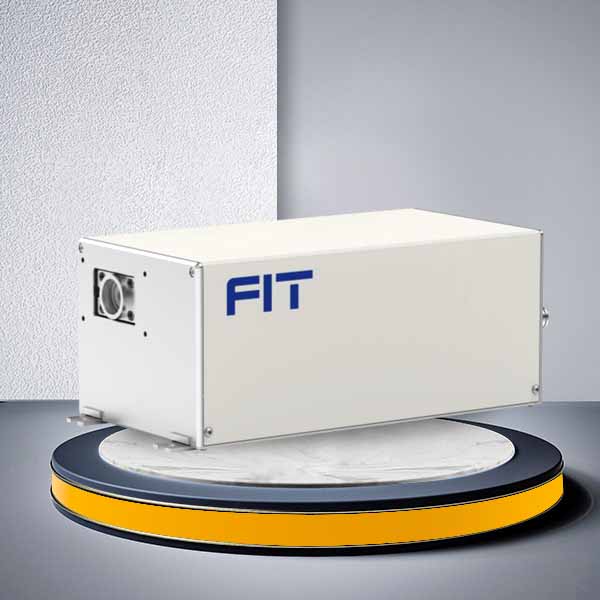
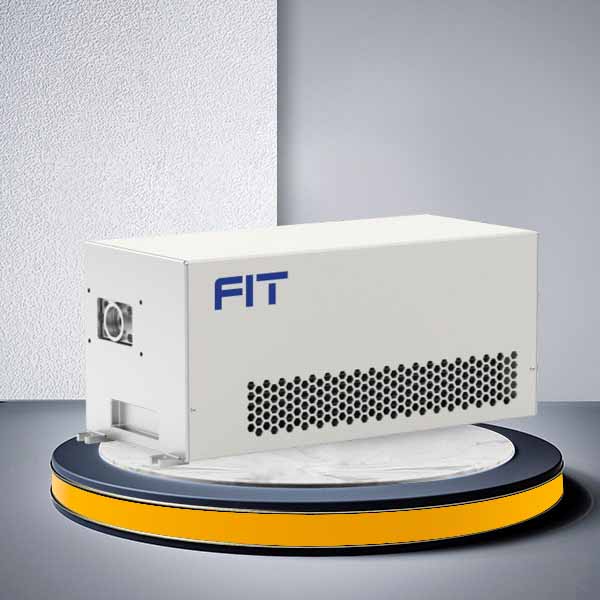
FIT UV nanosecond Q-switched laser with compact size, lightweight design, superior beam quality, and 30% power margin. Air-cooled and water-cooled options for industrial precision applications.
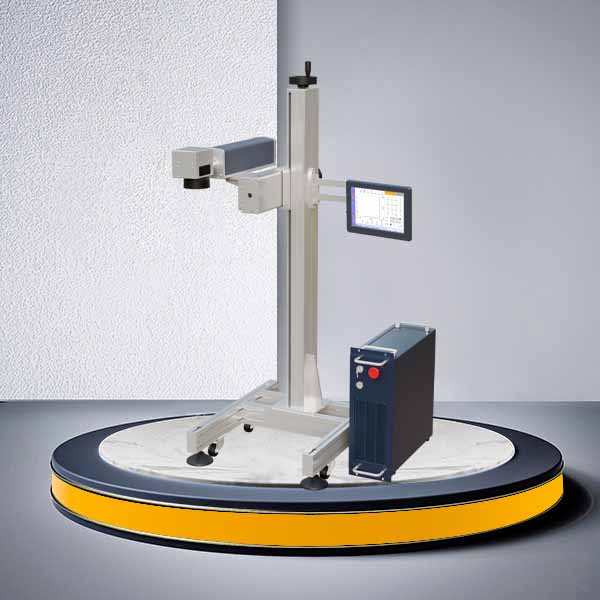
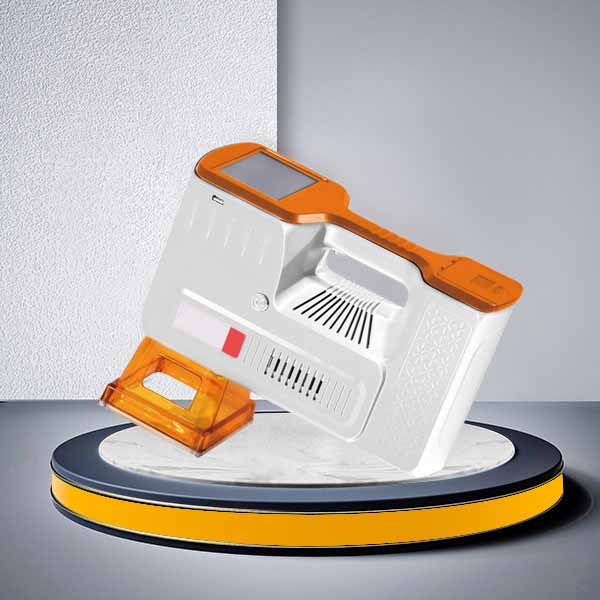
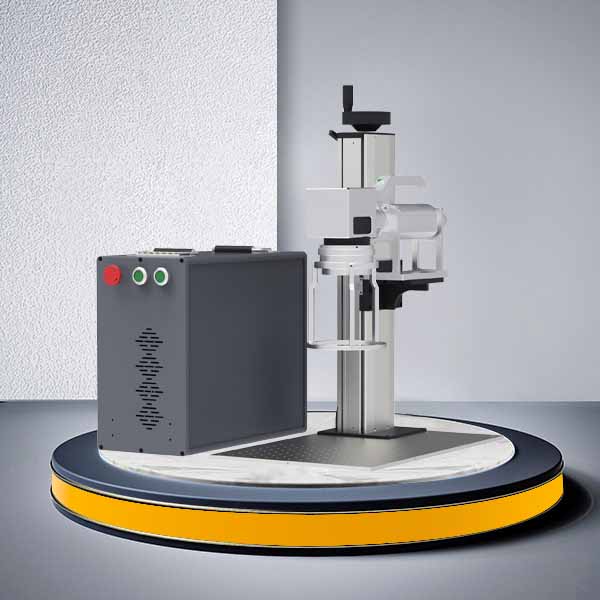
Product Pictures
Product Introduction
Building a smaller UV marking machine is not simply a matter of choosing a lower-power laser. The laser source must fit the available cabinet space, match the optical height, remain within the machine’s cooling capacity and connect to the control platform without extensive redesign.
The FIT compact 355nm UV nanosecond laser addresses these practical integration requirements. Available in 3 W and 5 W configurations, it combines a lightweight all-in-one structure, beam quality below M² 1.2, a 10–300 kHz repetition-rate range and a simplified electrical interface. Equipment manufacturers can choose air cooling to eliminate the external water circuit or water cooling to obtain the smallest available housing.
FIT is intended for compact UV marking and precision-processing machines where equipment size, installation work and component weight are as important as nominal laser power.
Two Cooling Configurations, Two Machine Design Priorities
FIT is available in air-cooled and water-cooled versions. The correct option depends less on the workpiece and more on how the complete machine is designed.
Choose the Air-Cooled Version When You Want to Remove the Chiller
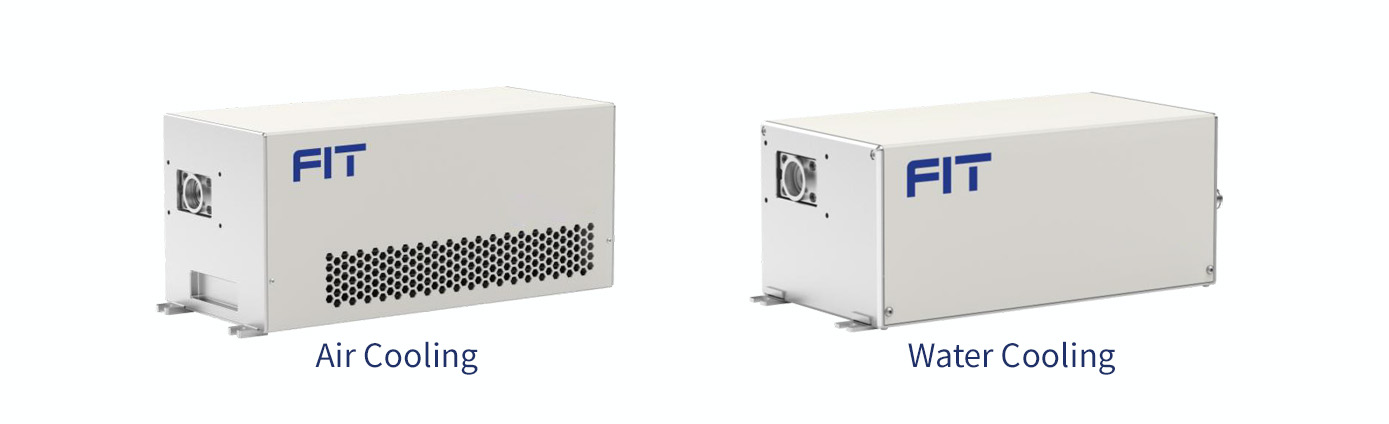
The air-cooled model integrates thermal management into a 339 × 140 × 144 mm housing and weighs approximately 5 kg.
It is a practical choice for:
- Desktop UV marking machines
- Portable or movable laser equipment
- Machines with limited internal plumbing
- Systems where water leakage risk must be avoided
- Equipment intended for simpler installation and maintenance
- Production environments with ambient temperatures from -5°C to 40°C
Removing the external chiller, water pipes, flow sensor and related fittings reduces the number of components that must be installed and maintained. It also makes the final machine easier to transport and deploy.
The air-cooled configuration uses a 12 V power input and a simplified 15-pin signal interface with integrated RS-232 communication. Complete interface cables are supplied for connection to the equipment platform. Choose the Water-Cooled Version When Installation Space Is the Priority
The water-cooled model measures approximately 264 × 139 × 114 mm and weighs about 4.1 kg. It is shorter and lower than the air-cooled version, making it better suited to tightly arranged optical cabinets.
Consider this version for:
- Machines that already include a water-cooling circuit
- Compact optical layouts with limited headroom
- Replacement projects using a compatible mounting footprint
- Equipment requiring the lowest laser-source weight
- Enclosed systems where heat must be transferred outside the cabinet
Its mounting arrangement and beam-output height were designed to maintain compatibility with an earlier water-cooled platform, reducing mechanical and optical redesign for suitable replacement projects. Final dimensions and mounting drawings should still be checked before purchase. h versions use the same compact 355nm UV nanosecond laser concept, but they solve different equipment-layout problems. Air cooling simplifies the complete machine, while water cooling minimizes the size of the laser module itself.
Key Feature
Compact & Lightweight
The air-cooled model features a slim body size of 339×140×144 mm and weighs only 5 kg, significantly reducing system integration complexity.
The water-cooled UV version is even smaller at 264×139×114 mm and weighs just 4 kg, ideal for space-limited laser systems.
Outstanding Optical Performance
Built on advanced DPSS nanosecond Q-switch technology, the FIT series maintains excellent beam quality and stable output performance, ensuring precise and consistent processing results.
High Power Margin & Reliability
With an average 30% power redundancy, the water-cooled UV model ensures long-term reliability and extended operating life.
Extreme Temperature Stability
Engineered for harsh industrial environments, the air-cooled model operates smoothly in temperatures ranging from -5°C to 40°C.
The FIT series is widely used in electronics, precision marking, micro-processing, semiconductor applications, and high-end manufacturing industries.
3 W or 5 W: Select According to Cycle Time
| Parameter | 3W-30K | 5W-30K |
|---|---|---|
| Wavelength | 355 nm | 355 nm |
| Average Power | >3 W at 30 kHz | >5 W at 30 kHz |
| Pulse Energy | >100 μJ | >160 μJ |
| Specified Frequency | 30 kHz | 30 kHz |
| Repetition-Rate Range | 10–300 kHz | 10–300 kHz |
| Beam Quality | M² <1.2 | M² <1.2 |
| Operating Temperature | -5°C to 40°C | -5°C to 40°C |
| Average Power Consumption | <110 W | <130 W |
| Power Requirement | 12 VDC / 350 W | 12 VDC / 350 W |
| Air-Cooled Weight | Approximately 5 kg | Approximately 5 kg |
| Water-Cooled Weight | Approximately 4.1 kg | Approximately 4.1 kg |
The 3 W model is suitable when the process requires fine surface interaction but does not demand high throughput. Typical projects include small-character marking, serial numbers, QR codes, plastic surface marking and selected coating-removal work.
The 5 W model provides higher average power and pulse energy. It should be considered when the buyer needs:
- Faster marking on the same material
- A larger marking field
- Stronger contrast at production speed
- More energy for thin coating removal
- Greater process margin for material variation
- Shorter cycle times on automated equipment
The 5 W model is not automatically better for every process. Delicate films and highly heat-sensitive surfaces can benefit more from controlled energy density than from maximum power. Final selection should be based on actual workpiece testing.

Application Cases
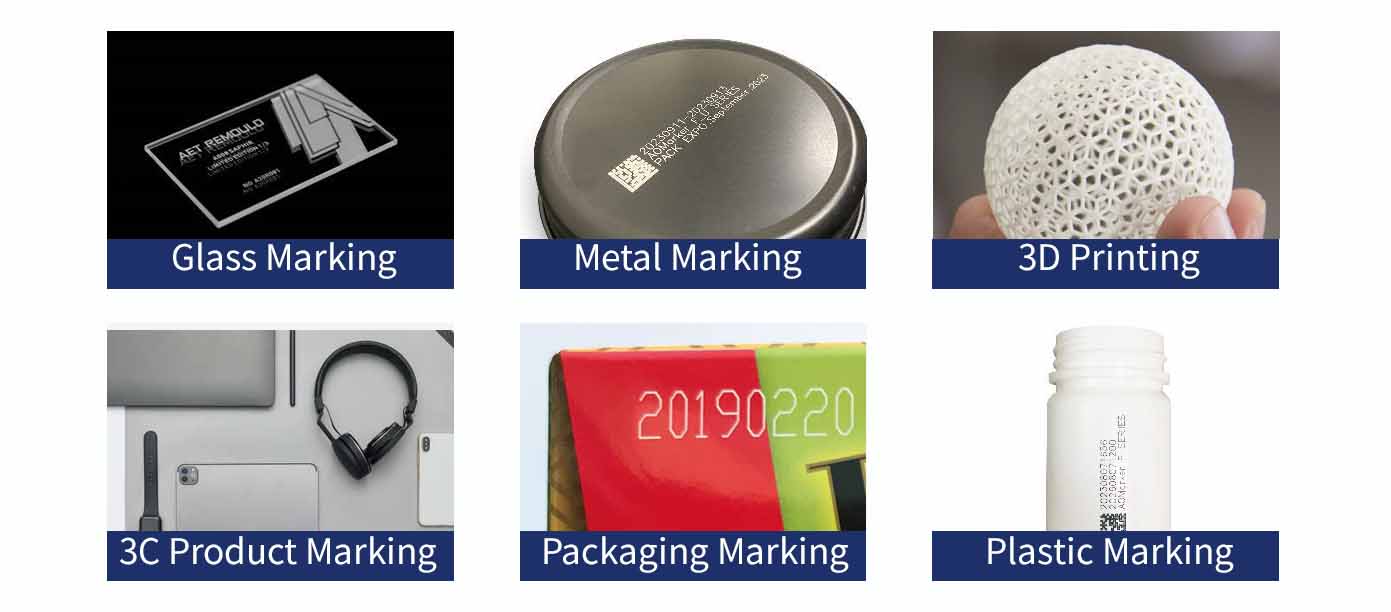
3D Printing
Electronics & Electrical Appliances
Medical Industry
Dental Applications
Aerospace, etc.
Packaging Industry
Paper Packaging
Glass Packaging
Plastic Packaging
Pharmaceutical Marking
Metal Packaging, etc.
3C Marking
Marking on Mobile Phone Back Covers
Charger Marking
PCB Marking
Cable Marking, etc.
Why Size and Weight Matter to the Machine Builder
The value of a lightweight UV laser source is not limited to making the machine look smaller.
A lower module weight can reduce:
- Supporting-frame requirements
- Vibration stress during transport
- Load on movable equipment platforms
- Installation work inside narrow cabinets
- Shipping weight for completed machines
- Time required to remove and replace the source
The compact housing also leaves more room for the galvo scanner, beam expander, controller, industrial computer, power components and safety circuits.
This is particularly useful for OEM manufacturers developing several machine sizes from one basic platform. A compact source allows more flexibility in cabinet dimensions without forcing the optical system to be completely rearranged.
Where a Different Laser Should Be Considered
FIT is optimized for compact low-power equipment. A different laser configuration should be evaluated when the process requires:
- UV output above 5 W
- High-volume cutting of thick material
- High pulse energy for deep ablation
- Large-area coating removal at high speed
- Green or infrared wavelength
- Very short picosecond or femtosecond pulses
- Specialized deep-UV processing
Clearly defining these boundaries helps avoid selecting a compact source for a process that fundamentally requires higher energy or a different pulse regime.
Frequently Asked Questions
Is FIT a complete UV marking machine?
No. It is an OEM UV laser source. A complete machine also requires a controller, galvo scanner, lens, industrial computer, power components, enclosure and safety system.
Which version produces better marking results: air cooled or water cooled?
Cooling does not by itself determine marking quality. Both configurations should be selected according to machine architecture, thermal conditions, installation space and maintenance requirements.
Can the air-cooled version operate without a chiller?
Yes. Its integrated thermal management removes the need for an external water-cooling circuit.
Why is the water-cooled model smaller?
Heat is transferred through an external cooling circuit, so the laser module does not require the same integrated air-cooling structure.
Should I purchase 5 W instead of 3 W?
Choose 5 W when testing confirms that additional power or pulse energy improves cycle time or process margin. Choose 3 W when it already meets the required quality and production speed.
Can FIT replace another 355 nm laser?
Replacement is possible after the mounting, beam height, optical parameters, cooling, control signals and electrical connections have been checked.
What does the 30% power margin mean for the buyer?
It provides additional internal output capacity intended to support stable usable power as the laser operates over time. It does not mean that the user receives 30% more selectable processing power than the rated model.
Discuss Your Machine Layout Before Selecting the Laser
Send the cabinet dimensions, required cooling method, existing source information and target processing result. JCZ will help evaluate whether the 3 W or 5 W compact 355nm UV nanosecond laser is the better fit for your equipment and identify the interfaces that must be confirmed before integration.