| Unit | Parameter | ||
| Product Model | YDFLP-C-20-M7-S-R | YDFLP-E-30-M7-S-R | |
| M2 | <1.4 | ||
| Armored Cable Length | m | 2 | |
| Nominal Average Output Power | W | >20 | >30 |
| Maximum Pulse Energy | mJ | 0.8 | |
| Pulse Repetition Rate Range | kHz | 1 ~ 4000 | |
| Pulse Duration | ns | 2 ~ 350 | |
| Output Power Stability | % | <5 | |
| Cooling Method | Air Cooled | ||
| Supply DC Voltage (VDC) | V | 24 | |
| Maximum Power Consumption | W | <110 | <150 |
| Environmental Supply Current | A | >5 | >7 |
| Central Emission Wavelength | nm | 1064 | |
| Emission Bandwidth@3dB | nm | <15 | |
| Polarization Orientation | Random | ||
| Anti-high Reflection | Yes | ||
| Output Beam Diameter | mm | 7±0.5 | |
| Output Power Tuning Range | % | 0 ~ 100 | |
| Operation Temperature | ℃ | 0 ~ 40 | |
| Storage Temperature | ℃ | -10 ~ 60 | |
| N.W | KG | 3.75 | 4.25 |
| Size(L×W×H) | mm | 245 × 200 × 65 | |
| Unit | Parameter | ||
| Product Model | YDFLP-E2-60-M7-M-R | YDFLP-E2-100-M7-M-R | |
| M2 | <1.5 | <1.6 | |
| Delivery Cable Length | m | 3 | |
| Nominal Average Output Power | W | >60 | >100 |
| Maximum Pulse Energy | mJ | 2 | 1.5 |
| Pulse Repetition Rate Range | kHz | 1 ~ 4000 | |
| Pulse Duration | ns | 2~500 | |
| Output Power Stability | % | <5 | |
| Cooling Method | Air Cooled | ||
| Supply DC Voltage (VDC) | V | 24 | |
| Power Supply | W | <330 | <440 |
| Environmental Supply Current | A | >13 | >18 |
| Central Emission Wavelength | nm | 1064 | |
| Emission Bandwidth@3dB | nm | <15 | |
| Polarization Orientation | Random | ||
| Anti-high Reflection | Yes | ||
| Output Beam Diameter | mm | 7±0.5 | |
| Output Power Tuning Range | % | 0 ~ 100 | |
| Operation Temperature | ℃ | 0 ~ 40 | |
| Storage Temperature | ℃ | -10 ~ 60 | |
| N.W | KG | 4.1 | 8.5 |
| Size(L×W×H) | mm | 205 × 253.3 × 75 | 336 × 255 × 90 |
| Unit | Parameter | |||
| Product Model | YDFLP-200-M7-M-R | YDFLP-350-M7-M-R | YDFLP-500-M7-M-R-W | |
| M2 | <1.6 | <1.7 | ||
| Armored Cable Length | m | 5 | ||
| Nominal Average Output Power | W | >200 | >350 | >500 |
| Maximum Pulse Energy | mJ | 1.5 | 1.5 | |
| Pulse Repetition Rate Range | kHz | 1 ~ 4000 | ||
| Pulse Duration | ns | 2 ~ 500 | 3 ~ 500 | |
| Output Power Stability | % | <5 | ||
| Cooling Method | Air Cooled | Water Cooled | ||
| Supply DC Voltage (VDC) | V | 48 | ||
| Maximum Power Consumption | W | <800 | <1200 | <1700 |
| Environmental Supply Current | A | >16 | >25 | >35 |
| Central Emission Wavelength | nm | 1064 | ||
| Emission Bandwidth@3dB | nm | <20 | <30 | <20 |
| Polarization Orientation | Random | |||
| Anti-high Reflection | Yes | |||
| Output Beam Diameter | mm | 7±0.5 | 7±1 | |
| Output Power Tuning Range | % | 0 ~ 100 | ||
| Operation Temperature | ℃ | 0 ~ 40 | 10 ~ 40 | |
| Storage Temperature | ℃ | -10 ~ 60 | ||
| N.W | KG | 24.8 | 30 | 19.8 |
| Size(L×W×H) | mm | 430 × 351 × 133 | 436 × 430 × 133 | 482 x 470 x 70 |
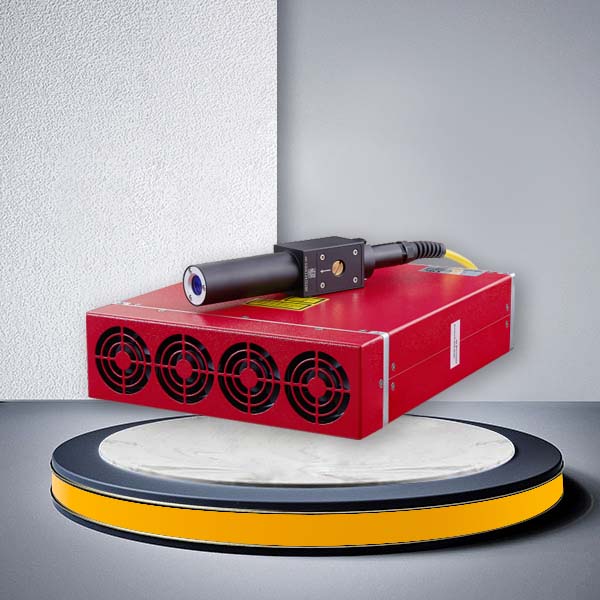
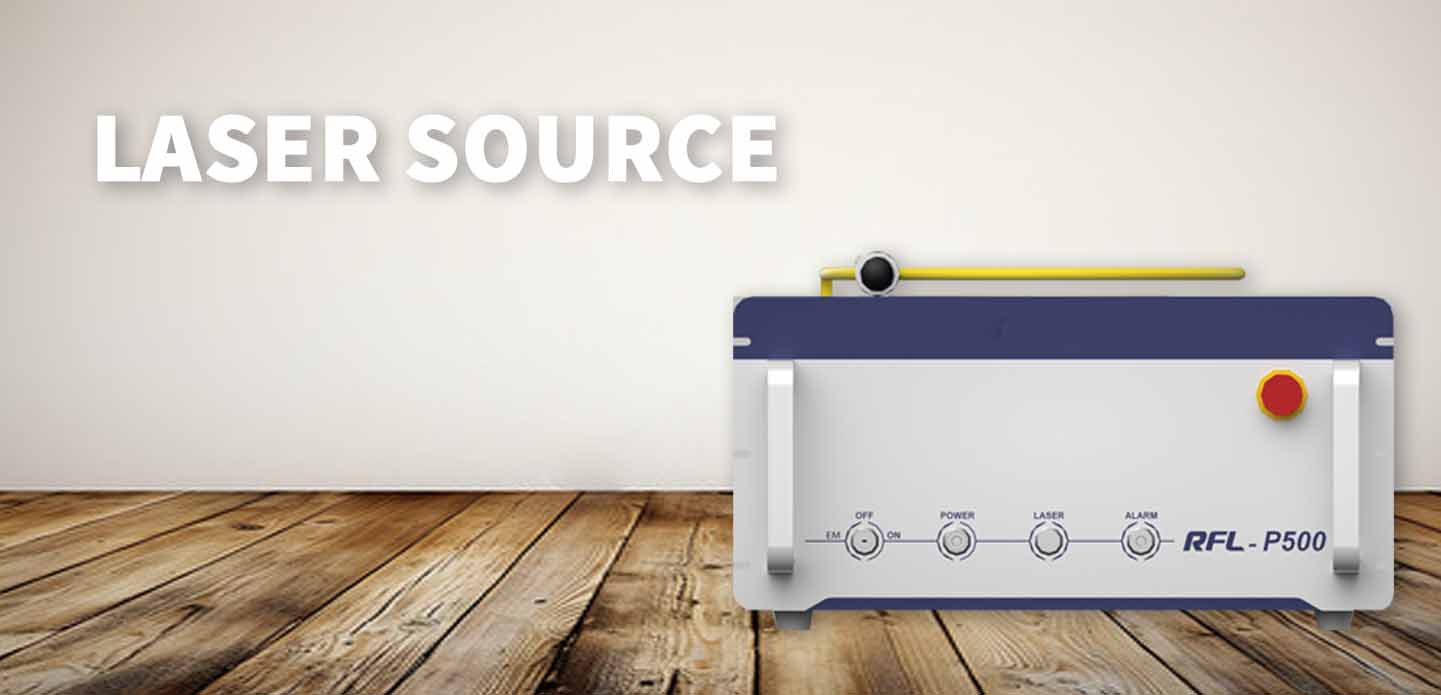
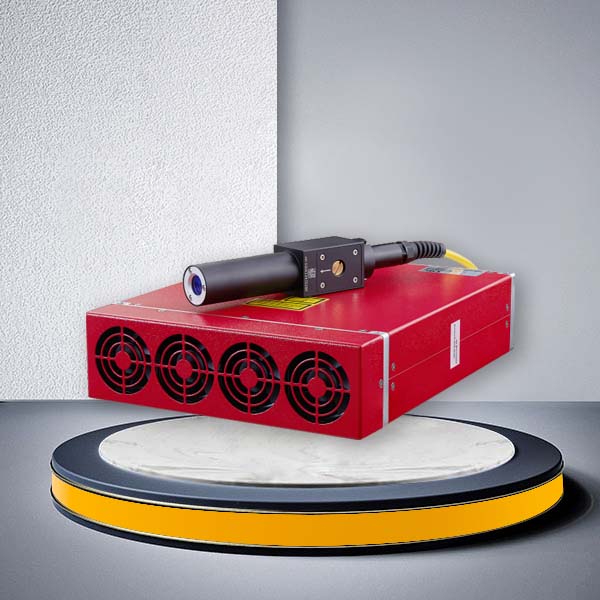
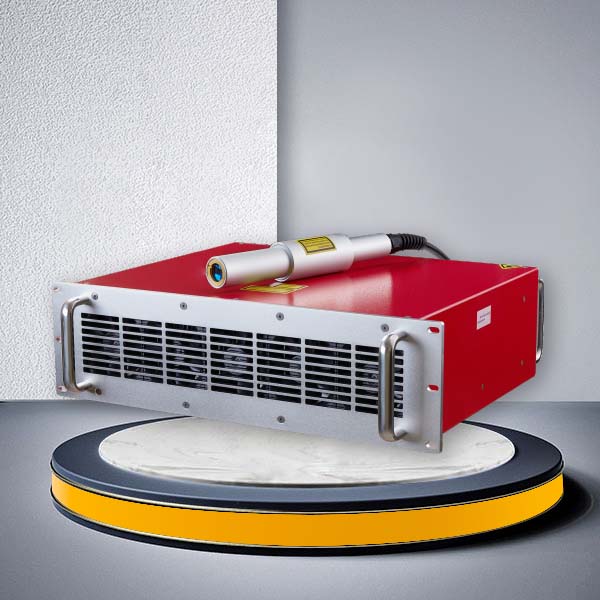
JPT MOPA M7 Fiber Laser Source
JCZ supplies JPT MOPA M7 fiber laser sources for industrial laser marking, engraving, surface treatment, cleaning and precision material processing. With power configurations from 20W to 1000W, the M7 series offers independently adjustable pulse width and repetition frequency to accommodate different materials, processing speeds and production requirements.
Available configurations include 20W, 30W, 60W, 80W, 100W, 120W, 200W, 300W, 350W, 500W and 1000W models. Options cover different pulse energies, beam qualities, fiber delivery configurations, cooling methods and electrical requirements.
We supply M7 laser sources for laser equipment manufacturers, OEM projects, system integrators and replacement requirements. JCZ can also help match the laser source with laser controllers, galvo scanners and F-theta lenses for complete equipment integration.
Send us your required power, material, processing objective and existing equipment specifications to select a suitable JPT MOPA M7 configuration.
JPT MOPA M7 Fiber Laser Source Power and Model Options
The JPT M7 series covers multiple power levels and model generations. Buyers should compare the complete model number rather than select a laser source by wattage alone, as pulse energy, pulse duration, beam quality, fiber configuration and electrical requirements can vary between models.
| Power | Representative Model | Maximum Pulse Energy | Pulse Width | Typical Selection Direction |
|---|---|---|---|---|
| 20W | YDFLP-C-20-M7-S-R / YDFLP-E2-20-M7-S-R | 0.8 / 1mJ | 2–350 / 2–500ns | Fine marking and detailed graphics |
| 30W | YDFLP-E-30-M7-S-R / YDFLP-E2-30-M7-S-R | 0.8 / 1mJ | 2–350 / 2–500ns | Precision marking and general industrial applications |
| 60W | YDFLP-E2-60-M7-M-R | 2mJ | 2–500ns | Faster marking and deeper engraving |
| 80W | M7 80W configuration | Model-dependent | Model-dependent | Higher-throughput marking |
| 100W | YDFLP-E2-100-M7-M-R | 1.5mJ | 2–500ns | Industrial production and surface processing |
| 120W | M7 120W configuration | Model-dependent | Model-dependent | Higher-power industrial processing |
| 200W | YDFLP-200-M7-M-R / E2 / E3 variants | 1.5–2mJ | 2–500ns | High-efficiency engraving and surface treatment |
| 300W | YDFLP-E-300-M7 / E3 variants | 1.5–2.3mJ | 2–500ns | High-output industrial processing |
| 350W | YDFLP-350-M7-M-R | 1.5mJ | 3–500ns | High-power material processing |
| 500W | YDFLP-500-M7-M-R-A / W | 1.5 / 2mJ | 30–500ns | High-power industrial processing |
| 1000W | YDFLP-1000-M7-L-R-W | 1.66mJ | 60–500ns | High-power industrial applications |
The values above represent different available model configurations, not a universal specification for every M7 source. Exact specifications, full model codes and supply requirements should be confirmed for the selected version.
M7 Model Generations and Fiber Configurations
Different M7 model generations and suffixes can have different optical and mechanical specifications.
| Model Variation | Configuration Characteristics | Selection Considerations |
|---|---|---|
| C / E Series | Earlier 20W and 30W M7 configurations | Confirm pulse width, pulse energy and dimensions |
| E2 Series | 20W, 30W, 60W, 100W and higher-power configurations | Compare the complete model code and electrical specifications |
| E3 Series | Available in selected 200W and 300W configurations | Evaluate beam quality, fiber delivery and pulse energy |
| M Fiber Configuration | Available across several M7 power levels | Confirm output beam diameter and fiber delivery requirements |
| L Fiber Configuration | Available in selected high-power models | Confirm beam diameter, cable length and optical matching |
| Air-Cooled Configuration | Available across multiple power levels, including selected 500W models | Consider installation space and thermal management |
| Water-Cooled Configuration | Available for selected high-power models | Confirm cooling capacity, connections and machine layout |
The suffixes and configurations are not interchangeable. When purchasing a replacement source or designing a new machine, provide the complete model number for compatibility confirmation.

Pulse Width and Frequency Control
The M7 series uses MOPA architecture, allowing pulse width and repetition frequency to be adjusted independently.
This provides greater control over laser energy delivery for applications involving different material responses and surface-processing requirements.
| Parameter | Available Configuration | Processing Consideration |
|---|---|---|
| Pulse Width | 2–350ns / 2–500ns / 30–500ns / 60–500ns | Select according to model and required processing effect |
| Pulse Frequency | 1–4000kHz | Balance pulse repetition and processing speed |
| Maximum Pulse Energy | 0.8–2.3mJ | Consider material removal and engraving requirements |
| Output Power Adjustment | 0–100% | Adjust average output according to the process |
| Power Stability | <5% for specified models | Consider consistency during continuous production |
For projects requiring different surface effects, color marking or material removal, pulse width, frequency, power, scanning speed and focal conditions should be evaluated together.
Beam Quality and Optical Output
Beam quality and output beam diameter affect optical matching, focusing conditions and processing results.
The M7 series offers different optical configurations according to power and model.
| Optical Parameter | Available Configuration | Application Consideration |
|---|---|---|
| Beam Quality M² | <1.4 / <1.5 / <1.6 / <1.7 / <1.8 | Select according to precision and optical requirements |
| Beam Diameter | 6 / 7 / 8 / 11mm configurations with model-specific tolerances | Match the input aperture of the optical system |
| Fiber Delivery | M / L configurations on selected models | Confirm fiber output and installation requirements |
| Fiber Cable Length | 2m / 3m / 5m | Match machine layout and cable routing |
| Wavelength | 1064nm | Match the optical coating and laser components |
| Polarization | Random | Consider the requirements of the optical system |
JCZ can help match the selected M7 source with suitable scanning and focusing optics.
View our F-theta Flat-Field Lenses and Telecentric F-theta Lenses for different optical system requirements.
How to Choose the Right JPT MOPA M7 Power
Selecting the right M7 laser source requires consideration of material, processing depth, production speed, pulse energy and the machine’s electrical and optical architecture.
| Power Configuration | Recommended Application Direction | Main Selection Considerations |
|---|---|---|
| 20W / 30W | Fine metal marking, detailed graphics, identification codes and precision surface marking | Detail requirements, thermal response and machine size |
| 60W / 80W | Higher-speed marking, engraving and surface processing | Pulse energy, cycle time and material removal |
| 100W / 120W | Industrial marking, deeper engraving and production-line processing | Production throughput, power demand and optical configuration |
| 200W / 300W | High-efficiency engraving, surface treatment, cleaning and selected thin-sheet processing | Pulse energy, beam quality and cooling |
| 350W | Higher-power material processing and production applications | Thermal management, electrical supply and processing speed |
| 500W | High-power surface processing, cleaning and selected cutting applications | Air or water cooling, pulse energy and installation conditions |
| 1000W | High-power industrial processing | Water cooling, AC power supply, optical matching and machine integration |
20W and 30W: Precision Marking and Detailed Processing
The 20W and 30W M7 configurations are suitable for applications where fine characters, detailed graphics and controlled surface marking are important.
They can be evaluated for:
- Product identification and traceability.
- Fine text, logos and serial numbers.
- Small metal components.
- Precision surface marking.
- Material and parameter development.
The 30W configuration provides higher average output power than the 20W option. The final selection should consider the required production cycle and actual material response.
60W to 120W: Higher Throughput and More Processing Flexibility
The 60W, 80W, 100W and 120W configurations provide additional power options for industrial marking and surface-processing systems.
These models can be evaluated when equipment requires:
- Faster marking cycles.
- Deeper engraving.
- Higher material-removal capacity.
- Larger production batches.
- More flexible processing across different metal components.
Maximum pulse energy should also be considered. For example, the E2 60W model has a listed maximum pulse energy of 2mJ, while the E2 100W model has a listed maximum of 1.5mJ.
Therefore, higher average power does not automatically mean higher maximum pulse energy.
200W to 350W: High-Power Industrial Processing
The 200W, 300W and 350W configurations are suitable for evaluating higher-throughput applications and processes requiring greater material-removal capacity.
Typical application directions include:
- High-speed deep engraving.
- Metal surface treatment.
- Coating and oxide removal.
- Laser cleaning.
- Selected thin-sheet cutting and welding.
- Automated production-line processing.
For these power levels, confirm the complete model code, M/L fiber configuration, beam diameter, power supply and installation dimensions.
500W and 1000W: High-Power MOPA Configurations
The 500W and 1000W M7 configurations are intended for projects requiring higher average output power and specific cooling and electrical arrangements.
| Model | Cooling | Maximum Pulse Energy | Pulse Width | Supply Voltage |
|---|---|---|---|---|
| 500W Air-Cooled | Air | 1.5mJ | 30–500ns | 48V DC |
| 500W Water-Cooled | Water | 2mJ | 30–500ns | 48V DC |
| 1000W Water-Cooled | Water | 1.66mJ | 60–500ns | 220V AC |
The 500W air-cooled and water-cooled versions have different power consumption and mechanical dimensions. The 1000W configuration also requires a different electrical supply architecture.
Provide the intended operating environment, installation space and processing requirements when requesting these high-power configurations.
Applications of JPT MOPA M7 Fiber Lasers
The M7 series can be configured for different metal marking, engraving and surface-processing applications. The required power and pulse settings depend on the material, surface condition, processing depth and production speed.
| Material / Workpiece | Application | Main Processing Objective | Selection Consideration |
|---|---|---|---|
| Stainless Steel | Color marking and high-contrast marking | Create different surface colors and identification marks | Pulse width, frequency, speed and surface condition |
| Titanium | Color marking | Develop controlled surface effects | Pulse parameters and material surface |
| Anodized Aluminum | Surface brightening and marking | Modify the anodized surface or create identification marks | Coating characteristics and processing parameters |
| Aluminum Components | Marking and engraving | Produce permanent product identification | Surface finish and required contrast |
| Metal Parts | Deep engraving and serial marking | Remove material and create durable marks | Power, pulse energy and processing speed |
| Plastic Components | Laser marking | Create identification and traceability marks | Polymer type, additives and laser absorption |
| Coated Metal | Coating removal and surface treatment | Remove selected surface layers | Coating thickness and substrate sensitivity |
| Rusted Metal | Laser cleaning | Remove rust and surface contaminants | Contamination thickness and required cleaning result |
| Battery Electrode Foils | Precision cutting and processing | Process thin metal materials | Foil thickness, edge quality and process speed |
| Thin Metal Sheets | Selected cutting and welding applications | Process thin metal components | Material thickness, motion system and process parameters |
Color Marking on Stainless Steel and Titanium
MOPA pulse control can be used to develop different surface colors and oxidation effects on suitable stainless steel and titanium materials.
The resulting color depends on several process variables:
- Pulse width.
- Repetition frequency.
- Laser power.
- Scanning speed.
- Hatch spacing.
- Focal position.
- Material composition and surface finish.
For equipment manufacturers developing color-marking machines, selecting the M7 source should be combined with optical and scanning-system matching.
Deep Engraving and Metal Surface Processing
Higher-power M7 configurations can be evaluated for deeper engraving, surface texturing, coating removal and other material-removal applications.
The required power depends on the target depth, material hardness, working field, production cycle and laser parameters.
For high-volume industrial systems, compare 100W, 200W, 300W and higher-power configurations according to the required throughput rather than choosing solely by nominal wattage.
Laser Cleaning and Coating Removal
M7 sources can be considered for selected rust-removal, oxide-removal and coating-removal applications.
The appropriate configuration depends on:
- Base material.
- Contamination or coating type.
- Layer thickness.
- Required surface condition.
- Processing width.
- Production speed.
On-the-Fly Marking
The M7 source can be integrated into production-line marking systems for variable product information, batch codes, serial numbers and traceability data.
The complete system needs coordinated laser control, scanning, encoder signals and production-line timing.
For fly-marking integration, see the JCZ J2000 Laser Coding Control System.
The maximum production-line speed depends on the complete control and motion architecture, not the laser source alone.
Custom and Optional Configurations for JPT MOPA M7
JCZ can supply different M7 power levels and configuration options to meet OEM equipment and system-integration requirements.
The available configuration range includes optical output, fiber delivery, pulse characteristics, cooling and electrical arrangements.
| Customization Category | Standard Configuration | Custom / Optional Range |
|---|---|---|
| Average Output Power | 20W / 30W / 60W / 100W / 200W / 350W / 500W | 80W / 120W / 300W / 1000W and other available M7 configurations |
| Maximum Pulse Energy | Model-specific 0.8–2mJ configurations | Options up to 2.3mJ, depending on power and fiber version |
| Pulse Width | 2–350ns / 2–500ns | 30–500ns / 60–500ns and other model-specific configurations |
| Pulse Frequency | 1–4000kHz | Model-specific configuration |
| Beam Quality M² | <1.4 to <1.7 on listed configurations | Options up to <1.8, depending on model |
| Output Beam Diameter | 7±0.5mm / 7±1mm | 6±1mm / 8±1mm / 11±1mm configurations |
| Fiber Delivery | Standard model configuration | M / L fiber versions |
| Armored Cable Length | 2m / 3m / 5m | Alternative cable-length arrangements |
| Cooling Method | Air Cooling / Water Cooling by model | Air-Cooled / Water-Cooled configurations |
| Supply Voltage | 24V DC / 48V DC | 220V AC for the applicable 1000W configuration |
| Optical Configuration | 1064nm M7 optical output | Model-specific fiber and optical matching |
| Mechanical Integration | Model-specific standard housing | Installation, cable-routing and machine-layout matching |
Fiber Delivery and Beam Diameter Options
Different M7 models are available with different fiber configurations and output beam diameters.
| Beam Diameter | Available Configuration |
|---|---|
| 6±1mm | Selected L-fiber models |
| 7±0.5mm | Selected standard configurations |
| 7±1mm | Selected medium- and high-power models |
| 8±1mm | Selected L-fiber models |
| 11±1mm | Selected high-power L-fiber configurations |
The selected output beam diameter must match the optical system’s input aperture and beam-expansion design.
Air Cooling and Water Cooling Options
Cooling selection depends on output power, laser configuration, machine structure and operating conditions.
| Cooling Method | Applicable Configuration | Main Consideration |
|---|---|---|
| Air Cooling | Selected 20W–500W models | Airflow, installation space and ambient temperature |
| Water Cooling | Selected 500W and 1000W models | Cooling capacity, water connections and temperature management |
For high-power projects, confirm the cooling method and electrical supply before designing the machine enclosure.
Electrical and Mechanical Configuration
The M7 series includes different electrical and mechanical configurations.
| Parameter | Available Options |
|---|---|
| DC Supply Voltage | 24V / 48V |
| AC Supply Voltage | 220V for the applicable 1000W configuration |
| Armored Fiber Cable | 2m / 3m / 5m |
| Mechanical Dimensions | Model-specific |
| Net Weight | Model-specific |
| Fiber Output Position | According to selected model |
| Installation Layout | Matched to equipment structure and available space |
JCZ can help evaluate the source dimensions, mounting space, cable routing and electrical supply requirements for OEM integration.
Customized configurations should be confirmed using the complete model specification and installation drawing before equipment production.
JPT MOPA M7 Laser Source and System Integration
A JPT MOPA M7 laser source is one component of a complete laser processing system. The control card, galvo scanner, F-theta lens, software, power supply and machine structure must be selected according to the application.
JCZ supplies related laser control and optical products to support equipment integration.
Laser Controller Selection
| Controller | Product Function | Integration Consideration |
|---|---|---|
| DLC2-V4 Control Card | Laser source, galvo, I/O and motion control | Confirm laser interface, signal requirements and control architecture |
| LMCPCIE Controller | PCIe-based laser marking and galvo control | Evaluate PC connection, galvo control and flight-marking requirements |
| J2000 Fly Marking System | Laser coding and production-line marking control | Evaluate encoder signals and production-line integration |
The appropriate controller depends on the M7 model, laser interface, software, galvo protocol, I/O requirements and machine architecture. Confirm compatibility before ordering.
Galvo Scanner Matching
The galvo scanner determines beam positioning and scanning behavior within the working field.
| Galvo Scanner | Product Positioning | Application Direction |
|---|---|---|
| GO7 Series 2D Galvo Scanner | General industrial 2D scanning | Standard laser marking and engraving |
| G3 Series 2D Galvo Scanner | Industrial scanning with different performance configurations | Applications with specific speed, accuracy and stability requirements |
When matching a galvo scanner with an M7 source, consider the laser power, beam diameter, mirror coating, aperture, scan angle and optical design.
F-theta Lens Matching
The F-theta lens focuses the laser beam onto the workpiece and determines the working field and focal characteristics.
JCZ provides two main lens configurations:
| Lens Type | Main Function | Selection Consideration |
|---|---|---|
| Flat-Field F-theta Lens | Conventional flat-field focusing | Working field, focal length, wavelength and spot size |
| Telecentric F-theta Lens | Telecentric beam delivery | Workpiece geometry and required beam incidence angle |
For a matched laser system, provide the M7 model, output beam diameter, required working field, focal length and working distance.
JPT MOPA M7 vs JPT MOPA LP Fiber Laser
JCZ also supplies the JPT MOPA LP series. Although both products belong to the JPT pulsed fiber laser range, they have different pulse-control characteristics and should serve different product-selection requirements.
| Comparison | JPT MOPA M7 | JPT MOPA LP |
|---|---|---|
| Product Type | MOPA Pulsed Fiber Laser | MOPA Pulsed Fiber Laser |
| Power Range on JCZ Pages | Multiple configurations from 20W upward | 20W / 30W / 50W |
| Pulse Width | Adjustable, model-dependent | Fixed 200ns |
| Pulse Frequency | 1–4000kHz | 1–600kHz |
| Pulse Control | Independently adjustable pulse width and frequency | Fixed pulse width |
| Main Selection Focus | Flexible pulse control and broader power configurations | Standardized fixed-pulse applications |
Choose M7 when your project requires a wider adjustable pulse-width range, more power configurations or specific material-processing flexibility.
For applications that fit the LP series’ fixed-pulse configuration, see the JPT MOPA LP Fiber Laser Source.
Information Required for a JPT MOPA M7 Quotation
To recommend the right M7 model and prepare an accurate quotation, JCZ needs the following project information.
| Required Information | Details to Provide | Why It Matters |
|---|---|---|
| Required Laser Power | 20W / 30W / 60W / 80W / 100W / 120W / 200W / 300W / 350W / 500W / 1000W | Determines the available model range |
| Full Model Number | Existing YDFLP model or required configuration | Confirms model generation and compatibility |
| Application | Marking / Engraving / Cleaning / Cutting / Welding / Surface Treatment | Determines processing requirements |
| Workpiece Material | Stainless steel / Titanium / Aluminum / Plastic / Other | Helps evaluate laser parameters |
| Material Thickness | Actual workpiece or coating thickness | Helps determine power and process requirements |
| Required Processing Result | Color / Black Mark / Deep Engraving / Coating Removal / Cutting | Determines pulse and power requirements |
| Production Speed | Target cycle time or line speed | Helps select output power |
| Pulse Requirements | Pulse width, frequency and pulse energy targets | Matches the required MOPA configuration |
| Optical Configuration | Beam diameter, fiber type and lens focal length | Confirms optical compatibility |
| Cooling Method | Air Cooling / Water Cooling | Determines machine thermal design |
| Electrical Supply | 24V DC / 48V DC / 220V AC, according to model | Confirms power-system compatibility |
| Existing Controller | Controller model and laser interface | Confirms control compatibility |
| Existing Galvo and Lens | Scanner model, aperture and lens parameters | Supports optical system matching |
| Installation Requirements | Dimensions, cable length and mounting space | Supports OEM integration |
| Order Quantity | Required number of laser sources | Supports quotation preparation |
For replacement orders, please also provide a photo of the original laser source nameplate, existing model number, cable length and installation dimensions.
For new equipment projects, a machine layout, optical drawing or sample workpiece can help clarify the required configuration.
Frequently Asked Questions About JPT MOPA M7 Fiber Laser Sources
1. What power options are available for the JPT MOPA M7 series?
The available M7 configurations cover 20W, 30W, 60W, 80W, 100W, 120W, 200W, 300W, 350W, 500W and 1000W.
The exact model and configuration depend on the required pulse energy, beam quality, fiber delivery, cooling and electrical supply.
2. What is the difference between the M7 and LP laser sources?
The main difference is their pulse-control configuration.
M7 allows pulse width and repetition frequency to be adjusted independently, with model-specific pulse-width ranges. The JCZ LP product page specifies a fixed 200ns pulse width and a 1–600kHz repetition-frequency range.
Choose according to the processing flexibility and pulse parameters required by your application.
3. Which M7 model is suitable for stainless steel color marking?
The 20W, 30W and higher-power M7 configurations can be evaluated for stainless steel color marking.
The final result depends on the stainless steel grade, surface condition, pulse width, repetition frequency, scanning speed, hatch spacing and focus position.
Provide your workpiece material and desired color effect when requesting a configuration recommendation.
4. What is the maximum pulse energy of the M7 series?
Maximum pulse energy varies by power and model.
Available configurations include 0.8mJ, 1mJ, 1.5mJ, 2mJ and up to 2.3mJ on selected models.
For example, the M7 E2 60W configuration has a listed maximum pulse energy of 2mJ, while the E2 100W configuration has 1.5mJ.
Always compare the full model number and its corresponding datasheet.
5. What pulse width and frequency ranges does the M7 support?
The M7 series offers model-dependent pulse-width configurations, including 2–350ns, 2–500ns, 30–500ns and 60–500ns.
The listed pulse repetition-frequency range is 1–4000kHz for the applicable configurations.
The exact range depends on the selected model and power level.
6. Is the M7 series air-cooled or water-cooled?
Both configurations are available.
Selected 20W–500W models use air cooling, while selected 500W and 1000W configurations use water cooling. The 500W series includes air-cooled and water-cooled versions.
Confirm the exact model suffix before designing the cooling system.
7. Can I replace my existing JPT M7 laser source with another 100W model?
Not based on output power alone.
Before replacement, confirm:
- Full model number and model generation.
- Supply voltage and power consumption.
- Mechanical dimensions and mounting.
- Fiber cable length and output beam diameter.
- Laser interface and controller compatibility.
- Cooling method.
Send JCZ the original model number and nameplate photo to check the replacement configuration.
8. Can JCZ supply different fiber lengths and beam diameters?
Yes. Available configurations include 2m, 3m and 5m armored fiber cables, as well as different beam diameters such as 6mm, 7mm, 8mm and 11mm configurations with model-specific tolerances.
The selected fiber and beam output must match the laser source version and downstream optical system.
9. Can the M7 be integrated with a JCZ laser controller and galvo scanner?
Yes, M7 sources can be evaluated for integration with compatible JCZ controllers, galvo scanners and optical components.
The exact controller and scanner configuration depends on the laser interface, control signals, galvo protocol, beam diameter and required working field.
Provide your current controller and scanner models so the complete configuration can be reviewed.
10. Can the M7 be used for laser cleaning, cutting and welding?
Selected M7 configurations can be evaluated for laser cleaning, surface treatment, coating removal, thin-sheet cutting and welding applications.
The required model depends on the material, thickness, processing speed, optical configuration and process quality requirements.
For higher-power applications, provide the workpiece details and target processing result before selecting the laser source.
11. What information is required to purchase a JPT MOPA M7 laser source?
Please provide the required power, full model number, material, application, pulse requirements, electrical supply and cooling configuration.
For replacement purchases, also provide the original laser source nameplate and machine installation details.
These details help confirm the correct model and reduce compatibility issues during installation.
Request a JPT MOPA M7 Fiber Laser Source Quote
Whether you are developing a new laser marking machine, upgrading an industrial processing system or replacing an existing laser source, selecting the correct M7 configuration is essential for machine performance and integration.
JCZ supplies JPT MOPA M7 fiber laser sources with multiple power levels, pulse configurations, fiber delivery options and cooling arrangements. We can also help match the source with suitable laser controllers, galvo scanners and F-theta lenses for your equipment requirements.
Send us your required power, complete model number, workpiece material, processing target and existing equipment specifications.
Contact JCZ today to confirm your JPT MOPA M7 configuration and request a product quotation.