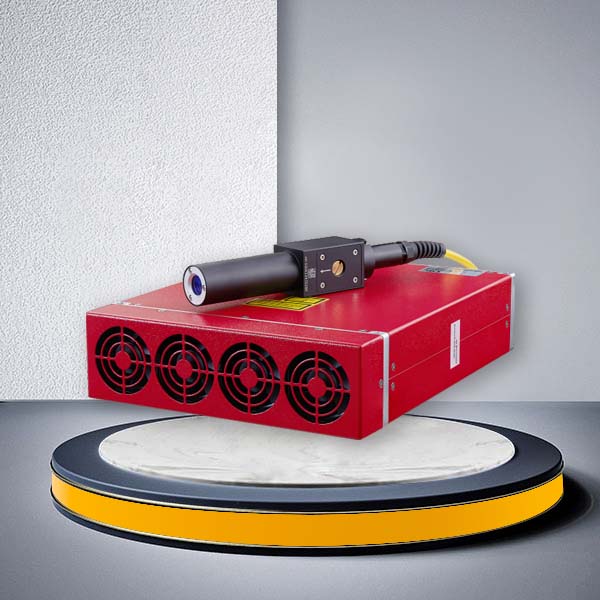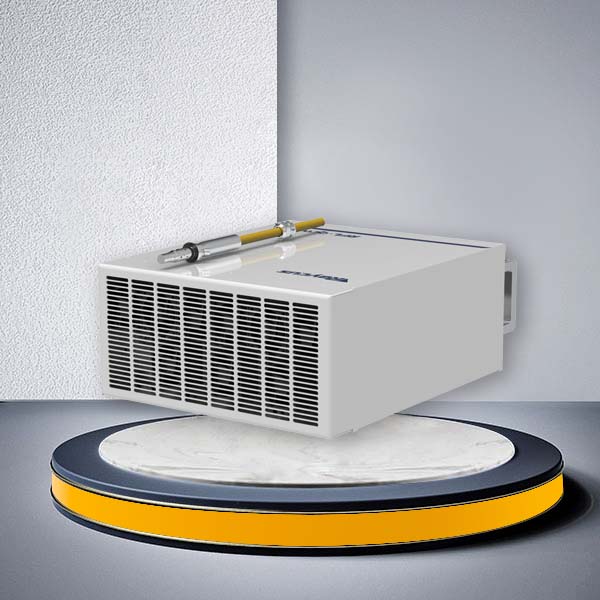
| Model | QCW-150 | QCW-300 |
| BPP | ≤2@50um | ≤0.55@25um |
| Fiber Cable Length | 5M (Customizable) | |
| Average Output Power | CW: 250W Pulse: 150W | CW: 400W Pulse: 300W |
| Max. Peak Power | 1500W | 3000W |
| Max. Pulse Energy | 15J | 30J |
| Adjustable Frequency Range | 0.001-10 kHz | |
| Adjustable Pulse Width Range | 0.01-10 ms | |
| Cooling Method | Air Cooled | |
| Power Supply | 220VAC Single Phase | 48VDC |
| Laser On/Off Time | <20us | |
| Central Emission Wavelength | 1080nm | |
| Emission Bandwidth@3dB | <4nm | |
| Operation Temperature | 10-40℃ | |
| Storage Temperature | -20-50 ℃ | |
| Net Weight | 52KG | 65KG |
| Size (LxWxH) | 483×752×177 mm | 483x648x234 mm |
Raycus Single-Module CW Fiber Laser – 250W to 3000W
The Raycus Single-Module CW Fiber Laser series available from JCZ covers industrial continuous-wave laser sources from 250W to 3000W for laser cutting, welding and other metal-processing systems.
The current range includes RFL-C300L, RFL-C500, RFL-C750, RFL-C1000, RFL-C1500X, RFL-C2000X and RFL-C3000S, with a central wavelength of 1080 ±5 nm, CW/modulated operation, QBH output, adjustable output power and water cooling.
Select the CW Fiber Laser by Process, Not Power Alone
Output power affects processing capacity and throughput, but it does not independently determine cutting thickness, cutting speed or welding penetration.
Two fiber lasers with the same rated power can behave differently if they use different:
- beam quality;
- fiber core diameter;
- focused spot size;
- processing heads;
- focal lengths;
- cutting gases;
- welding optics;
- motion parameters.
For this reason, start with the actual process requirement before choosing 500W, 1000W, 2000W or 3000W.
For a cutting project, provide the metal type, thickness range, required edge quality and target speed.
For a welding project, provide the material, thickness, joint geometry, required penetration and whether the process uses a fixed, wobble or scanner-based welding head.
For an existing machine replacement, the old laser model, output connector, fiber length, power supply, controller interface and processing head are equally important.
Single-Module Does Not Mean Single-Mode
This distinction is important when comparing industrial fiber laser sources.
Single-module describes the laser-source architecture.
Single-mode describes the spatial characteristics of the output beam.
A single-module laser should therefore not automatically be described as a single-mode laser.
Beam mode should be evaluated from parameters such as M², BPP and output fiber core diameter. Industrial single-mode lasers are normally characterized by very high beam quality and the ability to focus into a small spot, which increases power density without necessarily increasing total laser power.
Why Beam Quality Matters
A better-quality beam can normally be focused into a smaller spot.
This is particularly relevant when the process requires:
- fine cutting;
- narrow kerf;
- precision drilling;
- localized welding;
- small additive-manufacturing spot sizes;
- high optical intensity.
However, the smallest spot is not always the best choice.
For some welding, cladding and thicker-section processes, a larger spot or different beam distribution can create a more suitable process window.
Why Fiber Core Diameter Matters
Output fiber core diameter affects the beam delivered to the processing head and is therefore connected to:
- achievable spot size;
- power density;
- collimator selection;
- focusing optics;
- welding or cutting head configuration;
- beam-delivery compatibility.
Do not substitute a laser only because the replacement has the same wattage and wavelength. Confirm the output fiber and beam specification as well.
How to Choose 250W to 3000W Output Power
The following guide is intended as a starting point for system specification rather than a guaranteed material-thickness chart.
| Power Range | Typical Selection Direction | What Matters Most |
|---|---|---|
| 250–750W | Precision and lower-power metal processing, equipment development and processes where maximum throughput is not the first priority | Beam quality, focused spot, process stability |
| 1000–1500W | General industrial cutting and welding systems requiring more throughput while maintaining compact source integration | Material thickness, head configuration, beam quality |
| 2000–3000W | Higher-throughput cutting and welding or processes requiring greater available continuous power | Power density, fiber core, high-reflection behavior, cooling and electrical requirements |
Power should be increased because the process requires more usable energy or throughput—not simply because a higher number is available.
Do Not Use a Generic Cutting-Thickness Chart as the Only Selection Rule
Maximum cutting thickness is influenced by more than the laser source.
It also depends on:
- carbon steel, stainless steel, aluminum or other material;
- oxygen, nitrogen or air assist gas;
- processing-head design;
- nozzle;
- focal position;
- beam quality;
- fiber core;
- machine acceleration;
- required edge quality.
For this reason, use machine-level validated process data when specifying a cutting system.
Application Selection
Metal Cutting
For fiber laser cutting, check:
- material and thickness range;
- required cutting speed;
- beam quality;
- output fiber core;
- processing-head power rating;
- assist-gas strategy;
- required electrical and cooling capacity.
Higher power normally provides more processing capacity, but beam quality can strongly influence power density and thin-sheet performance.
If the project includes both thin and thicker material, specify the complete production mix rather than only the maximum thickness.
Laser Welding
For welding, laser power alone does not determine the result.
Also provide:
- material;
- joint type;
- thickness;
- penetration target;
- welding speed;
- focused spot;
- fixed or wobble welding head;
- filler-wire requirement;
- material reflectivity.
For copper, aluminum and other highly reflective materials, confirm that the exact laser model and processing system are suitable for the expected back-reflection conditions before finalizing the source.
Drilling and Precision Processing
Processes requiring smaller holes or localized high intensity place greater importance on beam quality and the focused spot.
A lower-power source with a more suitable beam can be a better engineering choice than a higher-power source with a beam configuration optimized for another process.
Additive Manufacturing
For metal additive manufacturing, evaluate:
- required spot diameter;
- power range;
- modulation response;
- scanner or optical architecture;
- powder material;
- build strategy.
Do not select the source from average power alone.

OEM Integration Checklist
A Raycus CW fiber laser source must be matched to the rest of the machine before the order is finalized.
QBH Output and Processing Head
The current JCZ specifications list QBH output with customization available.
Before replacing or integrating the source, check:
- processing-head connector;
- power rating;
- collimation optics;
- output fiber specification;
- interlock arrangement;
- optical cleanliness requirements.
A physically compatible QBH connector does not by itself confirm that the complete head is suitable for the laser power and beam configuration.
Output Fiber Length
The published JCZ specifications list 15 m and 20 m fiber-cable configurations with customizable length, depending on model.
Fiber length should be selected from the real machine layout.
Consider:
- laser cabinet position;
- motion envelope;
- robot movement if applicable;
- cable routing;
- minimum bending requirements;
- service access.
Do not specify a longer fiber solely for convenience without checking the exact laser and cable installation requirements.
Control Interface
The current series lists model-dependent combinations of:
- external RS232;
- external analog control;
- Super Terminal.
If the source will be integrated with an existing cutting, welding or automation controller, provide the controller model and required signals during technical confirmation.
Do not assume that control interfaces are identical between different Raycus generations.
Electrical Supply
The current product table includes both:
- 200–240VAC single-phase configurations
- 380 ±10% VAC three-phase/four-wire configurations
depending on the laser model.
Confirm the exact power-supply requirement before machine cabinet and factory electrical design are completed.
Water Cooling
The listed models are water cooled and have a published operating-temperature range of 10–40°C.
The laser wattage alone is not sufficient for selecting a chiller.
Request the exact model requirements for:
- cooling capacity;
- coolant temperature;
- flow;
- pressure;
- pipe diameter;
- QBH cooling if required.
These values should come from the model-specific Raycus datasheet or user guide.
Single-Module vs Multi-Module vs QCW Fiber Laser
Different fiber laser architectures address different processing requirements.
| Laser Type | Main Selection Logic | Typical Direction |
|---|---|---|
| Single-Module CW | Continuous industrial processing with strong emphasis on compact integration and beam performance in the available power range | Cutting, welding, drilling, additive manufacturing |
| Multi-Module CW | Higher continuous power where production throughput or high-power processing is the priority | Higher-power cutting, welding, cladding and surface processing |
| QCW | High peak power with lower average power and controllable millisecond-scale pulse operation | Spot/seam welding, drilling and selected YAG-replacement applications |
| Pulsed Fiber Laser | High peak energy in discrete pulses rather than continuous thermal input | Marking, engraving, cleaning and surface treatment depending on source |
JCZ also lists separate Raycus Multi-Module CW Fiber Laser, Raycus QCW Fiber Laser and Raycus High-Power Pulsed Fiber Laser ranges, so the laser type can be matched to the actual process rather than forcing one source architecture into every application.
Available Configuration Options
The options currently confirmed on this series include:
- customizable QBH output configuration;
- customizable output fiber length;
- different power levels from 250W to 3000W;
- model-specific control-interface configurations;
- model-specific electrical-supply configurations.
If the project requires a particular fiber core diameter, alternative output connector, special communication interface or a newer Raycus model generation, include the requirement in the RFQ for technical confirmation.
Availability should be confirmed against the exact Raycus model rather than assumed across the complete series.
What Changes the Raycus Fiber Laser Price?
The quotation is affected by more than nominal laser power.
Laser Power and Exact Model
500W, 1000W, 2000W and 3000W sources use different optical, electrical and cooling configurations.
The exact model generation also matters. Two Raycus products described as “2000W CW fiber lasers” may not have the same dimensions, interface, output fiber or system configuration.
Beam and Output Configuration
If a project requires a specific beam quality, fiber core or output configuration, confirm these requirements before comparing quotations.
Fiber Cable and Connector
Required delivery-cable length and output-head configuration should be specified because they directly affect machine integration.
Control Interface
Replacement projects may require compatibility with an existing controller or electrical architecture.
Cooling and Electrical Requirements
When comparing complete project cost, include the chiller, electrical cabinet requirement and installation conditions rather than comparing laser-source price alone.
Order Quantity and Destination
Current availability, order quantity, shipping destination and required project documentation can also affect the final commercial quotation.
MOQ and delivery schedule should be confirmed for the exact model.
Ready to Integrate the Right Raycus Fiber Laser?
Match power, beam quality and fiber core to your actual cutting, welding or additive process — not just the wattage. JCZ provides Raycus single-module CW lasers from 250W to 3000W, with customizable QBH, fiber length and control interfaces for seamless OEM integration.Contact JCZ for Model-Specific Datasheet & Quote