Introduction
In modern manufacturing, a laser marking machine has become one of the most important tools for permanent identification, traceability, branding, and product customization. Whether you work in metal fabrication, electronics, medical devices, automotive parts, jewelry, or packaging, choosing the right laser marking machine directly affects production efficiency, marking quality, and long-term operating cost.
Today, buyers searching for a fiber laser marking machine or industrial laser engraver often face many options: different laser sources, power levels, software systems, scanning heads, and automation configurations. A poor purchasing decision may lead to unstable performance, slow production speed, or limited material compatibility.
This buying guide explains how to choose the right laser marking machine for your production needs while helping international buyers understand key technical differences before making an investment.
Why More Manufacturers Are Choosing Laser Marking Machines
Traditional marking methods such as ink printing, mechanical engraving, and chemical etching have limitations in durability, precision, and environmental safety. A modern laser marking machine solves these issues by providing non-contact, permanent marking with high speed and excellent repeatability.
Main advantages include:
Permanent marking with no wear over time
No consumables required
High precision for micro marking
Low maintenance cost
Fast production cycle
Easy integration into automation lines
Because of these advantages, many manufacturers now replace traditional systems with laser marking equipment for both small-batch and mass production.
Main Types of Laser Marking Machines
Choosing the correct laser source is the first key decision when buying a laser marking machine.
Fiber Laser Marking Machine
A fiber laser marking machine is the most common choice for metal marking applications.
Suitable materials:
Stainless steel
Aluminum
Brass
Copper
Titanium
Gold
Silver
Hard plastics
Typical applications:
Serial numbers
QR codes
Barcodes
Logos
Deep engraving
Advantages:
Long lifetime (100,000 hours)
High electrical efficiency
Fast marking speed
Stable beam quality
For most industrial buyers, a fiber laser marking machine is the first recommended option because of its wide application range.
CO2 Laser Marking Machine
A CO2 laser marking machine is mainly used for non-metal materials.
Suitable materials:
Wood
Acrylic
Leather
Paper
Glass
Rubber
Packaging materials
Industries:
Packaging
Crafts
Promotional products
Food industry
CO2 systems are preferred when buyers need large-area engraving on organic materials.
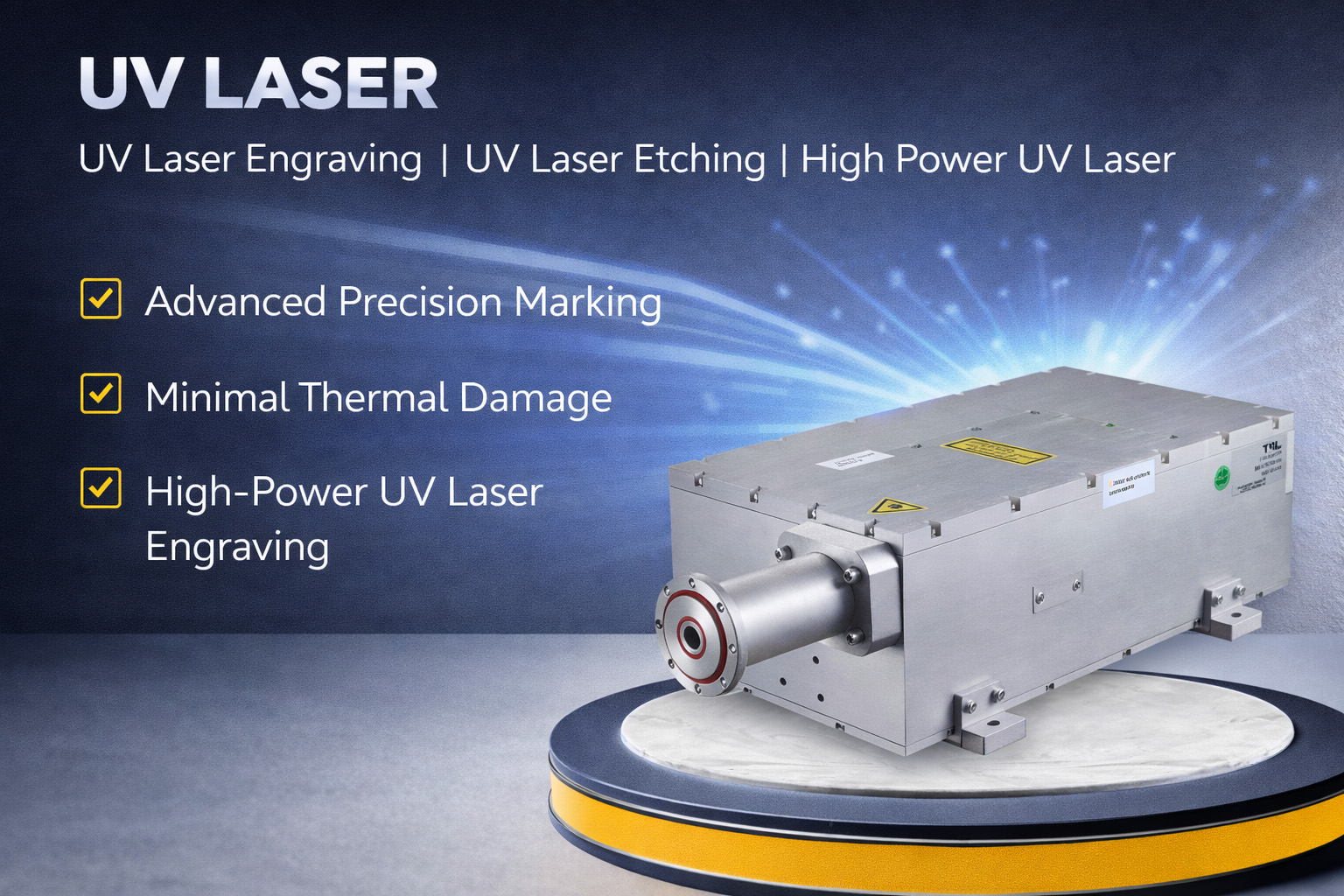
UV Laser Marking Machine
A UV laser marking machine uses shorter wavelength for cold processing.
Suitable for:
Glass
Plastic
Electronic components
Medical packaging
Sensitive materials
Advantages:
Minimal heat effect
Ultra-fine marking
High contrast on delicate materials
For precision industries, UV systems provide superior results where thermal damage must be avoided.
How to Choose Laser Power
Power selection affects speed, marking depth, and production capacity.
Common Fiber Laser Power Options
20W laser marking machine
30W laser marking machine
50W laser marking machine
100W laser marking machine
Which Power Is Right?
20W Fiber Laser
Suitable for:
Basic logo marking
Serial numbers
Fine text
30W Fiber Laser
Suitable for:
Faster production
Better metal contrast
Standard industrial use
50W Fiber Laser
Suitable for:
Deep engraving
Higher speed production
Thick metal marking
100W Fiber Laser
Suitable for:
Deep engraving
Mold engraving
Heavy industrial applications
For most export customers, 30W and 50W are currently the most popular choices.
Important Components to Evaluate Before Buying
A professional laser marking machine depends heavily on component quality.
Laser Source
High-quality laser source determines:
Lifetime
Beam stability
Marking consistency
Common source brands in the market include:
IPG Photonics
Raycus
JPT
Different source brands influence both price and performance.
Galvo Scanner
The galvo system controls marking speed and precision.
A stable galvo scanner ensures:
Sharp edges
Fast response
Repeat accuracy
For industrial use, scanner quality directly affects production efficiency.
Control System
A reliable control board and software determine machine usability.
For export markets, many buyers prefer systems compatible with:
Vector graphics
Barcode generation
QR coding
Multi-language interface
A stable control system also improves automation compatibility.
Field Lens Selection
Different field lenses determine working area.
Common options:
110×110 mm
150×150 mm
175×175 mm
300×300 mm
Smaller field:
Higher precision
Larger field:
Larger marking area
Buyers should match lens size with product dimensions.
Choosing Between Desktop and Portable Laser Marking Machines
Desktop Laser Marking Machine
Best for:
Factory production
Stable workbench operation
Batch processing
Advantages:
Better stability
Easier fixture installation
Portable Laser Marking Machine
Best for:
Large products
Flexible marking
On-site marking
Advantages:
Compact size
Easy movement
Portable systems are increasingly popular in overseas markets.
Automation Compatibility Matters
Modern factories increasingly require automated marking.
A good laser marking machine should support:
Conveyor integration
Rotary axis
Vision positioning
Automatic focus
PLC communication
Automation-ready systems improve long-term investment value.
Software Functions Buyers Often Ignore
Software quality strongly influences user experience.
Important software functions include:
Layer management
DXF / AI / PLT support
Variable data marking
QR code generation
Serial number automation
Good software reduces training time and improves production flexibility.
Cooling Method: Air Cooling vs Water Cooling
Most fiber laser marking machine systems use air cooling.
Advantages:
Simple maintenance
No water circulation
Lower failure rate
UV and high-power systems may require water cooling.
Global Buyers Often Focus Too Much on Price
A low-price laser marking machine may reduce initial investment, but poor component quality often causes:
Unstable output
Short laser lifetime
Weak marking consistency
Poor after-sales support
Professional buyers should evaluate:
Source quality
Scanner stability
Control system
Mechanical structure
Technical support
Long-term reliability matters more than lowest price.
Industries Using Laser Marking Machines Today
A modern laser marking machine serves many industries:
Automotive Industry
Marking:
VIN codes
Part numbers
Safety labels
Electronics Industry
Marking:
PCB codes
Connector identification
Medical Industry
Marking:
Surgical tools
Stainless components
Jewelry Industry
Marking:
Logos
Fine engraving
Hardware Industry
Marking:
Tools
Bearings
Fasteners
This wide application range explains why global demand for laser marking equipment continues to grow.
Future Trend: Smart Laser Marking Systems
Future buyers increasingly look for:
Vision-guided marking
AI parameter adjustment
MES connection
Smart production traceability
A modern supplier should offer upgrade capability.
Final Buying Advice
Before buying a laser marking machine, international buyers should clearly define:
Material type
Production volume
Required marking depth
Automation demand
Budget range
The right fiber laser marking machine improves productivity, reduces operating cost, and increases product competitiveness.
Choosing a reliable supplier with strong technical support is equally important for long-term operation.
JCZ Invites You to Photonics 2026 in Moscow
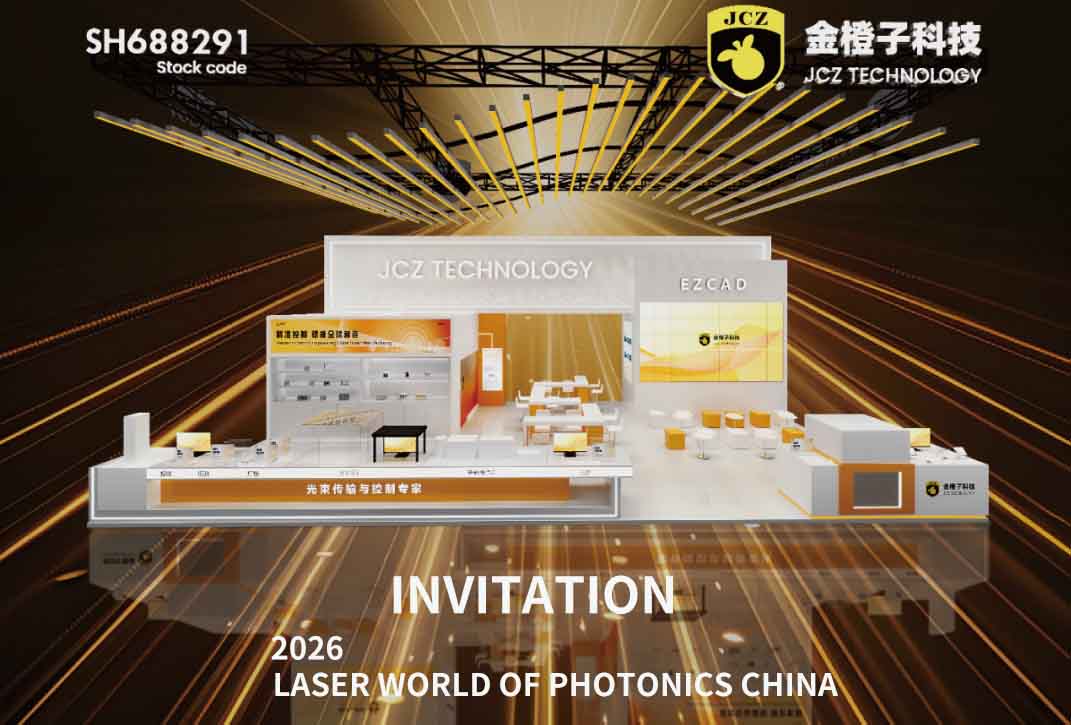
Invitation | JCZ Technology Invites You to LASER World of PHOTONICS CHINA 2026
Laser Marking Machine Buying Guide for Industrial Buyers
Laser Cleaning Machine Troubleshooting Guide
UV Laser: High-Precision Solution for Industrial Micro Marking
Mini Laser Marking Machine: Compact Solution for High-Precision Metal Marking