| Configurations | |||||
| Model | QP – 20 | QP – 30 | |||
| Working Field | 400 X 400 mm | 600 x 600 mm | 800 x 800 mm | 600 x 600 mm | 800 x 800 mm |
| Spot Size | 34 um | 52 um | – | 364 um | 487 um |
| Working Distance | 502 mm | 777 mm | – | 777 mm | 1051 mm |
| Resolution | 6um | 9 um | 12 um | 6 um | 9 um |
| Wavelength | 1064 nm | 10600 nm | |||
| Max Power | 400 w | 1000 w | |||
| Power Supply | ± 15 V/10 A | ||||
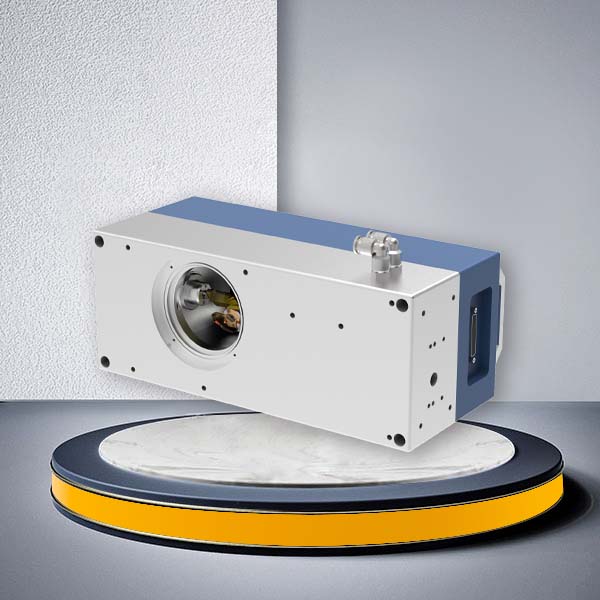
3D Dynamic Focus Galvo Scanner for Large-Format Laser Processing
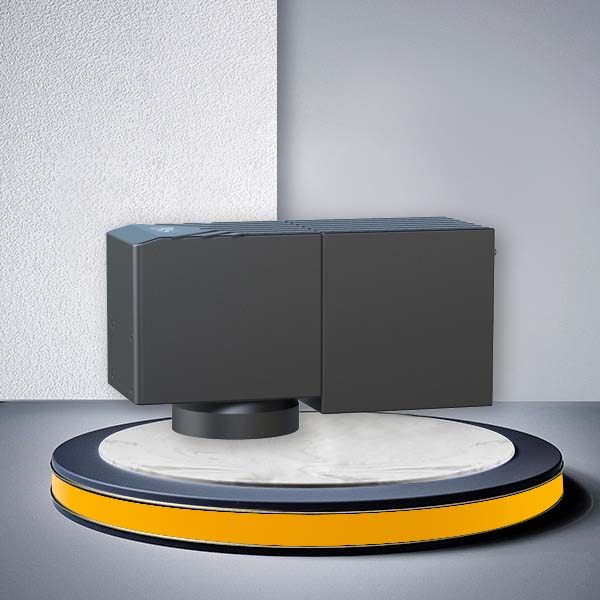
The JCZ DTJJ Series is a pre-focus 3D dynamic focus galvo scanner designed for large-area laser marking, engraving and cutting. By combining X/Y beam scanning with dynamic focal-position control, DTJJ can be evaluated for both large flat processing fields and workpieces with changing surface height.
DTJJ is available in published 1064 nm and 10.6 μm configurations. Selection should be based on the required working field, laser source, spot requirement, working distance and part geometry rather than field size alone.
Is DTJJ the Right Dynamic Focus Scanner for Your Application?
DTJJ is particularly relevant when a conventional 2D galvo and fixed F-theta field cannot provide the required processing area or when dynamic focus adjustment is required.
| Requirement | Recommended Direction |
|---|---|
| Standard flat marking in a small or medium field | 2D galvo may be sufficient |
| Curved surface with moderate Z variation | Compare G3-3D / GO3D-T |
| Large-area marking or engraving | DTJJ should be evaluated |
| Large field with dynamic focus correction | DTJJ pre-focus architecture |
| 1064 nm large-area laser processing | QP-20 direction |
| 10.6 μm CO2 large-area processing | QP-30 direction |
DTJJ QP-20 & QP-30 Published Configurations
QP-20 — 1064 nm
| Working Field | Spot Size | Working Distance | Resolution |
|---|---|---|---|
| 400 × 400 mm | 34 μm | 502 mm | 6 μm |
| 600 × 600 mm | 52 μm | 777 mm | 9 μm |
| 800 × 800 mm | Contact JCZ | Contact JCZ | 12 μm |
Published maximum power: 400 W.
QP-30 — 10.6 μm
| Working Field | Spot Size | Working Distance | Resolution |
|---|---|---|---|
| 600 × 600 mm | 364 μm | 777 mm | 6 μm |
| 800 × 800 mm | 487 μm | 1051 mm | 9 μm |
Published maximum power: 1000 W.
Power supply for the published DTJJ configurations is ±15 V / 10 A.
For working fields outside the published table, confirm the optical configuration, achievable spot size and working distance before specifying the scanner.
How Working Field, Spot Size and Working Distance Change Together
A large marking field should not be selected by dimensions alone.
For the published QP-20 configurations, increasing the field from 400 × 400 mm to 600 × 600 mm changes the specified spot size from 34 μm to 52 μm and the working distance from 502 mm to 777 mm.
For QP-30, the published 600 × 600 mm and 800 × 800 mm configurations use different spot sizes and working distances.
This matters because each parameter affects the machine design:
- Working field determines how much area can be processed without moving the part.
- Spot size influences achievable feature detail and energy density.
- Working distance affects machine clearance, fixture height and optical layout.
- Laser wavelength and power determine the required optical configuration.
For applications requiring both a very large field and fine features, provide the required feature size or process result instead of specifying only the largest possible field.
Why Use a Pre-Focus 3D Galvo Scanner for Large Fields?
In a pre-focus architecture, dynamic focusing occurs before the X/Y scanning mirrors. The focus position is adjusted as the beam moves across the processing field.
This architecture is commonly used when large-area processing, flat-field correction or changing focal distance cannot be handled efficiently by a conventional fixed-focus 2D configuration.
The practical advantage is not simply “3D capability.” Pre-focus dynamic focusing allows the optical system to be designed around a larger processing field while controlling the focal position across the work area.
For curved or height-varying parts, the Z-focus function can also follow changes in surface geometry when supported by the complete scanner, controller, calibration and software configuration.

DTJJ vs G3-3D vs GO3D-T
JCZ provides several 3D galvo architectures. Select them according to the actual processing problem.
| Requirement | DTJJ | G3-3D | GO3D-T |
|---|---|---|---|
| Main positioning | Large-field dynamic focus | Curved-surface post-focus processing | General industrial 3D dynamic focusing |
| Pre-focus architecture | Yes | No — post-focus | Confirm by project |
| Published wavelengths | 1064 nm / 10.6 μm | 1064 / 532 / 355 nm | 1064 / 532 / 355 nm / 10.6 μm |
| Standard large fields | Strong fit | More limited | More limited |
| Replaceable F-theta based design | Not the main DTJJ architecture | Yes | Configuration dependent |
| Multiple scanner apertures published | Not currently published | 10 mm scanner input | 10 / 12 / 14 mm |
| Best starting point | Large-area systems | Curved parts and Z-height variation | Higher-speed / flexible 3D integration |
Select DTJJ by Laser Application
Large-Area Laser Marking
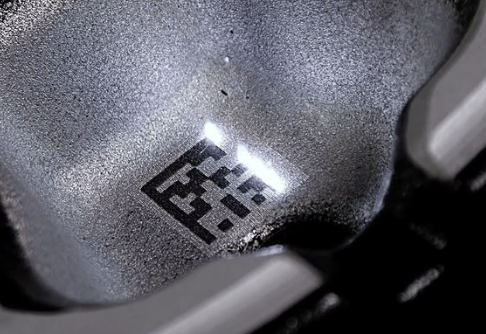
DTJJ can reduce the need to divide a large component into multiple small scan fields. When evaluating a large marking field, also confirm required feature size, edge accuracy and working distance.
Large-Format Laser Engraving
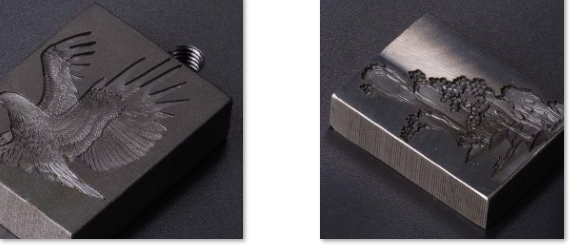
Engraving projects should be specified by field size, target detail, material-removal requirement and laser source. A larger field is useful for large panels or components, but the spot requirement still determines whether the selected optical configuration is appropriate.
3D and Curved-Surface Processing
Dynamic Z-focus allows the focal position to change with the processing path. For strongly curved or stepped workpieces, provide a 3D model or drawing showing the maximum height variation.
Laser Cutting
For cutting applications, field size alone is not sufficient. Provide material, thickness, laser type, power and required cut quality so optical power handling and focal requirements can be evaluated.
3D Control and System Integration
A 3D dynamic focus galvo scanner must operate as part of a complete laser-control architecture.
JCZ also provides EZCAD3 software and DLC-series controllers. EZCAD3 supports 3D processing, dynamic focus, 3D calibration and large-format processing functions.
Final DTJJ integration should confirm:
- laser source and wavelength;
- controller configuration;
- scanner/control protocol;
- dynamic-focus control;
- calibration method;
- processing field;
- input beam conditions;
- required automation or motion axes.
Do not assume that a compatible laser wavelength alone guarantees system compatibility.
FAQ
Is DTJJ a standard 2D galvo scanner?
No. DTJJ is a pre-focus 3D dynamic focusing galvo head intended primarily for large-field and dynamic-focus laser processing.
Which wavelengths are currently published for DTJJ?
The current JCZ specification lists 1064 nm for QP-20 and 10.6 μm / 10600 nm for QP-30.
Which working fields are published?
The current specification table lists 400 × 400, 600 × 600 and 800 × 800 mm options depending on the configuration. Larger project requirements should be confirmed separately.
Why does spot size increase with the working field?
Changing the working field changes the optical geometry. Spot size therefore needs to be evaluated together with focal configuration, beam characteristics and working distance rather than treated as a fixed scanner value.
Should I choose DTJJ or G3-3D for curved parts?
Use the actual field and Z-height requirement to decide. G3-3D is JCZ’s post-focus solution for curved-surface processing, while DTJJ is positioned around pre-focus and larger working fields.
Can DTJJ be used with EZCAD3?
EZCAD3 is JCZ’s current platform for 3D processing, dynamic focus, large-format processing and 3D calibration. The exact controller and DTJJ configuration should be confirmed for the project.
Ready to Scale Your Laser Processing?
Upgrade to a 3D Dynamic Focus Galvo Scanner — engineered for large fields, curved surfaces, and high-power industrial applications. Get the right configuration for your wavelength, field size, and throughput.Contact JCZ for a Custom Quote