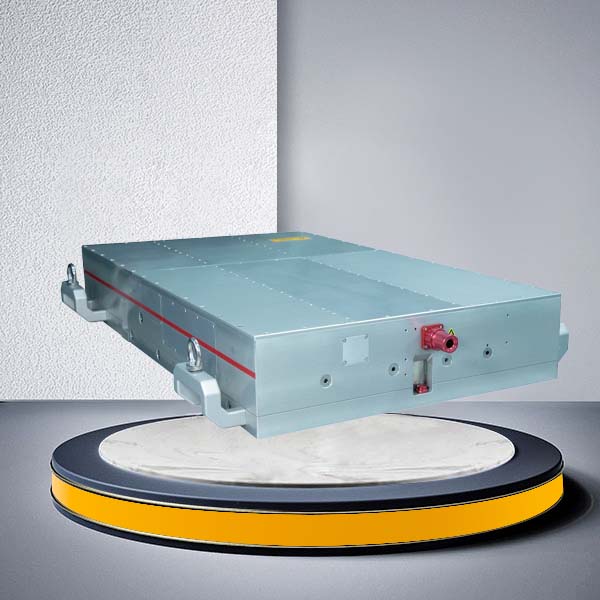
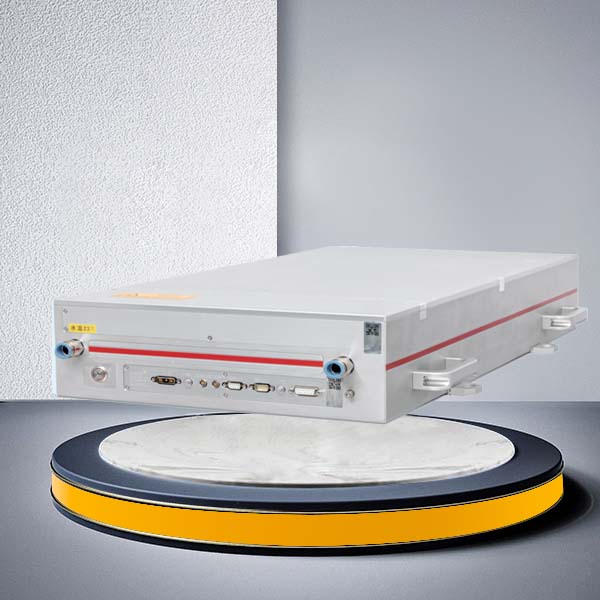
Picosecond Laser Specifications
| Product Model | IR Picosecond-1064-15 | IR Picosecond-1064-30 | IR Picosecond-1064-50 |
| Center Wavelength | 1064±0.5 nm | ||
| Power | 15 W@100 kHz | 30 W@100 kHz | 50 W@100 kHz 50 W@50 kHz |
| Repetition Rate | 1 HZ~1 MHZ | ||
| Pulse Energy | 150 μJ | 300 μJ | 500 μJ@Burst 1 1.0 mJ@Burst 2 |
| Power Stability | <1% (8 hours, RMS) | ||
| Pulse Duration | ~10 ps | ||
| Beam Quality | TEMoo, M²≤1.2 | TEMoo, M²≤1.3 | |
| Beam Circularity | >90% | ||
| Beam Diameter | ~2 mm | ~3 mm | |
| Burst Mode | 1~5 | ||
| Dimensions | 600*288*132.5 mm³ | 800*332*132.5 mm³ | |
| Trigger Mode | PSO, POD, Gate mode, and TTL trigger | ||
| External Power Control | 0~5 V | ||
| Warm-up Time | 15 min | ||
| Electrical Requirements | AC 100~240 V/50~60 Hz | ||
| Environment Humidity | <60% RH@25℃ | ||
| Environment Temperature | 22-30 °C | ||
| Cooling | Water cooling | ||
IR Picosecond Laser Specifications
| Product Model | IR Picosecond Laser-1064-80 | IR Picosecond Laser-1064-200 | IR Picosecond Laser-1064-500 |
| Center Wavelength | 1064±0.5 nm | ||
| Power | 80 W@Burst 5@20 kHz | 200 W@1 MHz | 500 W@3 MHz |
| Repetition Rate | 1 Hz~2 MHz | 1 Hz-6 MHz | |
| Pulse Energy | 4 mJ@Burst 5@20 kHz | 200 μJ | 150 μJ |
| Power Stability | <1%(8 hours, RMS) | ||
| Pulse Duration | -15 ps | -10 ps | -10 ps |
| Beam Quality | TEMoo, M²≤1.3 | ||
| Beam Circularity | >90% | ||
| Beam Diameter | -3 mm | ||
| Burst Mode | 5~6 | ||
| Dimensions | 800*364*140 mm³ | 800*420*139.5 mm³ | 980*560*153 mm³ |
| Trigger Mode | PSO、POD、Gate mode,and TTL trigger | ||
| External Power Control | 0-5 V | ||
| Warm-up Time | 15 min | ||
| Electrical Requirements | AC 100-240 V/50-60 Hz | ||
| Environment Humidity | <60% RH@25°C | ||
| nvironmentTemperature | 22-30℃ | ||
| Cooling | Water cooling | ||
Green Picosecond Laser Specifications
| Product Model | Green Picosecond Laser-532-6 | Green Picosecond Laser-532-30 | Green Picosecond Laser-532-90 | Green Picosecond Laser-532-200 |
| Center Wavelength | 532±0.5 nm | |||
| Power | 6 W@100 kHz | 30 W@100 kHz | 90 W@300 kHz | 200 W@1 MHz |
| Repetition Rate | 1 Hz-1 MHz | 1 Hz-2 MHz | ||
| Pulse Energy | 60 μJ | 300 μJ | 300 μJ | 200 μJ |
| Power Stability | <1%(8 hours, RMS) | |||
| Pulse Duration | -7ps | <15ps | ||
| Beam Quality | TEMoo, M²≤1.1 | TEMoo, M²≤1.2 | TEMoo, M²≤1.3 | |
| Beam Circularity | >90% | |||
| Beam Diameter | ~1.5mm | ~2mm | ||
| Burst Mode | 1-5 | |||
| Dimensions | 600*288*132.5 mm³ | 800*364*140 mm³ | 800*420*139.5 mm³ | 980*560*153 mm³ |
| Trigger Mode | PSO、POD、Gate mode,and TTL trigger | |||
| External Power Control | 0-5 V | |||
| Warm-up Time | 15 min | |||
| Electrical Requirements | AC 100-240 V/50-60 Hz | |||
| Environment Humidity | <60% RH@25°C | |||
| nvironmentTemperature | 22-30℃ | |||
| Cooling | Water cooling | |||
UV Picosecond Laser Specifications
| Product Model | UV Picosecond Laser-355-5 | UV Picosecond Laser–355-20 | UV Picosecond Laser–355-30 | UV Picosecond Laser–355-60 | UV Picosecond Laser–355-100 |
| Center Wavelength | 355士0.5 nm | ||||
| Power | 5 W@300 kHz | 20 W@1 MHz | 30 W@1 MHz | 60 W@1 MHz | 100 W @3 MHz |
| Repetition Rate | 1 Hz~2 MHz | 1 Hz~6 MHz | |||
| Pulse Energy | 15 μJ | 60-100 μJ | 30 uJ | ||
| Power Stability | <1%(8 hours, RMS) | ||||
| Pulse Duration | ~7 ps | ||||
| Beam Quality | TEMoo, M²≤1.2 | TEMoo, M²≤1.3 | |||
| Beam Circularity | >90% | ||||
| Beam Diameter | ~2mm | ~3mm | |||
| Dimensions | 600*288*132.5 mm³ | 800*332*132.5 mm³ | 800*364*140 mm³ | 980*560*153 mm³ | |
| Trigger Mode | PSO、POD、Gate mode,and TTL trigger | ||||
| External Power Control | 0-5 V | ||||
| Warm-up Time | 15 min | ||||
| Electrical Requirements | AC 100-240 V/50-60 Hz | ||||
| Environment Humidity | <60% RH@25°C | ||||
| nvironmentTemperature | 22-30℃ | ||||
| Cooling | Water cooling | ||||
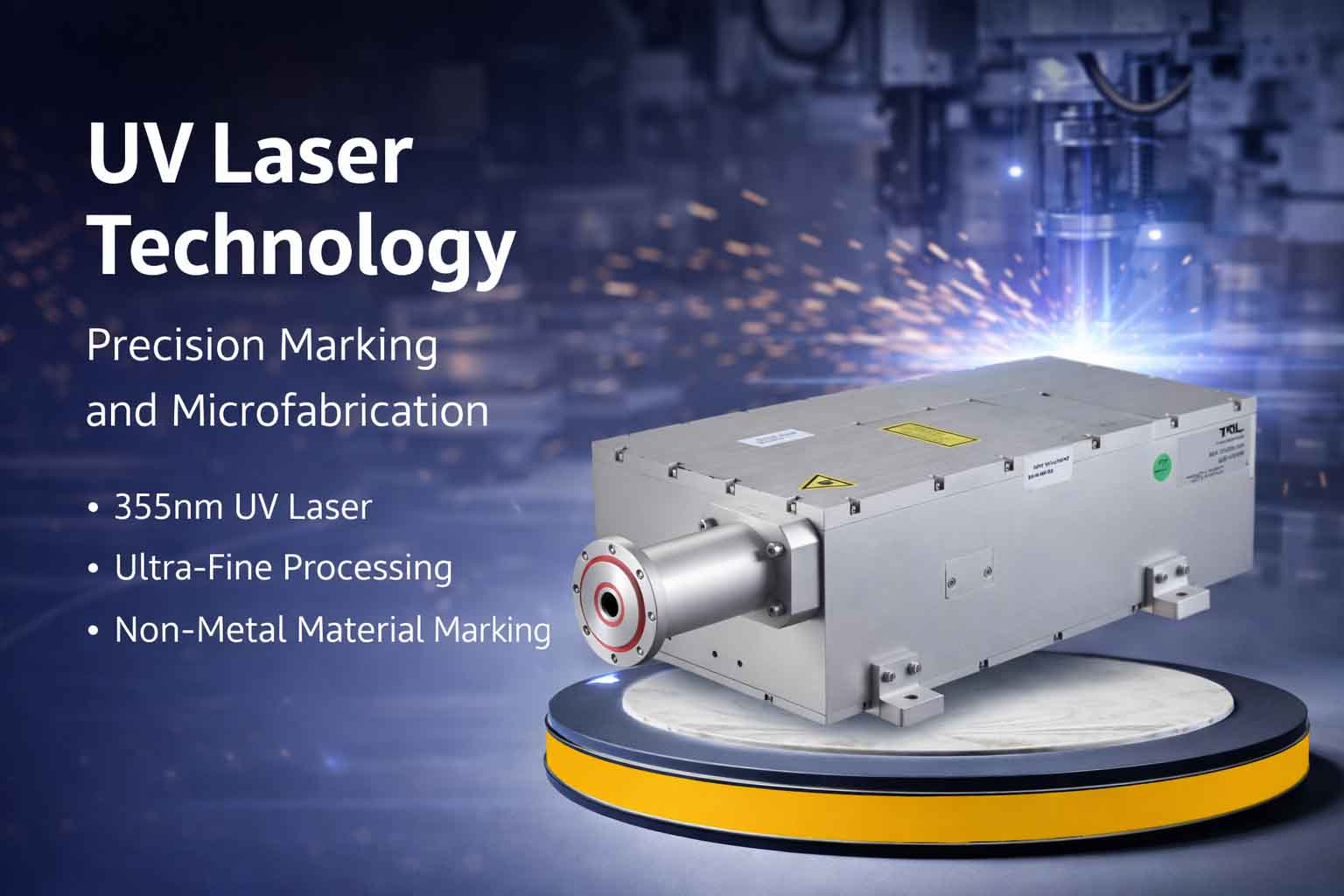
The high-power picosecond laser adopts a hybrid amplification technology combining fiber and solid-state lasers. The product series includes 500 W IR picosecond lasers, 200 W green picosecond lasers, and 100 W UV picosecond lasers. The system features an integrated design of optics, mechanics, and electronic control, offering a simple and compact structure.
The laser achieves an adjustable repetition frequency from 1 Hz to 6 MHz, with high single-pulse energy (>1 mJ) and pulse train energy (>4 mJ) output. This allows users to easily adjust the laser’s operating frequency, output power, or pulse energy.Know Technical Specifications
The product is controlled via a host computer software, providing intuitive and user-friendly operation. Designed for industrial use, it has been tested under 7×24 hours of industrial field conditions.
Industrial Applications & Case Studies
Our industrial picosecond laser manufacturer solutions are trusted globally for critical tasks:
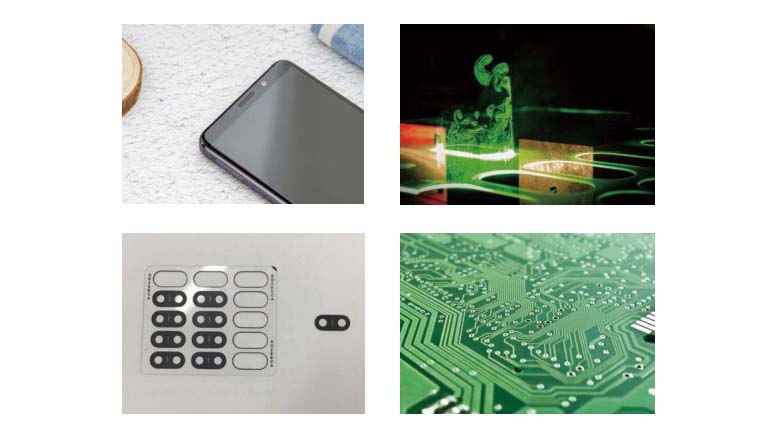
- Consumer Electronics: Cutting of mobile phone screens and drilling of speaker meshes.
- Automotive: Fuel injector nozzle drilling and sensor marking.
- Medical: Medical stent cutting without post-processing requirements.
- Photovoltaics: Edge isolation and scribing for high-efficiency solar panels.
When to Choose High‑Power Picosecond Lasers?
IR (1064 nm) Picosecond Lasers – Applications and Selection
Typical tasks include glass and sapphire cutting/dicing, ceramic drilling/milling, metal foil cutting, battery foil processing, thick‑film and thin‑film ablation, as well as micro‑hole drilling in engineering ceramics. The 1064 nm output provides strong absorption in many metals and oxides while still enabling precise micromachining due to the ultrashort pulse duration.
Choose the IR models when
- You process metals, alloys, glasses, or ceramics where higher pulse energy is beneficial.
- Your process requires micro‑hole drilling or micro‑cutting with high aspect ratios.
- You need higher average power (up to 500 W) to increase throughput or to enable large‑area structuring.
Green (532 nm) Picosecond Lasers – Applications and Selection
The 532 nm output is particularly effective on materials that are highly reflective or transmissive at 1064 nm. Common applications include thin‑film cutting and patterning on semiconductor wafers, FPC and flexible circuits, SiP and module depaneling, high‑contrast marking on ceramics and coated metals, and precision micro‑drilling in glass and composite stacks.
Choose the green models when
- You need finer feature sizes and improved edge quality on copper, Au/Ti films, or semiconductor layers.
- Your application involves transparent/reflective films where 532 nm provides better absorption.
- You process micro‑electronics, optical components, or sensor packages that demand minimal thermal influence.
UV (355 nm) Picosecond Lasers – Applications and Selection
At 355 nm, the UV picosecond laser excels in high‑resolution tasks on polymers, glasses, and ceramics. It is widely adopted for micro‑marking (2D codes, logos, UID), PVD/ink layer removal, wafer scribing and dicing, and surface micro‑structuring for optical or biomedical devices. The shorter wavelength yields smaller focused spots and higher resolution.
Choose the UV models when
- You must avoid chipping or micro‑cracks on glass, sapphire, or silicon carbide.
- You need sub‑10‑ps pulses to limit HAZ on temperature‑sensitive layers.
- Your workflow involves clean scribing, ultra‑fine engraving, or high‑contrast coding on medical or optical parts.
Request a Sample Test or Technical Consultation
Investing in a picosecond laser system is a critical decision. We invite you to verify the results on your specific material.
- Free Sample Testing: Send us your material, and our lab will process it with our IR, Green, or UV laser source to show you the quality.
- OEM Integration: Discuss your machine building requirements with our engineers.
Product Pictures
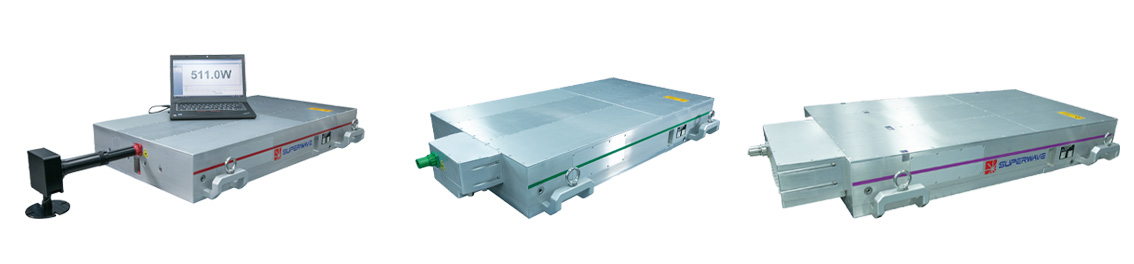
IR picosecond lasers Green picosecond lasers UV picosecond lasers
Product Applications