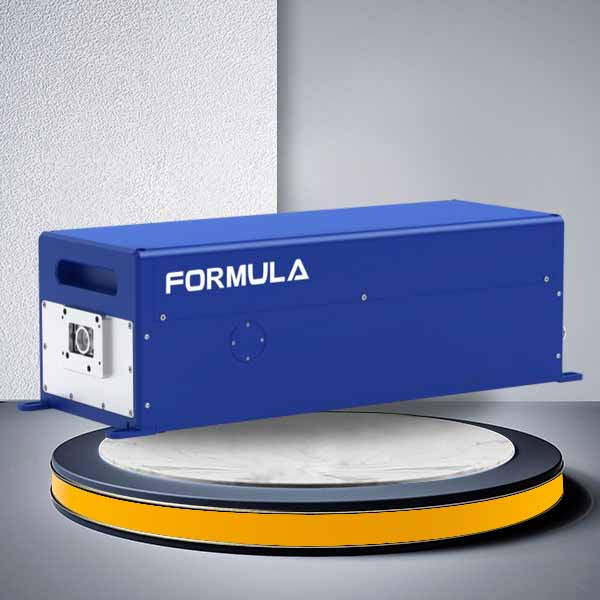
FORMULA Ultra (UV)
| Parameter | 30W-50K | 40W-60K | 50W-60K |
| Wavelength (nm) | 355 | ||
| Average Power (W) | >30W @50kHz | >40W @60kHz | >50W @60kHz |
| Pulse Energy (μJ) | >600 | >660 | >830 |
| Specified Frequency (kHz) | 50 | 60 | |
| Repetition Rate Range (kHz) | 50–300 | ||
| Beam Quality (M²) | <1.2 | ||
| Operating Temperature (°C) | 5–40°C | ||
| Average Power Consumption (W) | <310 | <350 | <410 |
| Power Supply Requirement (VDC/W) | 24V / 600W | 24V / 1000W | |
| Weight (kg) | 21 | ||
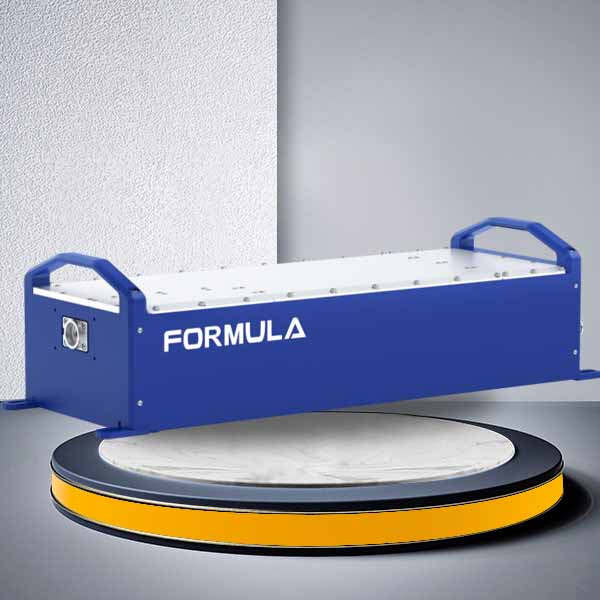
FORMULA Ultra (Green Light)
| Parameter | 60W-50K | 80W-60K |
| Wavelength (nm) | 532 | |
| Average Power (W) | >60W @50kHz | >80W @60kHz |
| Pulse Energy (mJ) | >1.2 | >1.4 |
| Specified Frequency (kHz) | 50 | 60 |
| Repetition Rate Range (kHz) | 50–300 | |
| Beam Quality (M²) | <1.2 | |
| Operating Temperature (°C) | 5–40°C | |
| Average Power Consumption (W) | <600 | |
| Power Supply Requirement (VDC/W) | 24V / 1000W | |
| Weight (kg) | 16 | |
The third-generation FORMULA high-power series laser has been deeply optimized and upgraded based on the original technology platform. While maintaining the industry-leading beam quality (M² <1.2), it further improves power performance at high repetition rates, enabling the laser to meet a wider range of application requirements and significantly enhance customer processing efficiency. The laser supports both TTL level signals and PWM modulation signals for output control. Users can adjust the laser power via the PWF parameter in the internal control software or by modifying the PWM duty cycle.
The FORMULA Ultra Series adopts AOC’s world-leading intra-cavity frequency conversion technology, delivering industry-leading frequency conversion efficiency. It is one of the most efficient solid-state UV lasers in its class. The power range covers 30W to 50W, with maximum output up to 55W, meeting the majority of customer demands for nanosecond UV laser power.
With an upgraded IP65 protection rating, the laser offers enhanced dustproof and waterproof performance, allowing reliable operation in extreme environments and effectively solving condensation issues caused by high temperature and high humidity conditions. The intelligent crystal switching system enables automatic adjustment of the crystal position, while the built-in gas cleaning and filtration system maintains the cleanliness of internal optical components, ensuring extended service life. Integrated power monitoring and one-button power optimization functions maintain long-term output stability.
Featuring a compact optoelectronic integrated design, superior beam quality, wide operating frequency range, flexible control modes, and comprehensive power coverage, the FORMULA Ultra Series is the ideal solution for precision micromachining, on-the-fly marking, FPC/PCB cutting, and other advanced industrial applications.
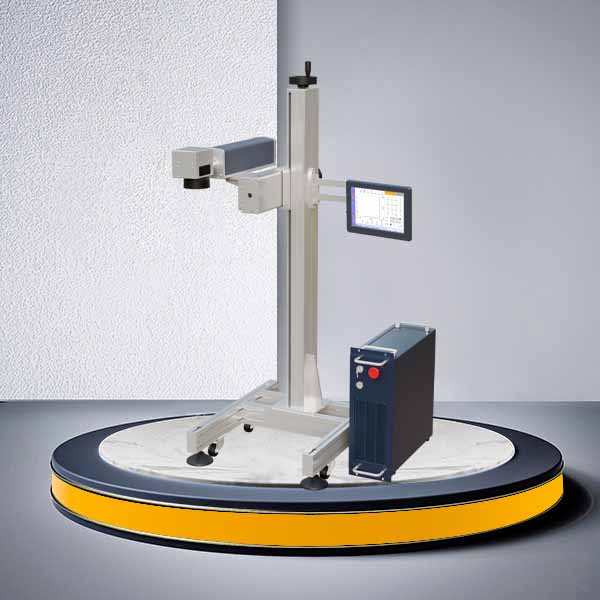
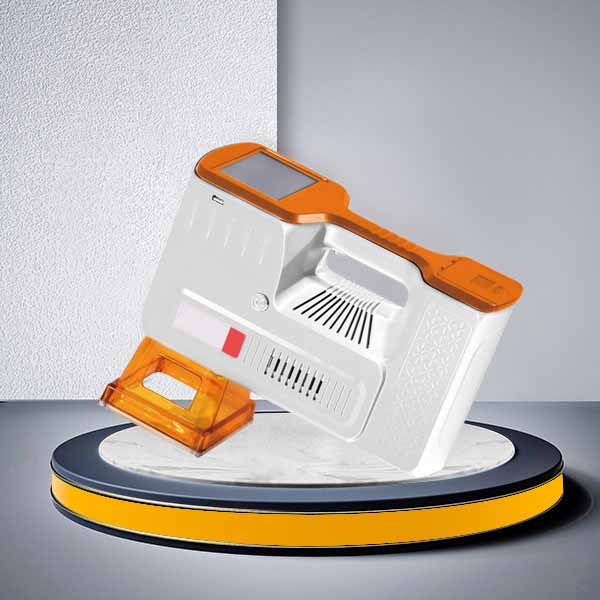
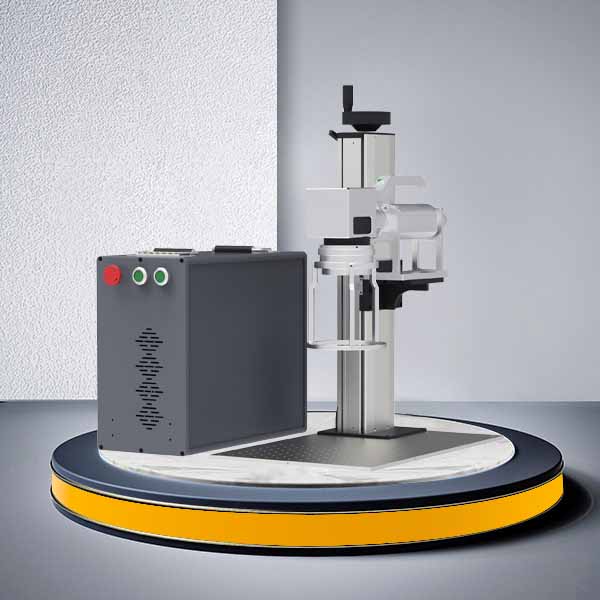
Product Pictures
Product Introduction
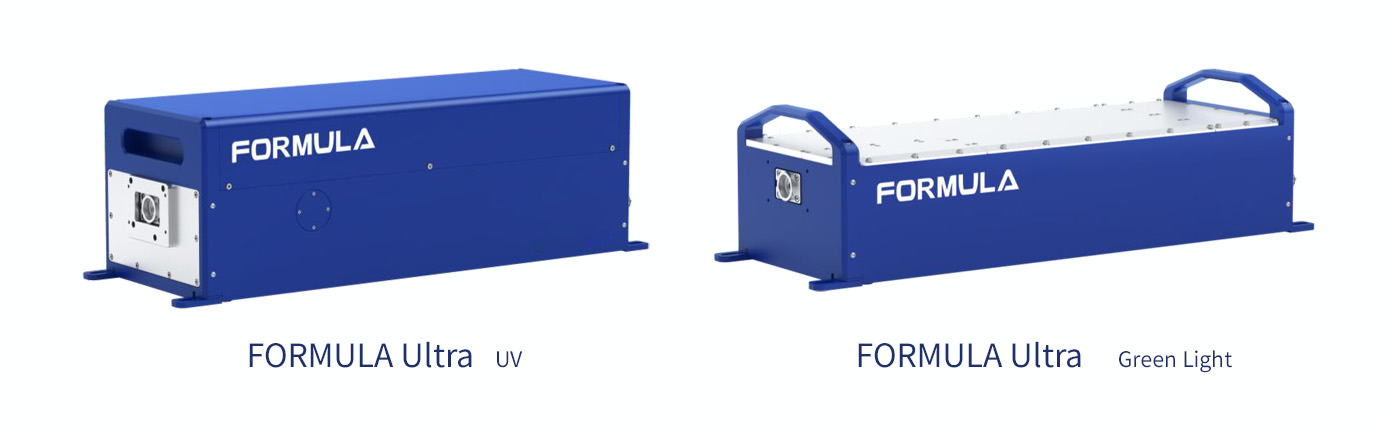
FORMULA Ultra is an industrial nanosecond Q-switched laser source developed for high-power precision processing and integration into automated laser equipment. The series is available in 355 nm ultraviolet configurations from 30W to 50W and 532 nm green configurations from 60W to 80W.
Designed for High-Power Precision Manufacturing
FORMULA Ultra is developed for manufacturing applications that require a combination of higher average power, fine beam quality and stable operation at industrial repetition rates.
The series can be evaluated for:
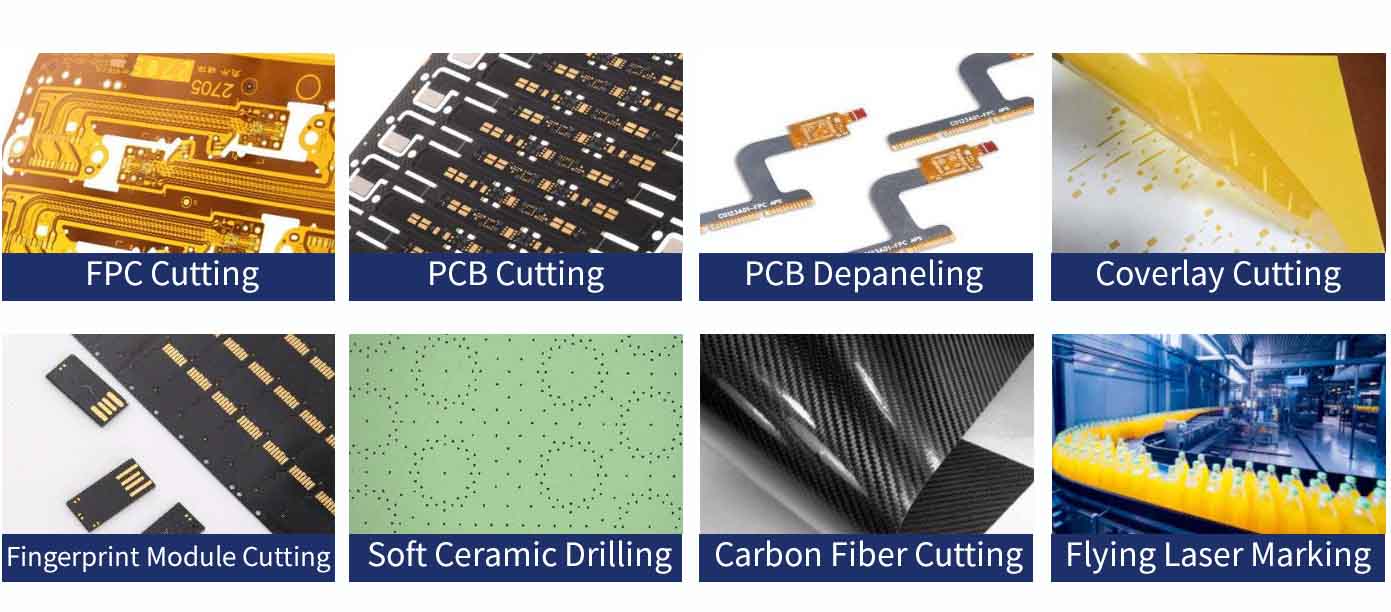
- PCB and FPC cutting or depaneling
- Ceramic drilling and precision material removal
- Carbon-fiber and composite-material processing
- Thin-film removal and selective layer processing
- Semiconductor and electronic-component processing
- High-speed product marking
- Precision micro-machining
- Automated production-line integration
- QR code, serial number and traceability marking
The final wavelength, power and optical configuration should be selected according to the material structure, processing method, acceptable heat-affected zone, required edge quality and production cycle.
Ultra UV Version – Long Life & Intelligent Recovery
The UV model integrates automatic crystal switching technology, allowing internal crystal position replacement to quickly restore output performance and reduce downtime.
Its CAS cavity gas self-cleaning system ensures optical component cleanliness, minimizing contamination risks and extending operational lifetime.
Built with IP65 industrial-grade protection, the laser resists dust, moisture, and extreme environmental conditions.
Ultra Green Version – High Power & Ultra Stability
The green laser version delivers ultra-high output power up to 90W+, ideal for advanced material processing and high-efficiency production lines.
The intelligent rear cavity mirror adjustment system continuously regulates crystal temperature and internal optical alignment through embedded algorithms, maintaining long-term stability with <2% power variation.
With IP65 sealing protection, the Ultra series is ready for demanding production environments.
FORMULA Ultra is widely used in PCB depaneling, ceramic drilling, carbon fiber cutting, semiconductor processing, and precision micro-machining.
355 nm UV or 532 nm Green: Which Version Should You Choose?
Wavelength selection should begin with the material and process rather than laser power alone.
Consider the 355 nm UV Version When:
- Fine feature size is a primary requirement
- The workpiece contains heat-sensitive organic layers
- Processing involves PI, FPC, PCB solder mask or selected polymers
- Low visible charring is important
- The application requires fine marking, cutting or selective surface removal
- A smaller focused spot is needed for detailed processing
Consider the 532 nm Green Version When:
- Higher average power and pulse energy are required
- Production efficiency is a major selection factor
- The material responds more effectively to 532 nm radiation
- The process involves copper-rich structures, ceramics or selected composites
- The application requires faster material removal
- The system needs to balance processing quality with higher throughput
These recommendations are not a substitute for sample testing. Material composition, thickness, coatings, adhesives and multilayer structures can significantly change the processing result.
Control, Galvo and Optical Components
The final control and optical configuration depends on the processing method. Compatibility must be verified according to the selected laser model, scanner protocol, control signals and production requirements.
High-Precision Laser & Galvo Control Software: Learn more about EZCAD3, supporting the latest 3D and multi-axis linkage functions.
Ethernet-Based Control Card: Learn more about the DLC2-V4 control card, supporting integrated laser, galvo, I/O, and motion bus control.
Digital Galvo Scanner Series: Learn more about the GO7 series 2D galvo scanners with available UV configurations.
Telecentric F-Theta Lens: Learn more about the 355 nm and 532 nm telecentric F-theta lenses.
Standard F-Theta Lens: Learn more about the standard 355 nm and 532 nm flat-field F-theta lenses.
The controller, scanner aperture, lens coating, focal length and scan field should be selected together. A larger scan field generally changes the focused spot size and energy density, so optical selection should be based on the required feature size and processing area.
Frequently Asked Questions
Q:Is FORMULA Ultra a complete laser machine?
No. It is an industrial nanosecond laser source intended for integration into marking, cutting, drilling or micromachining equipment.
Q:What power options are currently listed?
The UV series currently lists 30W, 40W and 50W configurations. The green series currently lists 60W and 80W configurations.
Q:Should we choose UV or green for PCB processing?
The decision depends on the board structure, copper content, organic layers, thickness, edge-quality requirements and production speed. Submit representative samples for comparative testing whenever possible.
Q:What is the repetition-rate range?
The published repetition-rate range is 50–300 kHz for both UV and green configurations.
Q:What is the beam quality?
The published beam quality is M² <1.2. Request additional beam-diameter, divergence, circularity and pointing-stability data for optical design.
Q:What is the pulse width?
The current public specification does not list model-specific pulse width. Request the pulse-width value and its variation across the operating frequency range before completing process evaluation.
Q:Does the laser include a power supply?
The specifications state a 24 VDC power-supply requirement, but the quotation should confirm whether the required power supply is included.
Q:What cooling system is required?
Cooling requirements must be confirmed for the selected model. Request the required cooling capacity, water temperature, flow rate, pressure, coolant specification and condensation-control guidance.
Q:Does IP65 apply to the complete laser machine?
No. The IP rating described on this page relates to the laser-source structure. The completed machine requires a separate environmental and safety evaluation.
Q:Can FORMULA Ultra operate continuously?
It is positioned for industrial use, but the required duty cycle, cooling conditions, warm-up period and long-term stability should be confirmed in the final technical documentation.
Request a Technical Evaluation
Send JCZ the following information:
- Material and layer structure
- Material thickness
- Required processing method
- Drawing or marking file
- Required feature size
- Quality acceptance criteria
- Target cycle time
- Planned control and optical configuration
- Expected annual quantity
The technical team can use this information to evaluate the suitable wavelength, power, optical configuration and system-integration requirements.

Application Cases
3D Printing
Electronics & Electrical Appliances
Medical Industry
Dental Applications
Aerospace, etc.
Packaging Industry
Paper Packaging
Glass Packaging
Plastic Packaging
Pharmaceutical Marking
Metal Packaging, etc.
3C Marking
Marking on Mobile Phone Back Covers
Charger Marking
PCB Marking
Cable Marking, etc.