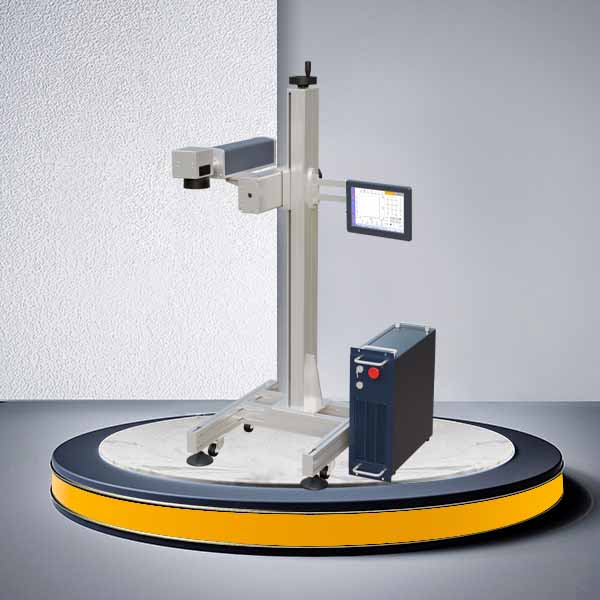


FF Series
| Model | FF-20 | FF-30 | FF-50 |
| Laser Generator | |||
| Laser Power(W) | 20W | 30W | 50W |
| Wavelength(nm) | 1064nm | 1064nm | 1064nm |
| Control System | |||
| Screen Size | 10.1 Inches | ||
| OS | Linux | ||
| Font | English, Korean, Russian, Arabic, etc. | ||
| Scanning System | |||
| Max. Scanning Speed(mm/s) | 15000mm/s | ||
| Max. Scanning Size (mm) | 90x90mm (Maximum 600*600mm optional) | ||
| Production Line Speed(m/min) | 0-189m/min (This data is determined by material and marking data) | ||
| Others | |||
| Power Supply | 110V/220V Optional | ||
| Weight | 24.8Kgs | ||
| IP Rating | IP54 (Head Section) | ||
| Cooling Method | Air Cooling | ||
| Working Temperature | 0-40℃ | ||
FU Series
| Model | FU-3 | FU-5 |
| Laser Generator | ||
| Laser Power(W) | 3W | 5W |
| Wavelength(nm) | 355nm | 355nm |
| Control System | ||
| Screen Size | 10.1 Inches | |
| OS | Linux | |
| Font | English, Korean, Russian, Arabic, etc. | |
| Scanning System | ||
| Max. Scanning Speed(mm/s) | 15000mm/s | |
| Max. Scanning Size (mm) | 90x90mm (Maximum 600*600mm optional) | |
| Production Line Speed(m/min) | 0-189m/min (This data is determined by material and marking data) | |
| Others | ||
| Power Supply | 110V/220V Optional | |
| Weight | 24.8Kgs | |
| IP Rating | IP54 (Head Section) | |
| Cooling Method | Air Cooling | |
| Working Temperature | 0-40℃ | |
FC Series
| Model | FC-40-10.6 | FC-40-10.2 | FC-40-9.3 | FC-60-10.6 |
| Laser Generator | ||||
| Laser Power(W) | 40W | 40W | 40W | 60W |
| Wavelength(nm) | 10.6um | 10.2um | 9.3um | 10.6um |
| Control System | ||||
| Screen Size | 10.1 Inches | |||
| OS | Linux | |||
| Font | English, Korean, Russian, Arabic, etc. | |||
| Scanning System | ||||
| Max. Scanning Speed(mm/s) | 15000mm/s | |||
| Max. Scanning Size (mm) | 90x90mm (Maximum 600*600mm optional) | |||
| Production Line Speed(m/min) | 0-189m/min (This data is determined by material and marking data) | |||
| Others | ||||
| Power Supply | 110V/220V Optional | |||
| Weight | 28Kgs | |||
| IP Rating | IP54 (Head Section) | |||
| Cooling Method | Air Cooling | |||
| Working Temperature | 0-40℃ | |||
Product Pictures

Product Introduction
Flying Laser Marking Machine for Automated Production Lines
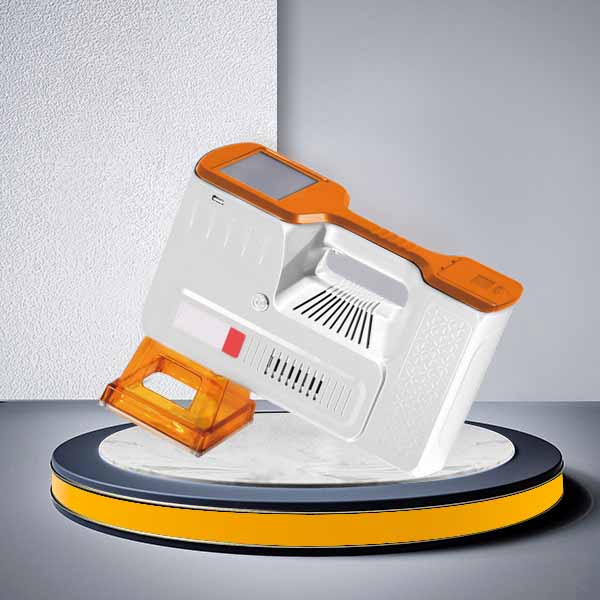
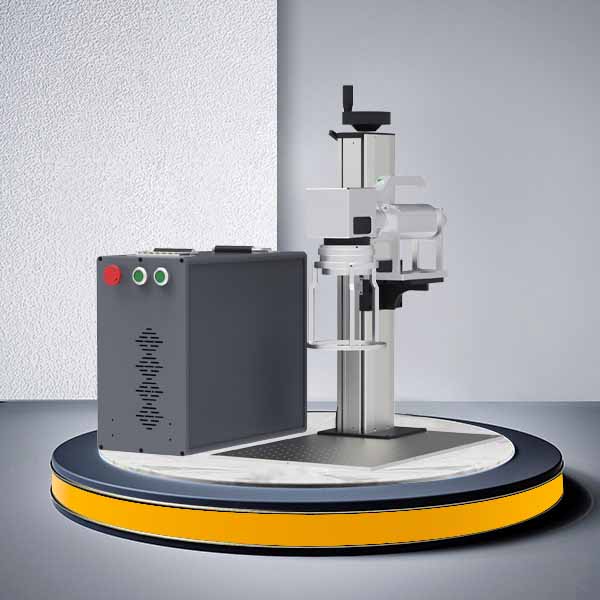
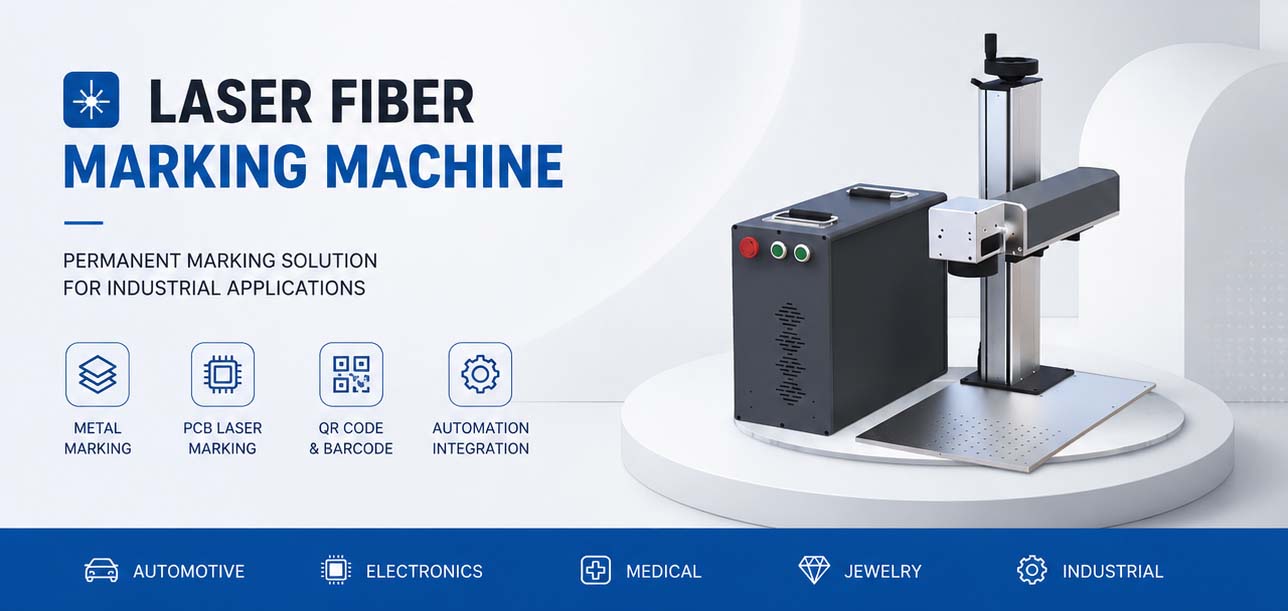
JCZ supplies high-speed flying laser marking machines for continuous, non-stop production lines. The FF, FC and FU series offer Fiber, CO₂ and UV laser configurations for marking metals, plastics, glass and packaging materials without stopping the conveyor. With laser power options, marking fields up to 600 × 600 mm, and production-line integration options, our systems support product identification, date coding, QR codes, batch numbers and industrial traceability. We provide configuration support for laser source selection, marking field, product detection, encoder connection and machine installation according to your production requirements.
FF, FC and FU Flying Laser Marking Machine Series
JCZ offers three flying laser marking machine series to accommodate different material characteristics and production requirements. Select the laser type according to your workpiece material, surface condition, marking content and required marking result.
| Series | Laser Type | Standard Models | Wavelength | Main Application |
|---|---|---|---|---|
| FF Series | Fiber Laser | FF-20 / FF-30 / FF-50 | 1064nm | Metal marking, hardware identification and electronic component traceability |
| FC Series | CO₂ Laser | FC-40-10.6 / FC-40-10.2 / FC-40-9.3 / FC-60-10.6 | 10.6μm / 10.2μm / 9.3μm | Packaging, paper, labels, selected plastics and non-metal marking |
| FU Series | UV Laser | FU-3 / FU-5 | 355nm | Fine marking on glass, sensitive plastics and electronic components |

FF Series – Flying Fiber Laser Marking Machine
The FF Series uses a 1064nm fiber laser source for online marking of metal components and compatible coated materials. It is suitable for production lines requiring permanent product identification and traceability information.
Available standard power configurations:
| Model | Laser Power | Wavelength |
|---|---|---|
| FF-20 | 20W | 1064nm |
| FF-30 | 30W | 1064nm |
| FF-50 | 50W | 1064nm |
Typical marking applications include:
- Stainless steel and aluminum component identification
- Metal hardware serial numbers
- QR codes and Data Matrix codes
- Electronic component traceability
- Product model numbers and batch identification
- Marking on selected coated and anodized metal surfaces
For projects requiring different output power or marking performance, additional fiber laser configurations can be evaluated according to material and production requirements.
FC Series – Flying CO₂ Laser Marking Machine
The FC Series is designed for online coding and marking of suitable non-metallic materials. Its CO₂ laser configurations support continuous product identification on packaging and manufacturing lines.
Available standard models:
| Model | Laser Power | Wavelength |
|---|---|---|
| FC-40-10.6 | 40W | 10.6μm |
| FC-40-10.2 | 40W | 10.2μm |
| FC-40-9.3 | 40W | 9.3μm |
| FC-60-10.6 | 60W | 10.6μm |
Typical applications include:
- Paper and cardboard packaging
- Cartons and product labels
- Packaging films
- Selected plastic containers and components
- Product manufacturing dates
- Batch numbers and production codes
- Packaging identification and traceability
Different CO₂ wavelengths can be considered according to the material and marking response. For projects involving packaging films or specific plastic materials, sample marking is recommended before finalizing the configuration.
FU Series – Flying UV Laser Marking Machine
The FU Series uses a 355nm UV laser source for applications requiring fine marking on selected heat-sensitive or precision materials.
Available standard models:
| Model | Laser Power | Wavelength |
|---|---|---|
| FU-3 | 3W | 355nm |
| FU-5 | 5W | 355nm |
Typical applications include:
- Glass product identification
- Cosmetic packaging
- Pharmaceutical packaging
- Sensitive plastic components
- Electronic component marking
- Fine QR codes and product traceability
- Precision identification on selected non-metal materials
UV laser selection should consider material composition, surface condition, required contrast and marking speed. Testing the actual workpiece helps determine the appropriate power and processing parameters.
Selection by Marking Objective
| Marking Objective | Recommended Series | Important Parameters |
|---|---|---|
| Permanent metal identification | FF | Power, contrast, line width and marking speed |
| Metal serial number marking | FF | Code size, readability and production throughput |
| QR and Data Matrix marking | FF / FC / FU | Module size, contrast and scanning conditions |
| Packaging date coding | FC | Production-line speed, character size and material |
| Batch and shift identification | FF / FC / FU | Variable data input and trigger control |
| Glass product marking | FU / FC, according to glass type | Marking contrast and surface response |
| Fine marking on sensitive plastics | FU | Pulse and processing parameters of the selected source |
| High-speed product traceability | FF / FC / FU | Code complexity, encoder feedback and product spacing |
Production Line Speed and Flying Marking Performance
A flying laser marking machine marks products while they move along a conveyor or production line. Unlike a conventional static marking workstation, the system must coordinate laser scanning with the movement of each workpiece.
JCZ systems have a published production-line speed range of 0–189m/min, with actual performance determined by material and marking data.
Factors Affecting Production-Line Marking Speed
| Factor | Effect on Marking | Selection Consideration |
|---|---|---|
| Conveyor Speed | Determines how quickly products pass the marking position | Provide actual operating and maximum line speeds |
| Laser Power | Influences material response and marking efficiency | Match power to material and marking requirements |
| Code Complexity | Large QR codes and detailed graphics require more processing time | Provide the actual marking file or content |
| Marking Dimensions | Larger marking areas may require longer scanning paths | Confirm code width and height |
| Product Spacing | Affects the available marking time for each workpiece | Provide minimum product spacing |
| Material Surface | Different materials and coatings respond differently | Conduct sample marking |
| Encoder Feedback | Tracks conveyor movement for dynamic marking | Confirm encoder type and resolution |
| Product Detection | Determines when marking should start | Confirm sensor position and trigger logic |
Scanning Speed vs. Production-Line Speed
These two parameters should be evaluated separately when selecting a flying laser marking machine.
| Parameter | Value | Meaning |
|---|---|---|
| Maximum Scanning Speed | 15,000mm/s | Maximum published galvo scanning speed |
| Production-Line Speed | 0–189m/min | Published production-line speed range, dependent on marking conditions |
A high scanning speed does not automatically mean the system can achieve the same throughput on every production line. Code complexity, product spacing, material response and required marking quality all affect the actual result.
Encoder and Conveyor Synchronization
For production lines with continuously moving products or variable conveyor speeds, encoder feedback can be configured to coordinate laser marking with product movement.
The integration plan can include:
- Rotary encoder or conveyor speed feedback
- Product detection sensors
- External marking trigger signals
- Product movement direction
- Sensor installation position
- Product spacing and marking position
- Signal connection with existing production equipment
Provide the conveyor speed range, encoder information and product movement layout so the system can be configured for the required production conditions.
Marking Field and Optical Configuration
The marking field determines the area that the laser can cover during processing. It should be selected according to the product dimensions, marking position, required code size and installation height.
JCZ provides a standard 90 × 90mm marking field, with optional configurations up to 600 × 600mm.
Marking Field Options
| Configuration | Marking Field | Selection Direction |
|---|---|---|
| Standard | 90 × 90mm | Conventional product identification and code marking |
| Custom Small Field | According to optical configuration | Small workpieces and compact marking areas |
| Custom Medium Field | According to optical configuration | Larger products and wider marking layouts |
| Custom Large Field | Up to 600 × 600mm | Large workpieces and expanded marking areas |
Optical Configuration Options
The optical system can be configured according to laser wavelength, beam diameter, required marking field and working distance.
| Parameter | Custom Configuration Scope | Selection Consideration |
|---|---|---|
| F-theta Lens | Different focal lengths and scan fields | Required working area and distance |
| Lens Wavelength | 1064nm / 355nm / 10.6μm and applicable CO₂ wavelengths | Must match the laser source |
| Input Aperture | Different aperture configurations | Match the beam diameter and galvo |
| Working Distance | Customized according to lens configuration | Machine height and product positioning |
| Scan Field | Different field sizes up to the supported optical configuration | Product dimensions and code layout |
| Telecentric Lens | Optional for suitable applications | Workpiece geometry and beam incidence requirements |
For optical matching, JCZ offers Flat-Field F-theta Lenses and Telecentric F-theta Lenses.
The lens should be selected together with the laser source and galvo scanner. A larger marking field does not automatically provide the same spot size, marking quality or throughput as a smaller field.
Automation Integration for Flying Laser Marking Systems
For OEM equipment manufacturers and production-line integrators, automation compatibility is an important part of the purchasing decision.
JCZ can configure flying marking systems according to conveyor structure, product detection requirements, external signals and machine installation conditions.
Encoder and Speed Feedback
An encoder can provide conveyor movement information to support dynamic marking on moving products.
Configuration considerations include:
- Encoder type and output signal
- Encoder resolution
- Conveyor speed range
- Product movement direction
- Distance between encoder and marking position
- Marking trigger timing
Product Detection and Trigger Control
Product detection sensors can be configured to identify workpiece arrival and initiate the marking process.
| Optional Configuration | Function | Application |
|---|---|---|
| Photoelectric Sensor | Detects product arrival | Conveyor-based marking |
| Product Detection Sensor | Identifies workpiece position | Automatic marking trigger |
| External Trigger Connection | Receives signals from production equipment | Automated production lines |
| Encoder Feedback | Tracks conveyor movement | Variable-speed production |
| Missed-Mark Detection | Detects missing or incomplete marking | Traceability and quality control |
| CCD Visual Positioning | Identifies product position and orientation | Products with variable placement |
Missed-mark detection and CCD visual positioning are project-based options. Their availability and configuration depend on the selected vision, control and inspection architecture.
PLC and Production-Line Communication
For projects requiring connection with existing automation equipment, the system can be configured according to external control signals and machine communication requirements.
Relevant integration points include:
- PLC start and stop signals
- Product detection signals
- Encoder feedback
- Marking completion signals
- Alarm and status outputs
- Emergency-stop and safety interlock circuits
- Data input for variable product information
The exact communication method and I/O configuration should be confirmed against the existing PLC, controller and electrical drawings before ordering.
Customization Options for Flying Laser Marking Machines
JCZ supports project-based customization for laser source power, optical configuration, automation interfaces, mechanical installation and operating requirements.
The following options can be considered according to your production-line application.
Laser Source Customization
| Laser Type | Standard Power | Custom / Optional Power |
|---|---|---|
| Fiber Laser | 20W / 30W / 50W | 10W / 60W / 100W and other project-specific configurations |
| CO₂ Laser | 40W / 60W | 30W / 100W and other project-specific configurations |
| UV Laser | 3W / 5W | 8W / 10W and other project-specific configurations |
Custom laser power should be matched with the material, marking requirements, scan field and target production speed.
Marking and Optical Customization
| Custom Item | Available Options |
|---|---|
| Marking Field | Different scan fields, with optional configurations up to 600 × 600mm |
| F-theta Lens | Different focal lengths, apertures and working distances |
| Laser Wavelength | 1064nm, 355nm and applicable CO₂ wavelengths |
| Beam Configuration | Matched to laser source and galvo requirements |
| Marking Quality | Customized line width, character size and positioning requirements |
| Marking Performance | Application-specific speed and quality targets |
For suitable configurations, project targets can include minimum line widths around 0.01–0.03mm, character heights around 0.15–0.4mm and positioning repeatability targets around ±0.002–0.01mm. These are application-dependent engineering targets, not universal specifications for every FF, FC or FU machine. Final performance should be established through sample testing and an agreed measurement method.
Automation and Mechanical Customization
| Custom Item | Available Options |
|---|---|
| Encoder | Conveyor encoder and speed-feedback configuration |
| Sensors | Photoelectric and product detection sensors |
| Trigger | External trigger and production-line signal connections |
| Vision | CCD visual positioning and project-specific inspection |
| Conveyor | Optional conveyor system and customized feeding arrangement |
| Mounting Structure | Mounting brackets and adjustable stands |
| Safety | Protective enclosure, emergency stop and safety interlock integration |
| Exhaust | Fume extraction configuration according to material and process |
| Communication | Ethernet, serial, USB and project-specific I/O configurations |
| Software | Customized operating interface and language |
| Branding | OEM branding and equipment identification |
Cooling and Electrical Customization
| Parameter | Standard Configuration | Custom / Optional Configuration |
|---|---|---|
| Cooling | Air Cooling | Water Cooling for selected laser-source configurations |
| Power Supply | 110V / 220V optional | Electrical configuration according to project requirements |
| Operating Interface | 10.1-inch Linux touchscreen | Customized language and interface |
| Machine Structure | Standard series configuration | Customized mounting, enclosure and cable routing |
| Protection | IP54 marking head section | Additional protective enclosure according to installation requirements |
The final configuration is confirmed according to the selected laser source, operating environment and machine layout. IP54 applies to the marking head section specified in the standard product information, not automatically to the complete machine.
Flying Laser Marking Machine Applications by Industry
The FF, FC and FU series can be configured for different production-line marking applications according to material, marking content and manufacturing process.
| Industry | Typical Products | Recommended Series | Marking Requirements |
|---|---|---|---|
| Food & Beverage Packaging | Bottles, cartons, packaging materials | FC / FU | Manufacturing dates, batch numbers and product codes |
| Pharmaceutical Packaging | Vials, packaging components, labels | FU / FC | Traceability codes and product identification |
| Cosmetics | Plastic containers, glass bottles and packaging | FU / FC | Logos, batch information and product codes |
| Electronics | Metal components, electronic housings and selected sensitive materials | FF / FU | Serial numbers, QR codes and component traceability |
| Automotive Components | Metal parts, hardware and assemblies | FF | Part numbers and permanent identification |
| Hardware Manufacturing | Metal fittings, tools and components | FF | Logos, model numbers and batch codes |
| Cable & Pipe Manufacturing | Cables, pipes and compatible polymer products | FC / FU / FF, according to material | Production dates, specifications and traceability |
| Packaging Manufacturing | Paper, cartons and films | FC | Date coding and packaging identification |
| Medical Device Manufacturing | Metal components, plastic housings and selected packaging | FF / FU | Device identification and traceability |
Laser selection for each application should be confirmed against the actual workpiece material and surface condition.
Flying Laser Marking System Configuration and JCZ Components
A complete online laser marking system requires coordination between the laser source, controller, galvo scanner, focusing lens and production-line signals.
JCZ supplies related laser control and optical components for OEM equipment manufacturers and system integrators.
Flying Marking Controllers
| Product | Main Function | Integration Consideration |
|---|---|---|
| MINI02 Fly Laser Marking System | Dedicated laser coding control system | External signals, I/O and production-line coding |
| J2000 Fly Laser Marking System | Laser coding control system | Laser control, external connections and coding workflow |
| DLC2-V4 Control Card | EZCAD3 laser and galvo control | Encoder inputs, expanded I/O and advanced automation |
| LMCPCIE Controller | EZCAD2 laser marking control card | PCIe-based integration and flying-marking applications |
For a dedicated flying coding system, compare the JCZ Fly Marking System to determine the appropriate controller architecture.
Controller selection should consider laser interface, software version, encoder requirements, signal connections and the complete machine control architecture.
Galvo Scanner Matching
The galvo scanner determines beam positioning and scanning performance. It should be selected according to the laser wavelength, beam diameter, marking field and required production speed.
| Product | Main Positioning | Selection Consideration |
|---|---|---|
| GO7 Series 2D Galvo Scanner | Standard industrial 2D scanning | General marking and production applications |
| G3 Series 2D Galvo Scanner | Different industrial performance configurations | Higher stability, speed and accuracy requirements |
F-theta Lens Matching
The focusing lens determines the working field, focal characteristics and spot size.
| Lens Type | Main Function | Selection Consideration |
|---|---|---|
| Flat-Field F-theta Lens | Conventional flat-field focusing | Marking field, wavelength and working distance |
| Telecentric F-theta Lens | Telecentric beam delivery | Workpiece geometry and beam incidence angle |
When requesting a complete configuration, provide the laser type, beam diameter, required marking field, galvo model and installation distance.
Sample Marking Evaluation Before Ordering
Selecting a flying laser marking machine based only on nominal laser power may lead to unsuitable marking results or production-line performance.
JCZ can evaluate your material and marking requirements before the final equipment configuration is confirmed.
The sample evaluation process can include:
- Provide the workpiece material, product photographs and surface details.
- Submit the required marking content, such as a QR code, serial number, date or logo.
- Confirm the required marking size, contrast and readability.
- Provide the target production-line speed and product spacing.
- Evaluate suitable Fiber, CO₂ or UV laser configurations.
- Review the sample marking result and confirm the recommended equipment configuration.
For production-line projects, also provide conveyor photographs, installation drawings and existing encoder or sensor information where available.
Information Required for a Flying Laser Marking Machine Quotation
To recommend the correct series and prepare an accurate quotation, please provide the following information.
| Information | Details to Provide | Purpose |
|---|---|---|
| Workpiece Material | Stainless steel, aluminum, plastic, glass, paper, film or other materials | Laser source selection |
| Surface Condition | Bare, coated, painted, anodized or printed surface | Material compatibility |
| Required Laser Type | Fiber / CO₂ / UV, if already determined | Product configuration |
| Required Power | 3W / 5W / 20W / 30W / 40W / 50W / 60W or custom | Laser source selection |
| Product Dimensions | Length, width and height | Marking position and field selection |
| Marking Content | Date, batch number, QR code, Data Matrix, barcode, serial number or logo | Marking configuration |
| Marking Size | Required code width and height | Optical selection |
| Production-Line Speed | Normal and maximum conveyor speed in m/min | Speed matching |
| Product Spacing | Distance between consecutive products | Marking cycle evaluation |
| Conveyor Type | Existing conveyor or new conveyor system | Mechanical integration |
| Encoder Information | Encoder model, resolution and signal type | Speed synchronization |
| Sensor Information | Existing product detection sensor or required sensor type | Trigger configuration |
| Power Supply | 110V / 220V and local electrical requirements | Electrical configuration |
| Installation Space | Mounting position, working distance and available space | Machine layout |
| Communication Requirements | PLC, I/O, Ethernet, serial or other connections | Automation integration |
| Order Quantity | Required machine quantity | Quotation preparation |
For replacement or production-line upgrade projects, please also provide the existing machine model, controller information, electrical drawings and installation photographs.
Frequently Asked Questions About Flying Laser Marking Machines
1. What is the difference between a flying laser marking machine and a standard laser marking machine?
A flying laser marking machine marks products while they move along a production line. It uses product detection and, where required, encoder feedback to coordinate laser marking with conveyor movement.
A standard static laser marking machine generally requires the workpiece to remain in a fixed marking position during processing.
Flying systems are suitable for continuous manufacturing and automated product coding.
2. How do I choose between FF, FC and FU series?
Choose according to the material and required marking result.
- FF Fiber: for metal components, hardware and compatible coated materials.
- FC CO₂: for paper, cartons, packaging films and suitable non-metal materials.
- FU UV: for glass, sensitive plastics and fine marking applications.
Provide your material sample and marking content to confirm the appropriate series.
3. Can the machine mark products without stopping the conveyor?
Yes. The flying marking system is designed for continuous production-line marking without requiring products to stop at the marking station.
The actual production speed depends on laser power, material, marking content, code dimensions, product spacing and synchronization configuration.
4. Can the machine work with an existing production line?
Yes. The system can be configured for integration with an existing conveyor.
Before ordering, provide conveyor speed, product spacing, movement direction, available mounting space, sensor information and encoder specifications.
These details help determine the appropriate installation and synchronization configuration.
5. Does the machine support variable QR codes, barcodes and serial numbers?
Yes. Flying laser marking applications can include variable product information such as dates, batch numbers, serial numbers, QR codes, Data Matrix codes and barcodes.
The required data input method, code dimensions, production speed and controller configuration should be confirmed before ordering.
6. Can I choose a marking field larger than 90 × 90mm?
Yes. The standard marking field is 90 × 90mm, with optional configurations up to 600 × 600mm.
The appropriate field depends on the selected lens, focal length, optical system and installation height.
Larger marking fields should be evaluated together with required spot size, marking quality and production throughput.
7. Can the production-line speed reach 189m/min?
The current product specifications list a production-line speed range of 0–189m/min.
This is application-dependent rather than a guaranteed speed for every workpiece. Material response, laser power, code complexity, marking size, product spacing and required contrast affect achievable throughput.
Provide your actual production conditions for a configuration review.
Request a Quote for a Flying Laser Marking Machine
Whether you are building a new automated production line or integrating laser coding into an existing conveyor system, choosing the right laser source and control configuration is essential for reliable marking performance.
JCZ supplies FF Fiber, FC CO₂ and FU UV flying laser marking machines with different power options, marking fields and automation configurations. We can assist with material evaluation, sample marking, encoder and sensor integration, optical matching and project-specific machine customization.
Send us your workpiece material, required marking content, production-line speed and installation requirements. Our team can help evaluate the appropriate laser series and system configuration for your application.
Contact JCZ today to discuss your flying laser marking project and request a customized equipment quotation.