
| Model | HCP-C200 | HCP-C300 | HCP-C500 |
| Laser Generator | |||
| Laser Power(w) | 200W | 300W | 500W |
| Frequency(kHz) | 1-4000kHz | 1-1000kHz | 10-600kHz |
| Pulsed width(ns) | 2-500ns | 80-500ns | 80-500ns |
| Single Pulse Energy(mj) | 5mj | 13mj | 30mj |
| Control System | |||
| Software | Multilingual HMI Screen | ||
| Controller | |||
| Scanning System | |||
| Cleaning Speed(mm/s) | 12000mm/s | ||
| Others | |||
| Power Supply | 110V/220V Optional | ||
| Cable Length | 5M(Customizable) | 10M(Customizable) | |
| Cooling Method | Air Cooling | Water Cooling | |
Pulse Laser Cleaner for Industrial Rust, Paint and Coating Removal
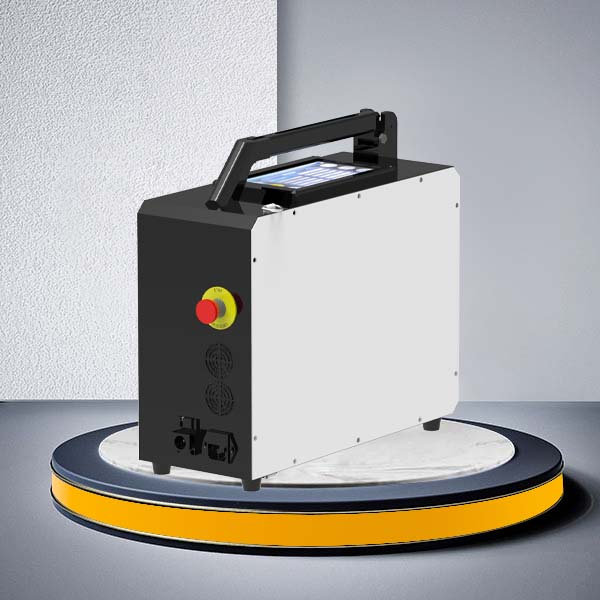
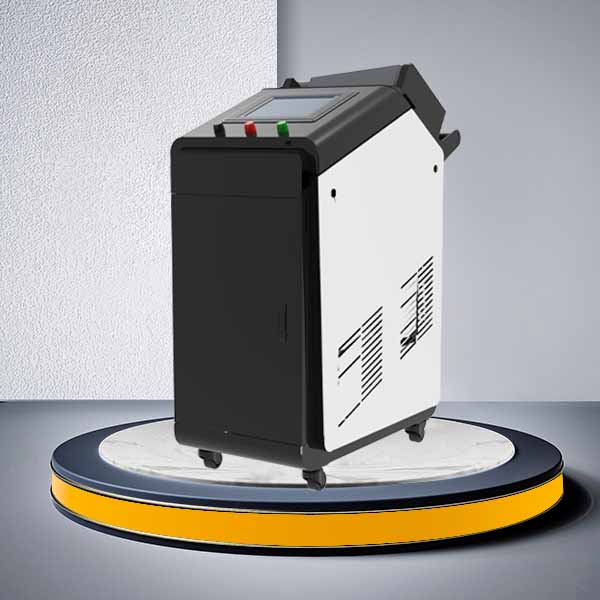
The pulse laser cleaner from EZCAD is a handheld pulsed fiber laser cleaning machine designed for industrial surface treatment, including rust removal, paint stripping, oxide removal, mold maintenance and the removal of selected surface contaminants. The HCP-C Series is available in 200W, 300W and 500W configurations, allowing buyers to evaluate different power levels according to the base material, contamination condition, required surface finish and production requirements.
When selecting a pulsed laser cleaning machine, laser power alone is not enough to determine the right configuration. Pulse energy, pulse width, repetition frequency, scanning parameters and cooling requirements also affect the cleaning process. EZCAD provides published specifications for the HCP-C200, HCP-C300 and HCP-C500 to support initial model selection. For a project-specific quotation, provide your workpiece material, contaminant type, contamination thickness, cleaning area and target result so the appropriate configuration can be reviewed.

How to Choose Between the HCP-C200, HCP-C300 and HCP-C500
The correct pulsed laser cleaning machine depends on the relationship between laser parameters and the workpiece requirements. Use the following comparison as an initial selection guide, then confirm the process against your actual material and contamination conditions.
| Selection Factor | HCP-C200 | HCP-C300 | HCP-C500 |
|---|---|---|---|
| Rated Laser Power | 200W | 300W | 500W |
| Single Pulse Energy | 5 mJ | 13 mJ | 30 mJ |
| Pulse Width Range | 2–500 ns | 80–500 ns | 80–500 ns |
| Initial Evaluation | Evaluate for localized cleaning where the 200W configuration meets the required removal rate and finish. | Evaluate when the 300W configuration may provide a suitable balance between process requirements and cleaning productivity. | Evaluate when the 500W configuration and its higher published single-pulse energy are appropriate for the contamination and production requirements. |
What Can a Pulsed Laser Cleaning Machine Remove?
A pulsed fiber laser cleaning machine can be evaluated for removing different types of surface contamination. The appropriate process depends on the contaminant, substrate, coating thickness and required finish.
| Cleaning Application | What Buyers Should Specify | Selection Considerations |
|---|---|---|
| Rust and Oxide Removal | Base metal, rust severity, oxide thickness and cleaning area | Confirm removal efficiency and the acceptable condition of the underlying metal. |
| Paint and Coating Removal | Coating type, number of layers, thickness and substrate | Determine whether complete removal or selective stripping is required. |
| Mold Cleaning | Mold material, residue type, surface texture and cavity geometry | Check whether the cleaning process preserves the required surface finish and geometry. |
| Oil and Grease Removal | Contaminant composition, residue thickness and downstream process | Confirm cleaning results and plan suitable fume extraction where necessary. |
| Surface Preparation | Welding, bonding or coating requirements and the target surface condition | Validate the cleaned surface against the requirements of the next manufacturing step. |
| Precision Component Cleaning | Component material, critical dimensions, surface finish and allowable changes | Establish suitable parameters before processing production components. |
Pulse Laser Cleaning vs. Continuous Wave Laser Cleaning
Both pulsed and continuous wave (CW) laser cleaning machines are used for industrial surface treatment, but they deliver laser energy differently. Choosing between them should begin with the workpiece, contaminant and required cleaning result rather than laser power alone.
| Comparison Factor | Pulsed Laser Cleaning | CW Laser Cleaning |
|---|---|---|
| Laser Output | Energy is delivered in pulses. | Energy is delivered continuously during operation. |
| Typical Selection Priority | Controlled, localized or precision-oriented cleaning. | Continuous processing and higher-throughput cleaning of suitable surfaces. |
| Key Evaluation Factors | Pulse energy, pulse width, repetition frequency, substrate sensitivity and scan settings. | Continuous power, heat input, removal rate, substrate condition and cooling requirements. |
| Before Ordering | Verify removal performance and surface condition for the selected pulse parameters. | Verify the required throughput and acceptable heat input for the application. |
If your project prioritizes controlled cleaning of localized areas, molds or components with specific surface-finish requirements, evaluate the HCP-C pulsed laser cleaner first. If you need to process large metal surfaces or remove heavy rust and coatings at a high continuous throughput, compare the application with EZCAD’s CW laser cleaning machine.
For a more detailed technical comparison, see Pulse vs. Continuous Laser Cleaner: Which Is Better?.
Handheld Pulse Laser Cleaner vs. Portable and Suitcase Models
The HCP-C Series should be compared with other EZCAD laser cleaning products when portability, power requirements and working access are important to the purchase decision.
| Product Configuration | Published Model Range | Primary Selection Consideration |
|---|---|---|
| HCP-C Handheld Pulse Laser Cleaner | 200W, 300W, 500W | Compare pulse parameters and required cleaning performance for industrial maintenance and surface treatment. |
| HCP-M Backpack Laser Cleaner | 50W, 100W | Evaluate when carrying mobility and access to remote or hard-to-reach work areas are important. |
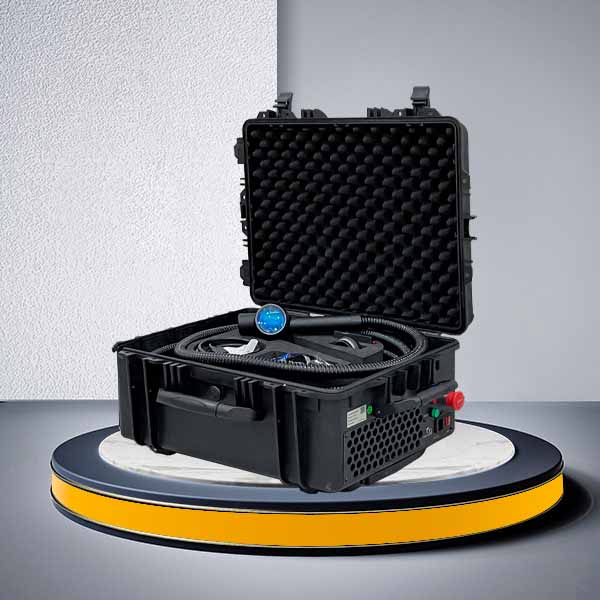
| HCP-S Suitcase Pulse Laser Cleaner | 100W HCP-S100 | Evaluate a compact, air-cooled configuration for portable and localized cleaning tasks. |
| HCC CW Laser Cleaner | 1000W, 1500W, 2000W | Evaluate continuous-wave processing for suitable heavy-duty or large-area cleaning applications. |
Review the individual product specifications before comparing models. The HCP-C Series is not interchangeable with every portable or CW configuration.
- View the HCP-M Backpack Laser Cleaning Machine
- View the HCP-S Suitcase Pulsed Laser Cleaning Machine
- View the CW Laser Cleaning Machine
Laser Safety and Fume Extraction
Industrial laser cleaning requires appropriate controls for direct and reflected laser exposure, operator access and material removed during cleaning. The required safety equipment depends on the delivered system, its laser classification and applicable local regulations.
- Confirm the laser classification and compatible protective eyewear for the delivered equipment.
- Provide suitable control of access to the laser work area and address direct and reflected beam exposure.
- Review emergency-stop, interlock and warning requirements for the intended installation.
- Assess fume and particulate extraction according to the coating or contaminant being removed.
- Evaluate fire risks associated with combustible coatings, residues and surrounding materials.
- Confirm operator training and safe operating procedures before production use.
Do not assume that chemical-free cleaning eliminates the need for fume extraction or waste handling. Paints, oils, resins and other removed materials may generate fumes or particles that require appropriate controls.
Frequently Asked Questions About Pulse Laser Cleaners
1. Which HCP-C model should I choose for rust removal?
Start by identifying the base metal, rust thickness, cleaning area and required surface finish. The HCP-C200, HCP-C300 and HCP-C500 provide different published power, pulse-width, frequency and single-pulse-energy specifications. EZCAD can review these requirements to help determine which model is appropriate. The model with the highest rated power is not necessarily the best choice for every surface.
2. What is the difference between the HCP-C200, HCP-C300 and HCP-C500?
The main published differences are laser power, repetition-frequency range, pulse-width range and single pulse energy. The HCP-C200 is rated at 200W and 5 mJ, the HCP-C300 at 300W and 13 mJ, and the HCP-C500 at 500W and 30 mJ. Compare these specifications with the material, contaminant and required cleaning result before selecting a model.
3. Can this pulsed laser cleaning machine remove paint as well as rust?
The HCP-C Series is presented for rust, paint, oxide and other surface-contamination removal. Actual performance depends on the coating chemistry, thickness, underlying material and laser parameters. Specify the coating and substrate when requesting a quotation so the application can be evaluated.
4. Is a pulsed laser cleaner suitable for precision components and molds?
Pulsed laser cleaning can be considered for localized cleaning, mold maintenance and components with defined surface-finish requirements. Suitability must be confirmed for the actual material, geometry and residue. For critical surfaces, establish acceptable cleaning parameters before processing production parts.
5. What cleaning speed can I expect from the HCP-C Series?
The published specification lists a scanning speed of 12,000 mm/s. This is not a guaranteed area-cleaning rate. Actual productivity depends on the contamination, coating thickness, scan width, pulse settings, overlap, number of passes and required finish. Provide the workpiece details and production target when asking EZCAD to assess expected cleaning performance.
6. Are 110V and 220V power configurations available?
The product page lists 110V/220V as optional. Specify the required voltage and destination market in your inquiry. Confirm the electrical configuration for the exact model before placing the order.
7. Can I customize the cable length or cooling method?
The product page lists 5 m and 10 m cable options as customizable and lists air cooling and water cooling. However, these details are not clearly mapped to every HCP-C model. Ask EZCAD to confirm the available cable length and cooling method for your selected configuration. Do not assume that every option is available on every model.
8. Can the HCP-C Series be customized for a specific cleaning application?
The published information identifies customizable cable length and optional input voltage. Other changes, including hardware, software, safety provisions or branding, require technical and commercial confirmation. Include your requirements in the RFQ so EZCAD can determine feasibility and provide a confirmed specification.
Request a Quote for the HCP-C Pulse Laser Cleaner
If you are sourcing a pulse laser cleaner for industrial rust removal, paint stripping, oxide removal, mold maintenance or surface preparation, EZCAD can review your application and the published HCP-C Series specifications to help identify a suitable configuration. To make the quotation more accurate, provide your workpiece material, contaminant type, contamination thickness, cleaning area, required finish, expected production rate and destination electrical requirements.
Contact EZCAD to request the price and confirmed technical specification for the HCP-C200, HCP-C300 or HCP-C500. Ask us to confirm the available cooling method, cable length, power configuration, delivery schedule and commercial terms for your selected model before placing an order.
Product Image

Pulse Laser Cleaning Machines
Product Introduction
The JCZ HCP-C Series is a handheld pulse laser cleaning machine designed for controlled industrial surface cleaning, including rust removal, paint stripping, oxide removal, mold cleaning, oil-residue removal, and surface preparation.
Available in 200W, 300W, and 500W configurations, the HCP-C Series helps manufacturers, maintenance teams, metal fabricators, mold shops, repair companies, and industrial distributors select a cleaning process based on material, contamination level, required finish, and working environment.
This handheld pulse laser cleaning machine is intended for applications where cleaning precision, reduced thermal impact, mobility, and process control are more important than maximum large-area cleaning speed.
Key Features:
Adjustable Power Options – 200W, 300W, 500W, with power flexibility for various applications.
Non-Contact & Eco-Friendly – No chemicals, minimal waste, and no damage to the base material.
Ergonomic Handheld Design – Lightweight, easy to operate, and highly portable.
High-Speed Precision Cleaning – Ensures fast, efficient removal of rust, oxidation, oil stains, and coatings.
Low Maintenance & Long Lifespan – Durable fiber laser technology with minimal upkeep.
Applications:
1: Industrial Manufacturing – Cleaning molds, precision parts, and metal components.
2: Automotive & Aerospace – Engine maintenance, paint stripping, and corrosion removal.
3: Electronics & Semiconductors – Delicate surface cleaning without abrasives.
4: Cultural Heritage Restoration – Safe removal of dirt and oxidation from historical artifacts.
5: Medical & Food Industry – Sterile cleaning of equipment and processing tools.
With powerful cleaning capabilities, precision control, and user-friendly operation, the HCP Series Pulse Laser Cleaning Machine is the ultimate solution for high-efficiency, damage-free surface treatment across various industries.Buy directly from the Pulse Laser Cleaning Machine manufacturer and save on high-quality laser cleaning machines.
If you are unsure which configuration best fits your application , please share your process requirements with our engineers for tailored recommendations.
Why Choose a Handheld Pulse Laser Cleaning Machine?
A handheld pulse laser cleaning machine uses short laser pulses to remove selected surface contaminants such as rust, paint, oxide layers, oil residues, coatings, carbon deposits, and production contamination.
For suitable materials and process conditions, pulsed laser cleaning can reduce reliance on abrasive blasting, manual scraping, and chemical stripping.
Key advantages include:
- Controlled cleaning of localized or difficult-to-access areas
- Non-contact treatment for molds, tools, fixtures, and metal components
- Adjustable process settings for different contamination conditions
- Suitable for rust, paint, oxide, oil, and coating residues
- Handheld operation for workshop and on-site maintenance tasks
- Available 200W, 300W, and 500W configurations
- Multilingual HMI operation
- Configurable cable length and electrical options subject to project confirmation
Cleaning results depend on the base material, contamination type, coating thickness, laser parameters, cleaning area, duty cycle, and operator process settings.
Frequently Asked Questions (FAQ):
How does the pulse laser cleaning machine work?
The machine uses pulsed fiber laser technology to remove rust, paint, coatings, and other contaminants without damaging the base material.
What materials can be cleaned with the laser?
This laser cleaner can be used on a variety of materials including metal, plastic, stone, and composite materials.
Is the laser cleaning process eco-friendly?
Yes, the process is chemical-free, producing minimal waste and requiring no abrasives, making it an eco-friendly cleaning solution.
What power options are available for the pulse laser cleaner?
The machine is available in 200W, 300W, and 500W power options, providing flexibility for both light and heavy-duty cleaning.
Is the handheld design easy to use for extended periods?
The ergonomic handheld design ensures ease of use, even during long cleaning sessions, offering both comfort and portability.
Can I use this machine for industrial cleaning?
Absolutely, the HCP Series is specifically designed for industrial applications, providing high-speed, high-precision cleaning for rust removal, paint stripping, and coating removal.
Request a price quote for our pulsed fiber laser cleaning machine and explore our OEM options.