| Model | RFL-P20QB | RFL-P30QB | RFL-P50QB |
| M2 | <1.5 | <1.6 | |
| Fiber Cable Length | 2M (Customizable) | 3M (Customizable) | |
| Average Output Power | >20W | >30W | >50W |
| Max. Pulse Energy | 1.0mJ@20kHz | 1.0mJ@30kHz | 1.0mJ@50kHz |
| Adjustable Frequency Range | 20-60 kHz | 30-60 kHz | 50-100 kHz |
| Adjustable Pulse Width Range | 120ns @20kHz | 120ns @30kHz | 120-150 |
| Cooling Method | Air Cooled | ||
| Power Supply | 24V | ||
| Max. Power Consumption | 200W | 300W | 340W |
| Central Emission Wavelength | 1064nm | ||
| Polarization | Random | ||
| Output Beam Diameter | 7±1.0 mm | ||
| Output Power Adjusting Range | 10-100% | ||
| Operation Temperature | 0-40℃ | ||
| Storage Temperature | -20-60 ℃ | ||
| Size (LxWxH) | 215×286×95 mm | 215x286x95 mm | 260×340×120 mm |
Raycus Q-Switched Pulsed Fiber Laser – 20W, 30W & 50W
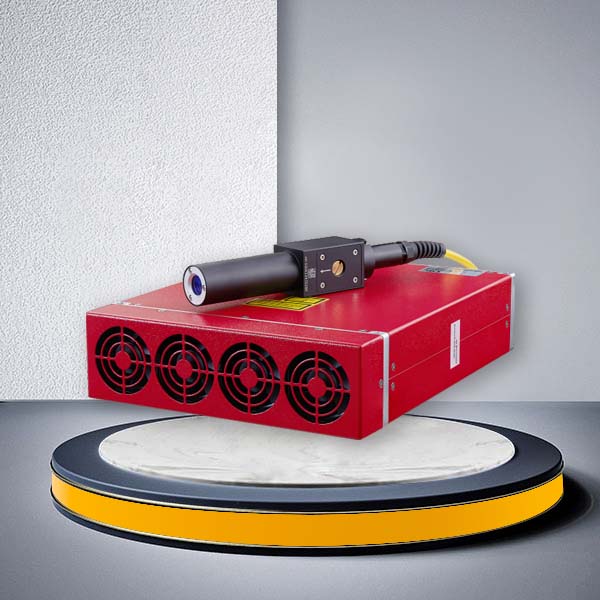
The Raycus Q-Switched Pulsed Fiber Laser series provides compact 1064 nm laser sources for industrial marking, engraving and precision surface processing systems. This page covers the RFL-P20QB, RFL-P30QB and RFL-P50QB models, giving machine builders and laser system integrators a clear way to compare output power, pulse energy, frequency range and system requirements before selecting a source.
For other fiber, UV, CO₂ and ultrafast laser options, view our Laser Source range.
How to Choose a Raycus Q-Switched Pulsed Fiber Laser
Selecting a Raycus Q-Switched Pulsed Fiber Laser should start with the required processing result rather than simply choosing the highest available wattage.
| Model | Recommended Direction | Typical Requirement |
|---|---|---|
| RFL-P20QB – 20W | Fine and general marking | Logos, serial numbers, barcodes and identification marks where moderate processing speed and controlled heat input are required |
| RFL-P30QB – 30W | General-purpose industrial marking | A balanced option when higher throughput or slightly stronger engraving capability is required |
| RFL-P50QB – 50W | Faster marking and deeper engraving | Higher production throughput, stronger material removal and applications requiring more available average power |
Power alone should not determine the final configuration. Frequency range, pulse behavior, beam delivery, marking field, galvo scanner aperture, F-theta lens and controller interface should also be considered when configuring the complete machine.
Designed for Industrial Marking System Integration
A Raycus Q-switched source is normally one part of a complete galvo laser system. A typical setup combines the laser source with a JCZ controller, galvo scanner, F-theta lens, PC/software and machine safety system.
For standard EZCAD2-based fiber marking systems, the LMCV4 Laser Marking Controller can be considered when the exact laser interface and machine configuration are compatible.
For EZCAD3-based systems requiring additional industrial I/O, encoder support or expanded machine integration, see the DLC2-V2 Laser & Galvo Controller.
Controller selection should always be confirmed against the exact Raycus model, laser interface, control signals and final system wiring rather than by laser brand alone.
Galvo Scanner and F-Theta Lens Matching
The Raycus Q-Switched Pulsed Fiber Laser operates at a central wavelength of 1064 nm, so the scanner and focusing optics must be configured for the same wavelength.
For standard 2D marking systems, the GO7 Series 2D Galvo Scanner Head is available in 1064 nm configurations and is designed for high-speed laser marking and engraving applications.
For the focusing section, choose a suitable F-Theta Flat Field Lens according to wavelength, scanner aperture, focal length and required marking field.
The final optical configuration should be selected as a system. A larger marking field normally requires a different focal length and may affect spot size and marking performance.
Typical Applications
This Raycus Q-Switched Pulsed Fiber Laser series is suitable for industrial systems used for permanent identification, graphics and surface processing on compatible materials.
Typical applications include metal part marking, serial numbers and UID codes, logos and nameplates, stainless steel and aluminum marking, tool and hardware engraving, electronics component identification, automotive component marking and selected engineered-plastic marking.
Actual results depend on the material grade, surface treatment, required depth, cycle time, lens configuration and processing parameters. Sample testing is recommended when marking quality or production speed is critical.
Q-Switched Raycus or MOPA Fiber Laser?
A standard Q-switched fiber source is often suitable when the main requirement is reliable industrial marking and engraving with a relatively straightforward parameter window.
A MOPA fiber laser provides greater pulse-duration control for applications where pulse shaping and a wider parameter range are important. For this type of requirement, compare the JPT MOPA M7 Fiber Laser Source, which provides independently adjustable repetition frequency and pulse duration across a much wider operating range.
The purpose of this comparison is not to determine which technology is universally better. The correct source depends on the material, marking effect, cycle time and machine architecture.
Build a Complete Fiber Laser Marking System
JCZ can help machine builders and system integrators match the laser source with compatible control hardware, scanning components and optical configurations.
You can also explore the complete Laser & Galvo Controller range for different EZCAD2 and EZCAD3 system architectures.
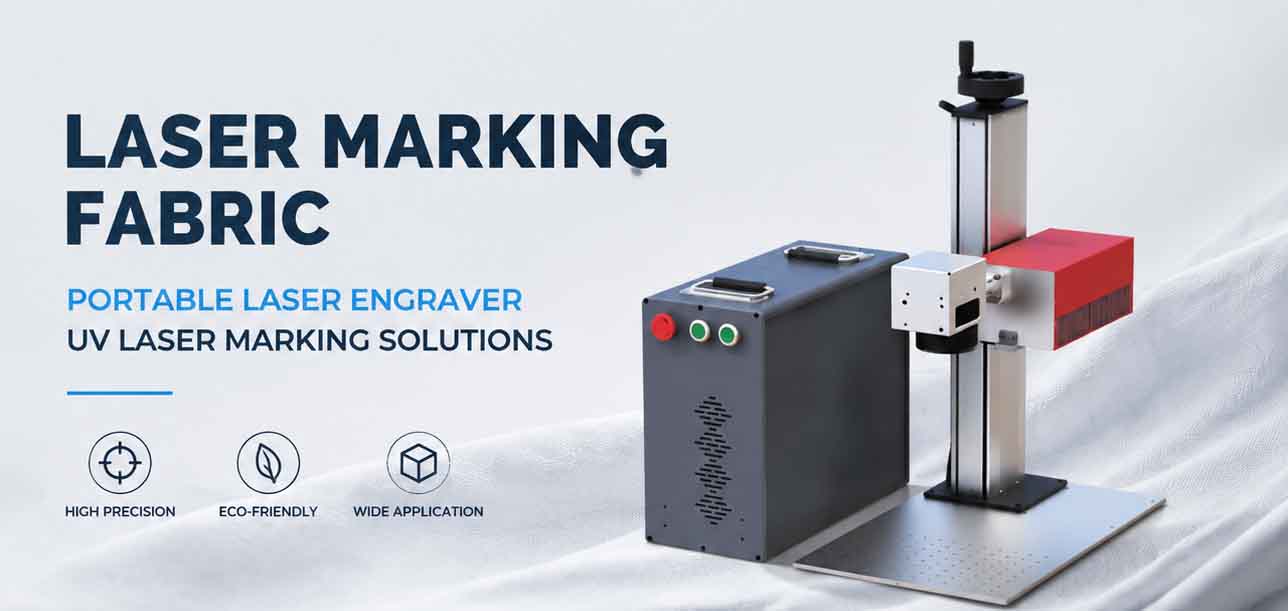
If you require a complete machine rather than an individual laser source, see our Laser Marking Machines range.
Send us the required Raycus model or your application parameters to confirm the recommended laser source and system configuration.
FAQ
What is the difference between the Raycus RFL-P20QB, P30QB and P50QB?
The main differences are average output power and operating frequency range. The P20QB provides more than 20 W with a 20–60 kHz range, the P30QB provides more than 30 W with a 30–60 kHz range, and the P50QB provides more than 50 W with a 50–100 kHz range.
Is this a complete fiber laser marking machine?
No. This page focuses on the Raycus laser source. A complete marking system also requires compatible control hardware, a galvo scanner, focusing optics, software, mechanical structure, power supply and appropriate safety components.
Does the Raycus Q-Switched Pulsed Fiber Laser work with EZCAD?
It can be integrated into compatible JCZ-controlled fiber laser systems, but compatibility should be confirmed according to the exact Raycus source model, controller, laser interface and wiring configuration.
Should I choose 20W, 30W or 50W?
Choose according to the required material, marking depth, production speed and process result. 20W is suitable for many standard identification tasks, 30W provides additional processing capacity for general industrial marking, while 50W is normally selected when higher throughput or stronger engraving capability is required.
Request a Quote or Data Sheet
Looking for a stable, cost-effective laser source for your next project? We offer competitive wholesale pricing for machine manufacturers and distributors.Get a Quote.