
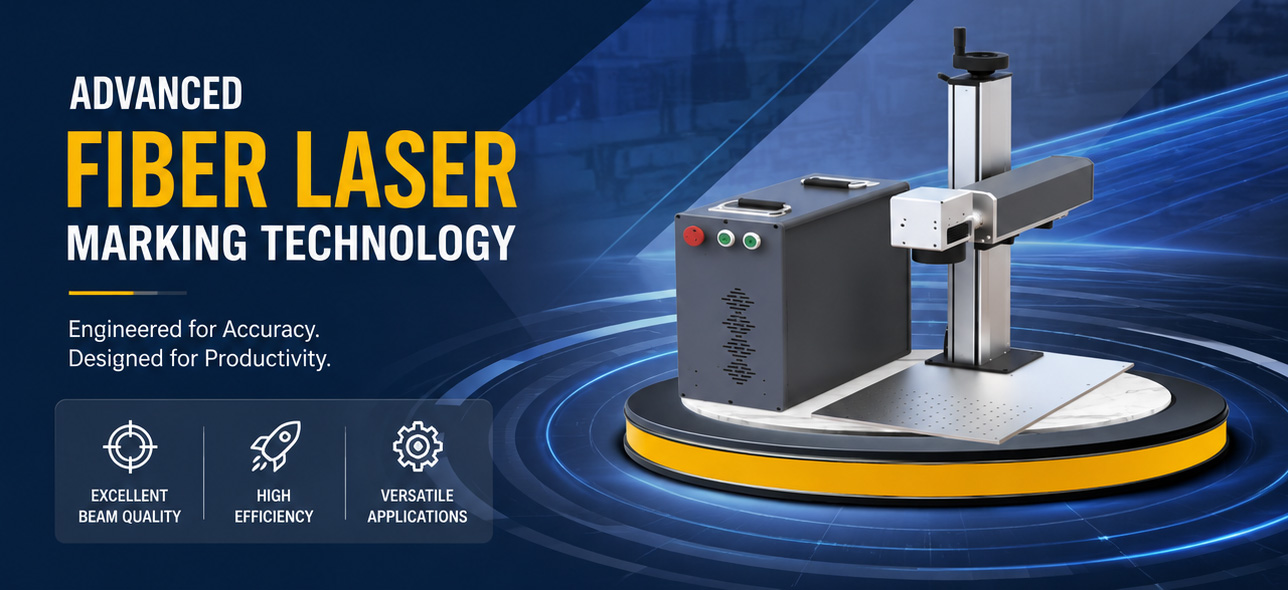
The Real Question Isn’t “Do You Need a Fiber Laser?”
A few years ago, most such discussions about industrial laser equipment began with the question:
“Which laser marking system should we get?”
That question has evolved today.
Producers are now inquisitive:
How can we lower the cost of manufacturing without reducing the quality?
And what about the customer’s traceability requirements?
How can product identification be automated? Tell me which technology still fits your needs in 5 years time?
The conversation is no longer around buying a machine, if you will it’s that they want more capacity, and they want to run more product.”
This change in operators explains why fiber laser technology has become one of the fastest growing industrial manufacturing lasers. It isn’t just replacing older marking devices — it’s transforming how factories manage quality, production data and product lifecycle tracking.
For distributors and suppliers of industrial equipment, learning this change of mindset will prove far more beneficial than committing technical specifications to memory. Customers don’t often buy a laser because it has a higher wattage, they buy it because it solves a manufacturing problem.
Product Identification Has Become a Business Requirement
Each and every manufactured product has a story.
A QR code says where it was made.
It has a serial number that tells when it entered the production line.” A logo symbolizes the manufacturer’s credibility.
A Data Matrix code allows engineers to trace quality issues months or even years later.
As industries move toward digital manufacturing, product identification has become a critical part of business operations rather than a finishing process.
Automotive suppliers need permanent part identification throughout the supply chain.
Medical device manufacturers must comply with increasingly strict traceability standards.
Electronics companies require tiny, high-resolution markings without damaging sensitive components.
Even household appliance manufacturers now rely on permanent identification to simplify after-sales service and warranty management.
The result is clear: manufacturers are no longer looking for a faster way to print information—they are looking for a smarter way to manage products.
Why Traditional Marking Methods Are Losing Their Advantage
Every identification technology was designed to solve a problem at a particular stage of manufacturing.
Inkjet printers offered flexibility.
Labels simplified product management.
Mechanical engraving created permanent marks.
Chemical etching delivered excellent durability.
However, manufacturing has changed dramatically.
Factories now expect identification systems to operate continuously, connect with production databases, generate variable codes automatically, and integrate with robotic production lines.
Traditional technologies struggle to meet these expectations.
Ink requires continuous replacement.
Print heads require cleaning.
Labels can detach during transportation.
Mechanical tools wear over time.
Chemical processes create environmental concerns.
These limitations increase maintenance costs, interrupt production, and reduce overall efficiency.
Instead of asking which marking method is cheapest, manufacturers have begun asking which solution creates the lowest total cost throughout the entire production lifecycle.
This change in thinking has accelerated the adoption of fiber marking laser systems around the world.
Fiber Laser Technology Solves More Than a Marking Problem
Many people think a fiber laser simply replaces an engraving machine.
In reality, it changes how a production line operates.
Because laser marking is completely digital, every marking parameter can be stored, repeated, and modified instantly.
Switching from one product to another no longer requires replacing printing plates or mechanical tools.
Variable serial numbers can be generated automatically.
Different customer logos can be loaded within seconds.
Production databases can communicate directly with the marking system.
Machine vision can verify every code immediately after marking.
The result is a production process that is faster, more flexible, and easier to automate.
For manufacturers producing hundreds of product variations every month, this flexibility often delivers greater value than the laser itself.
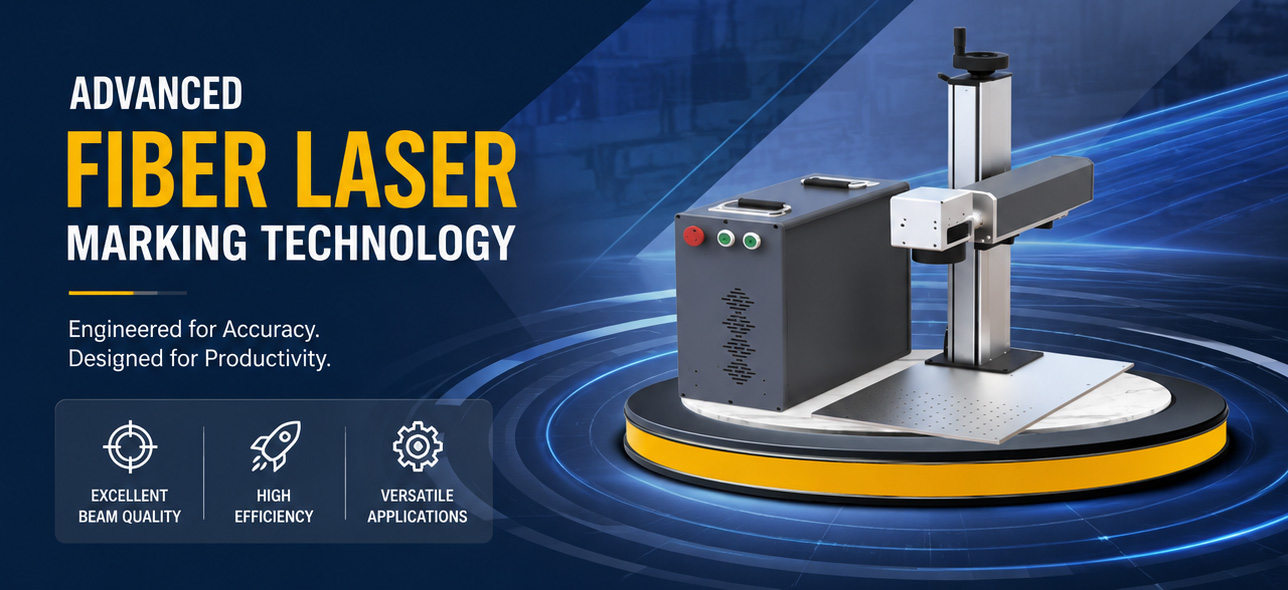
Why Experienced Buyers Look Beyond Laser Power
One of the most common questions distributors receive is:
“Should I choose a 20W or a 50W laser?”
Although laser power matters, experienced buyers know that it is only one part of the equation.
Two machines with identical laser sources can produce completely different results depending on the overall system design.
Factors that influence real production performance include:
- Beam quality
- Galvanometer accuracy
- Control software
- Motion synchronization
- Optical configuration
- Mechanical stability
- Vision positioning
- Process optimization
This is why professional equipment suppliers focus on complete solutions rather than individual components.
A reliable fiber laser system is the result of engineering integration—not simply installing a powerful laser source.
Software Is Quietly Becoming the Most Valuable Component
Ten years ago, manufacturers mainly evaluated hardware.
Today, software often determines the productivity of an entire production line.
Modern laser marking software no longer performs only basic text engraving.
It now manages production data, variable information, barcode generation, database communication, user permissions, quality inspection, and production reporting.
Many factories connect laser marking systems directly with ERP and MES platforms, allowing production information to flow automatically without manual input.
As manufacturing becomes increasingly digital, software transforms laser equipment from an isolated workstation into part of an intelligent factory.
For distributors, software capability has become one of the strongest competitive advantages when recommending complete laser solutions.
Where Does a MOPA Fiber Laser Create the Greatest Value?
Not every customer needs a MOPA laser.
That is precisely why understanding customer applications is so important.
A company producing ordinary steel brackets may never benefit from adjustable pulse width.
However, manufacturers producing premium consumer products often have completely different expectations.
Consider a company manufacturing stainless steel drinkware.
Its marketing department may require colorful logos that enhance brand recognition without using paint.
A medical device manufacturer may need extremely clean markings while minimizing thermal effects.
An electronics supplier may process engineering plastics that are sensitive to excessive heat.
In these situations, a MOPA fiber laser becomes more than a technical upgrade—it becomes a production advantage.
Instead of offering higher power, it offers greater process control.
For distributors, this creates opportunities to recommend equipment based on application value rather than hardware specifications alone.
Successful Distributors Sell Solutions, Not Specifications
Industrial buyers are becoming more experienced.
They have already compared power ratings, working areas, and machine dimensions before contacting suppliers.
What they often need is guidance.
Experienced distributors usually begin by asking different questions.
What materials are being processed?
How many parts are produced every day?
Will the machine operate independently or on an automated production line?
Does the customer expect future expansion?
Are product designs updated frequently?
Is international traceability required?
The answers to these questions determine the most suitable configuration far more accurately than laser power alone.
Distributors who understand manufacturing processes build stronger customer relationships because they become technical partners rather than equipment vendors.
The Next Generation of Fiber Laser Systems
Industrial laser technology continues to evolve.
Today’s customers are increasingly interested in systems that can communicate with robots, cameras, conveyors, and factory management software.
Future fiber laser systems are expected to include more intelligent functions, such as:
- AI-assisted parameter optimization
- Automatic process adjustment
- Vision-guided positioning
- Cloud-based equipment monitoring
- Predictive maintenance
- Digital production analytics
- Multi-machine networking
Rather than operating as independent workstations, laser systems are becoming connected manufacturing platforms.
Companies investing in these technologies today are preparing themselves for the next generation of smart factories.
Choosing a Technology Partner Instead of Just a Supplier
Buying industrial equipment is rarely a one-time decision.
Production requirements evolve.
Materials change.
Customer expectations increase.
Automation expands.
Therefore, suppliers that can deliver consistent technical support, software upgrades, customized solutions and application development are being more highly appreciated by the manufacturers.
For the distributors, the choice of manufacturer partner is as crucial. A technologically-advanced, quality-consistent and responsive supplier with a long term roadmap for customers makes it much easier for distributors to confidently serve their customers and pursue sustainable business growth.
Closing words mindStd out of 5 stars What Did You Think of The Recall to The Stars? The fiber laser has long since advanced past the status of just a marking tool. It provides digital manufacturing, intelligent production, product traceability and automation quality management. “No matter if your customers purchase a standard fiber marking laser for industrial marking applications or a MOPA fiber laser for unique applications, your ultimate goal is the same: to maximize your production efficiency while… Main Article Whether it’s a competition, casino games, sports betting or lottery machines, the chance to win is always present.
For distributors, the ability to best sell laser sales is no longer “what can a laser do, tell me about the specifications.” It revolves around knowledge of manufacturing challenges, complete solutions, and helping customers prepare for the future in industrial production. So in that sense, a fiber laser isn’t just another tool in your shop – it is an investment in smarter manufacturing.
Frequently Asked Questions
Is the fiber laser a good option for the small customers?
Yes. Because fiber laser systems come in so many different sizes and types, they are suitable for anything from a small workshop to a large fully automated production line. You need to select a system that meets your processing requirements today, but has the potential to handle tomorrow’s production.
What distinguishes fiber marking laser from other marking technologies?
Fiber marking laser produces permanent high precision marks without contact and consumables. It also has seamless integration with automation, vision systems, and production management software.
Why would one want to purchase a MOPA fiber laser?
A MOPA fiber laser offers more flexibility in applications such as color marking, black marking on anodized aluminium, detailed engraving and working on heat sensitive materials.
What are the concerns that distributors have to keep in mind in recommending laser systems?
Rather, before recommending a solution, they should take the time to learn about the customer’s materials, production process, their automation needs and long-term business objectives.
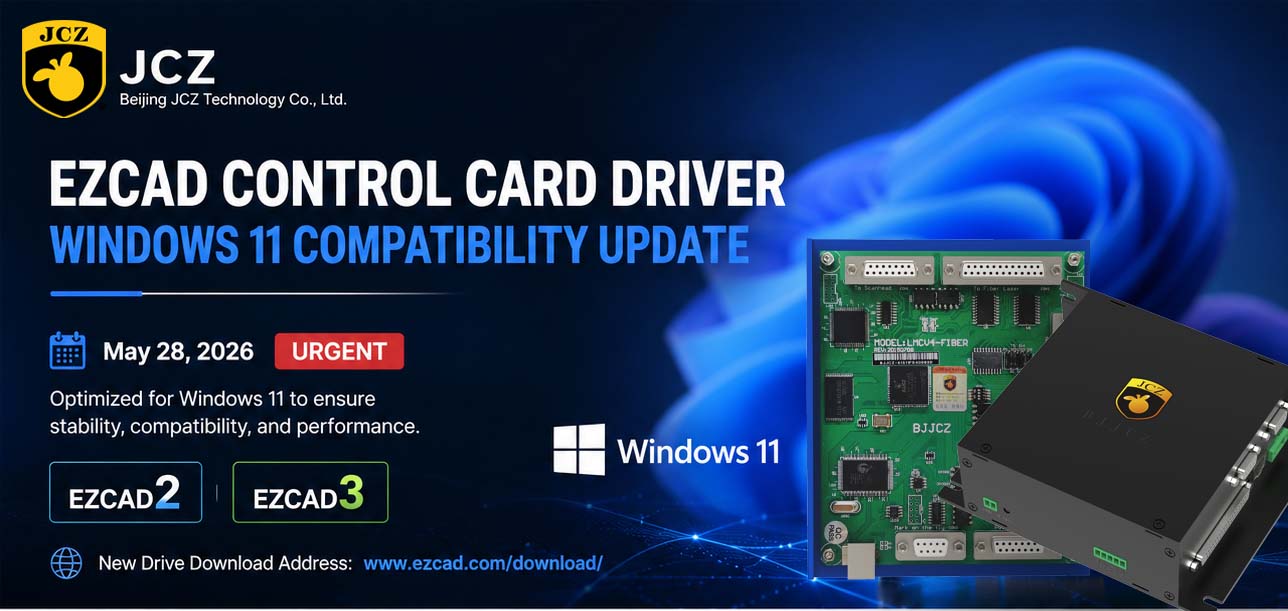
OFFICIAL DRIVER UPDATE NOTICE

Top Factors That Affect Marking Quality in Handheld Fiber Laser Systems

Meet JCZ at Laser World of Photonics India 2026 in Bengaluru
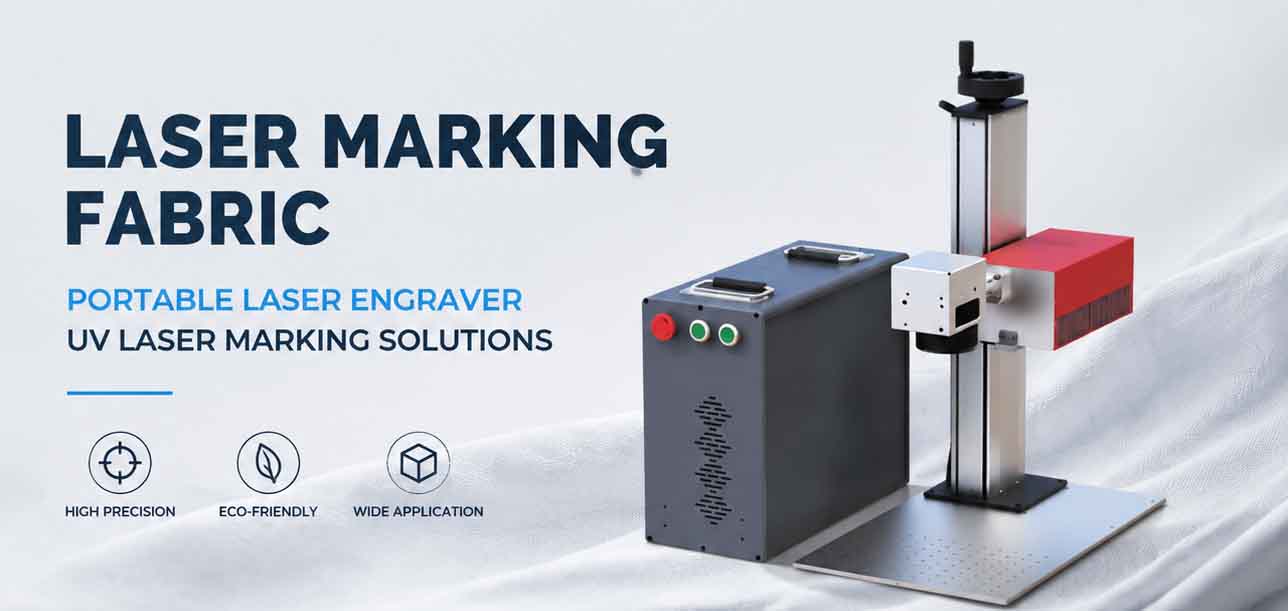
Laser Marking Fabric with Portable Laser Engraver: Advanced UV Laser Marking Solutions for Modern Manufacturing
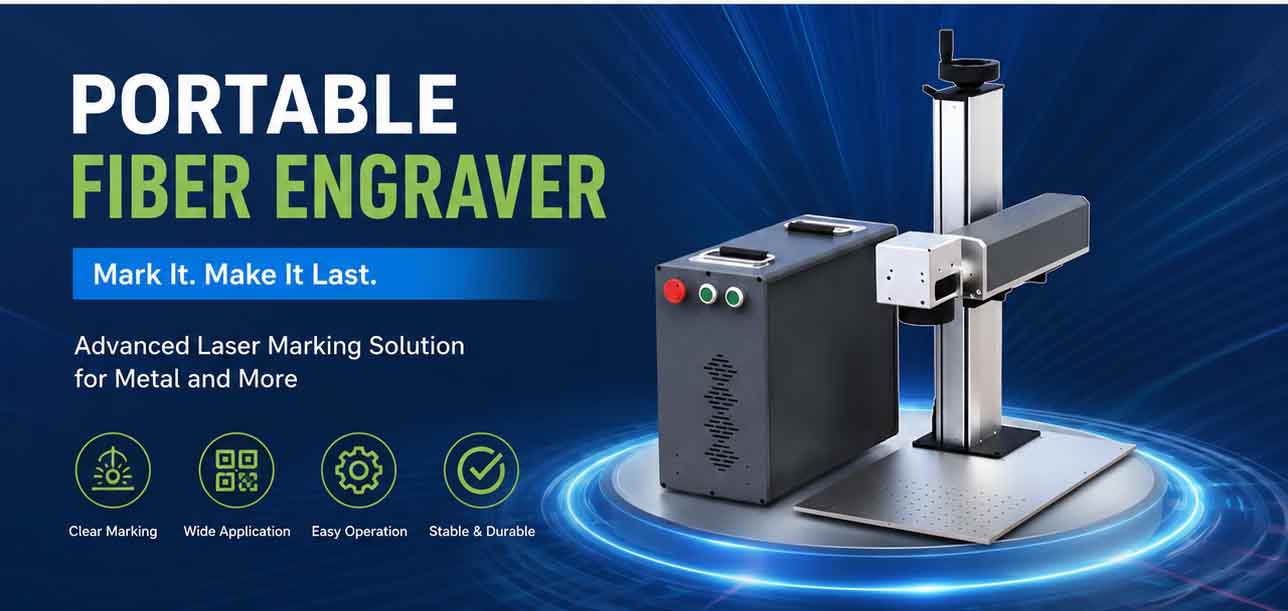
Laser Machine for Marking: The Ultimate Guide to Portable Fiber Engravers & MOPA Color Laser Marking
Laser Cleaning Machine for Wood: The Ultimate Guide to Safe, Precise & Eco-Friendly Wood Surface Cleaning


