High Frequency AMT-266
| Specification | 0.5W-120M | 1.5W-120M | 3W-70M | 5W-70M |
| Central Wavelength (nm) | 266.08 ± 0.1 | |||
| Linewidth (pm; FWHM) | ≤20 | |||
| Output Power (W) | ≥0.5 | ≥1.5 | ≥3 | ≥5 |
| Repetition Rate (kHz) | ≥120 | ≥70 | ||
| Power Adjustment Range (%) | 90%-100% | 1%-100% | ||
| Output Power Stability (PV) | ≤0.5% @8h | |||
| RMS Noise | <1% rms (<3 MHz) | |||
| Beam Quality (M²) | ≤1.2 | |||
| Output Beam Waist Diameter & Position | 1.8mm ±10%, waist distance from output +/-2m | |||
| Ellipticity | ≥90% | |||
| Polarization | 100:1 Linear, Horizontal | |||
| Pulse-to-Pulse Intensity Variation (PV) | ≤5% | |||
| Pointing Stability after Replacement (urad) | ≤100 | |||
| Temperature Coefficient (urad/K) | <20 | |||
| Power Supply (V) | DC24V | |||
| Total Power / Consumption (W) | <250 | <450 | <800 | |
| Operating Temperature (°C) | 20-25 | |||
| Cooling Method | Water Cooling | |||
| Cooling Capacity Requirement | 300W | 500W | 1000W | |
| Power Monitoring | Internal PD | |||
| Lifetime (h) | ≥10000, single point ≥500 | |||
| Manual / Auto Replacement | Auto replacement | |||
Low Frequency AMT-266
| Specification | 1W-10K | 3W-100K |
| Wavelength (nm) | 266 | |
| Average Power (Watts) | >1 | >3W |
| Pulse Energy (μJ) | >130 | >30 |
| Specified Frequency (kHz) | 10 kHz | 100 kHz |
| Repetition Rate (kHz) | Single Shot-30 kHz | Single Shot-300 kHz |
| Pulse Width (ps) | <30 | |
| Beam Quality (M²) | <1.3 | |
| Beam Roundness (%) | >85 | |
| Beam Diameter (mm) | ~1.8 ±10% | |
| Divergence (mRad) | 0.3 ±10% | |
| Pointing Stability (μrad/°C) | <20 | |
| Polarization | 100:1 Linear, Horizontal | |
| Pulse-to-Pulse Stability (% RMS) | <3 | |
| Average Power Stability (% over 12 hours) | <3 | |
| Warm-up Time (mins) | <60 | |
| Standby Warm-up (mins) | <10 | |
| Operating Temperature (°C) | 15-35 | |
| Operating Humidity (%) | 20 to 80, Non-condensing | |
| Storage Temperature (°C) | -20 to 50 | |
| Storage Humidity (%) | 20 to 80, Non-condensing | |
| Power Supply (VDC/Watts) | 24 / 600 | |
| Communication Protocol | RS232 | |
| Cooling Method | Water | |
| Weight (kg) | 55 | |
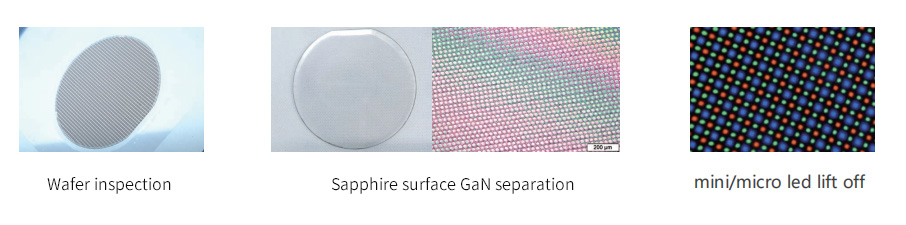
High-stability 266nm picosecond UV laser with SYNC output and <3% power fluctuation. Ideal for semiconductor inspection, GaN lift-off, glass separation, and precision micromachining.
Why 266nm?
Not all UV lasers are created equal. The move from 355nm to 266nm represents a fundamental shift in how light interacts with material at the atomic level.
At 266nm, photon energy reaches 4.66 eV. This exceeds the bond dissociation energy of most polymer backbones and sits precisely within the absorption band of GaN at the GaN/sapphire interface. The result: material is removed through direct electronic excitation rather than photothermal heating. No melt zone. No recast layer. No carbon residue.
Compared to 355nm UV lasers, a 266nm deep UV picosecond laser offers:
- Tighter achievable focus diameter — diffraction-limited spot size scales with wavelength, enabling feature processing below 5μm
- Near-zero heat-affected zone (HAZ) — picosecond pulse duration combined with deep UV photon energy eliminates thermal diffusion into substrate
- Direct processing of wide-bandgap materials — sapphire, fused silica, and alumina that are transparent at 355nm absorb strongly at 266nm
- Carbon-free cold ablation — critical for semiconductor yield protection and polymer cutting where carbonization is a production defect
For engineers designing semiconductor inspection systems, micro-LED production lines, or advanced display manufacturing equipment, the 266nm picosecond laser is not a premium option — it is the enabling technology.
AMT-266 vs. Competing 266nm Picosecond Laser Platforms
Engineers evaluating deep UV picosecond lasers for production integration typically compare on five axes: output power, beam quality, power stability, system lifetime, and integration flexibility.
| Parameter | AMT-266 (High-Freq.) | Typical Competitor A | Typical Competitor B |
|---|---|---|---|
| Max Output Power | 5W | 3W | 3W |
| Beam Quality (M²) | ≤1.2 | <1.5 | <1.2 |
| Power Stability (PV, 8h) | ≤0.5% | <5% (12h) | <3% |
| System Lifetime | ≥20,000h | N/A | N/A |
| Single-Point Lifetime | ≥500h (auto replace) | N/A | N/A |
| SYNC Output | ✓ Edge + Level trigger | ✓ Internal/External | — |
| Power Supply | DC24V | 24VDC | 24VDC |
| Cooling | Water | Water | Water |
The AMT-266 delivers higher maximum output power (up to 5W) than most competing 266nm picosecond platforms currently available, combined with lower long-term power instability and the only auto-replacement crystal system with verified unchanged beam parameters post-swap
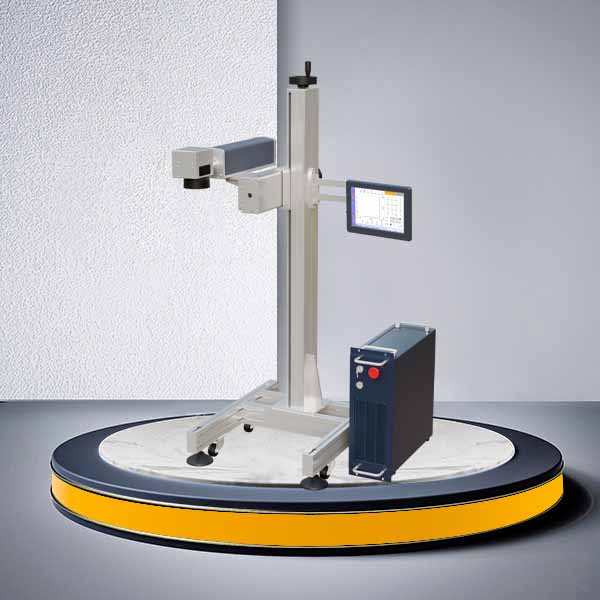
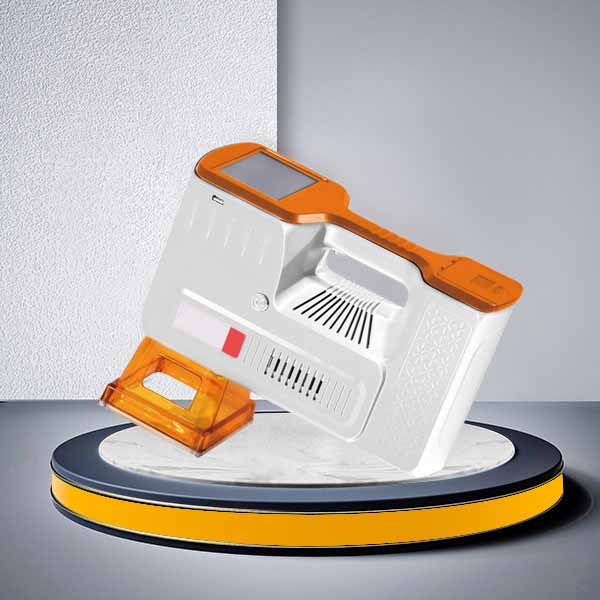
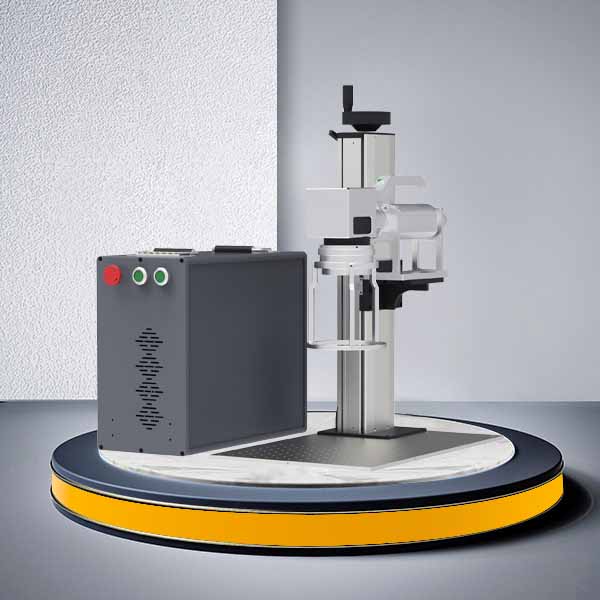
Product Pictures
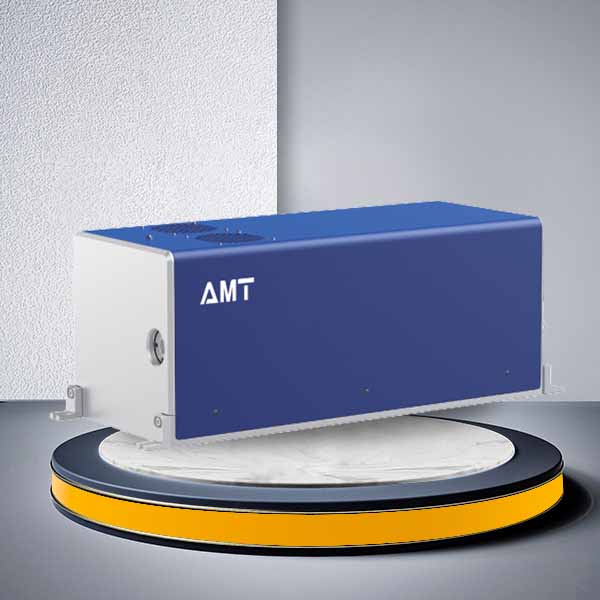
Product Introduction
The AMT Series Deep UV Picosecond Laser is engineered for next-generation industrial micro-processing applications. Utilizing advanced 266nm intra-cavity frequency conversion technology, it delivers exceptional deep UV performance with maximum output power above 3W.
Designed for extreme precision, the AMT laser offers excellent beam quality (M² <1.3), high beam circularity (>90%), and stable power output (<3% fluctuation), ensuring superior micro-processing accuracy. Its innovative frequency conversion switching system guarantees unchanged beam parameters after switching, maintaining processing consistency and machine stability.
Equipped with self-developed high-reliability core modules—including an ultra-fast seed source and high-temperature nonlinear crystal system—the laser achieves a single-point lifetime exceeding 1000 hours and total system lifetime beyond 20,000 hours. The integrated cavity air-cleaning filtration system further enhances durability and crystal longevity.
The AMT Series supports SYNC synchronized output, edge trigger and level trigger control, and features a built-in power monitoring module for precise control. It is widely applied in:
Sapphire GaN separation
Carbon-free cold processing
Glass crystal separation
28nm and below semiconductor defect inspection
Large-aperture optical surface inspection
Polymer cutting
High-density optical data storage
The AMT Series is a high-performance solution for advanced semiconductor and precision industrial applications.
Frequently Asked Questions
Q:What is the difference between the High-Frequency and Low-Frequency AMT-266 series?
A:The High-Frequency series operates at repetition rates from 70MHz to 120MHz+ and is optimized for high-throughput scanning applications such as OLED processing and surface inspection. The Low-Frequency series operates from single-shot to 300kHz and delivers higher per-pulse energies (up to 130μJ at 10kHz), making it the preferred configuration for GaN lift-off and glass separation processes that require high peak fluence.
Q:How does the AMT-266 achieve 266nm output?
A:The AMT-266 uses fourth harmonic generation (FHG) — successive frequency doubling of the fundamental 1064nm seed source to 532nm and then to 266nm using nonlinear crystals inside a controlled optical cavity. This intra-cavity approach achieves higher conversion efficiency than extra-cavity doubling stages used in competing platforms.
Q:What cooling infrastructure does the AMT-266 require?
A:The AMT-266 uses water cooling. A recirculating chiller providing 300W–1000W of cooling capacity (depending on power configuration) is required. The DC24V power supply and water connections are the only external services required for operation.
Q:Is the AMT-266 compatible with EZCAD-based galvo scan systems?
A:Yes. The SYNC synchronous output with edge and level trigger support is compatible with standard galvo scan head control interfaces used with EZCAD-controlled marking and microfabrication systems.
Q:What is the minimum feature size achievable with the AMT-266?
A:With M² ≤1.2 and a 1.8mm beam diameter, the achievable focused spot diameter depends on the f-theta or objective lens used. At 266nm, focused spots below 5μm are achievable with appropriate optics, enabling sub-10μm feature processing for OLED edge ablation and semiconductor microstructuring.
Request a Quote for the AMT-266 Deep UV Picosecond Laser
The AMT-266 266nm picosecond laser is available in High-Frequency and Low-Frequency configurations with output power from 0.5W to 5W. Custom power levels, beam delivery configurations, and OEM integration packages are available on request.
Contact our application engineering team to discuss your process requirements, receive a detailed specification sheet, or arrange a sample processing evaluation.

Application Cases
UV Picosecond
P-Coating Film Cutting
Smartphone Antenna Cutting
OLED Cutting