| Model / Spec | 50W-500K | 60W-2000K | 70W-1000K |
| Wavelength (nm) | 355 / 532 / 1064 | ||
| Average Power (Watts) | >50W @ 500 kHz | >60W @ 2000 kHz | >70W @ 1000 kHz |
| Pulse Energy (μJ) | >100 | >30 | >70 |
| Specified Frequency (kHz) | 500 | 2000 | 1000 |
| Repetition Frequency Range (kHz) | 100–500 | 100–2000 | 100–1000 |
| Pulse Width (ns) | 20–40 (customizable) | ~3 | 20–40 (customizable) |
| Beam Quality (M²) | <1.2 | ||
| Operating Temperature (°C) | 15–35 | ||
| Power Supply Requirement (VDC / Watts) | 24 / 450 | ||
| Weight (kg) | <48 | ||
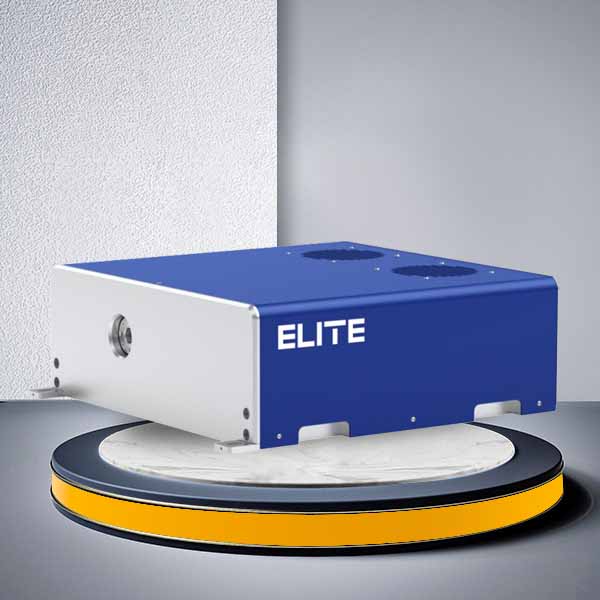
Elite Series nanosecond lasers feature compact all-in-one design, selectable IR, UV, Green, Red wavelengths, high beam quality (M² <1.2), and flexible repetition rates (50 kHz–5 MHz). Ideal for industrial marking, cutting, and precision processing.
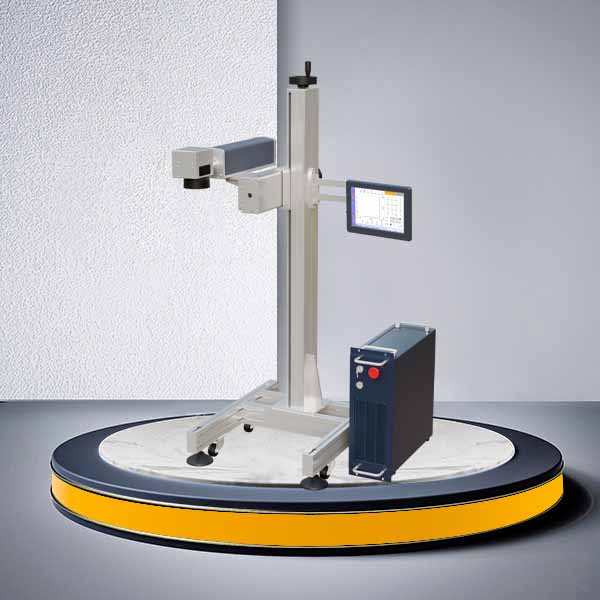
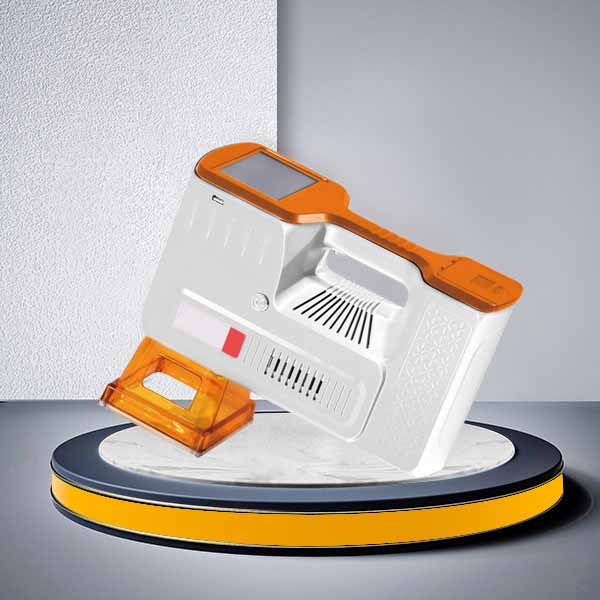
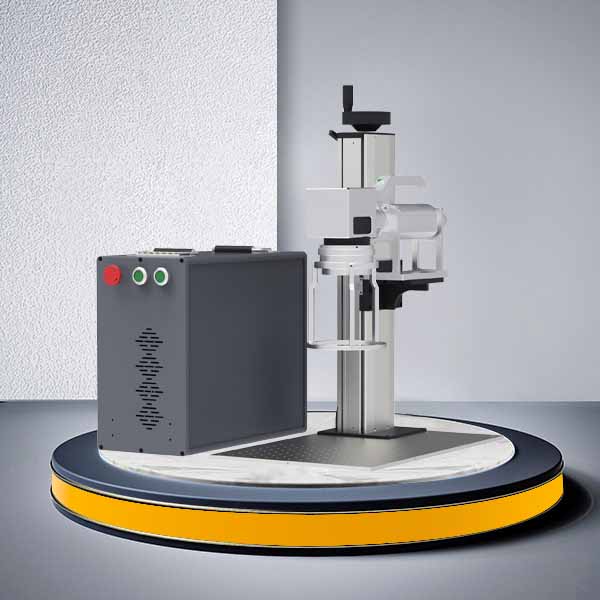
Product Pictures
Product Introduction
The Elite Series is a compact industrial nanosecond laser source developed for equipment manufacturers and laser system integrators requiring high beam quality, flexible pulse parameters and simplified installation. Available in 355 nm, 532 nm and 1064 nm configurations, the series supports industrial marking, precision material removal and application-specific laser processing.
With beam quality below M² 1.2, selectable repetition rates and an integrated optical and electrical design, the Elite Nanosecond Laser Series helps system builders reduce component-matching work while maintaining the parameter flexibility needed for different materials and production speeds.
Key capabilities:
- 355 nm, 532 nm and 1064 nm wavelength configurations
- Average power from over 50 W to over 70 W at specified frequencies
- Beam quality below M² 1.2
- Repetition frequency ranges up to 2 MHz, depending on the model
- Approximately 3 ns or customizable 20–40 ns pulse-width configurations
- Compact all-in-one construction
- 24 VDC power supply
- Designed for operation at 15–35°C
- Suitable for marking, cutting and precision material processing
Contact our technical team with your material, required process, target speed and integration conditions to identify the appropriate configuration.
Choose the Laser by Processing Requirement
Selecting a nanosecond pulsed laser should begin with the material, process and required cycle time rather than output power alone. Wavelength determines how effectively the material absorbs the laser energy, while pulse energy, pulse width and repetition rate influence processing speed, feature quality and heat input.
355 nm UV Nanosecond Laser
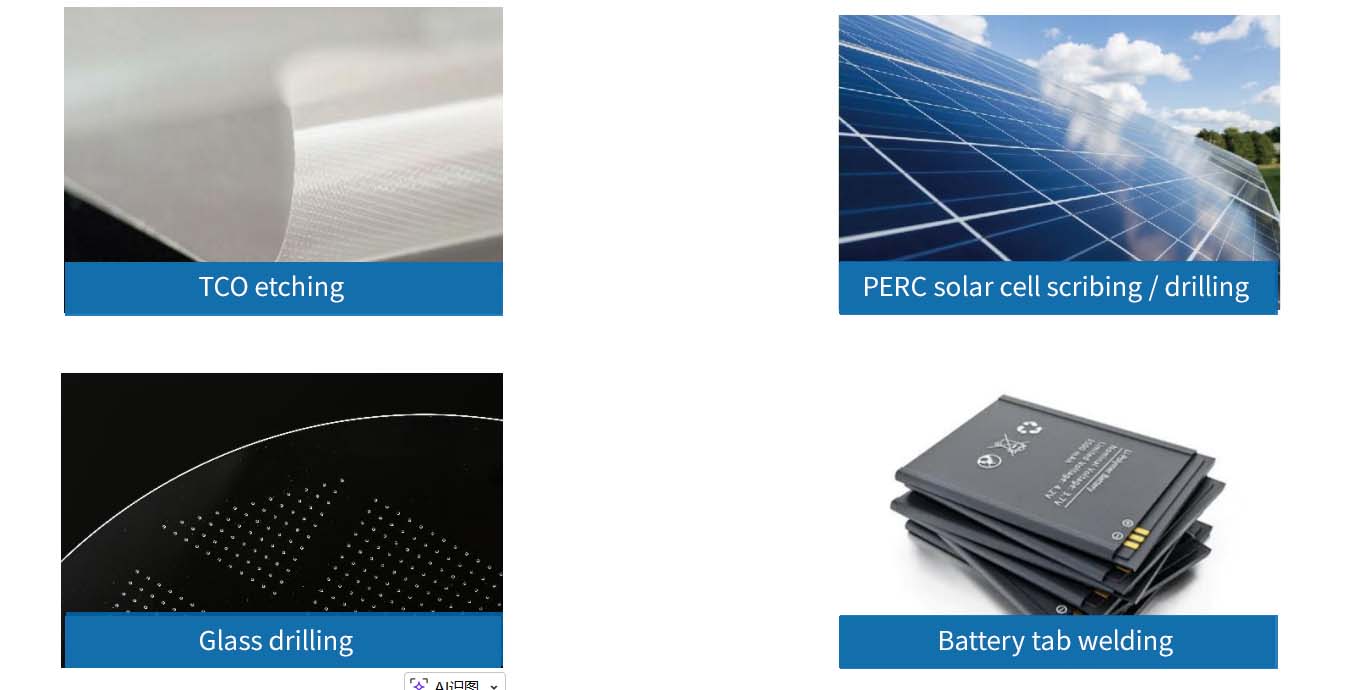
The 355 nm configuration is suitable for applications requiring a small focused spot and controlled interaction with sensitive materials. It should be considered for fine marking and precision processing of polymers, electronic components, packaging materials and other parts where excessive heat input must be limited.
Typical project requirements include:
- Fine text, codes and traceability marks
- Processing of thin or sensitive materials
- High-definition marking on electronic components
- Precision removal of coatings or surface layers
- Applications requiring a smaller focal spot
532 nm Green Nanosecond Laser
The 532 nm green nanosecond laser provides an intermediate wavelength for materials that do not respond efficiently to conventional infrared processing. It is suitable for selected electronic, glass, ceramic, polymer and precision-component applications.
Typical project requirements include:
- PCB and electronic-component processing
- Precision marking on selected plastics
- Processing of glass or ceramic components
- Fine cutting, drilling or surface removal
- Applications requiring controlled energy absorption
1064 nm Nanosecond Laser
The 1064 nm configuration is intended for materials and processes with suitable infrared absorption. It can be evaluated for industrial marking, surface processing and selected precision metal applications.
Typical project requirements include:
- Metal marking and identification
- Surface texturing or material removal
- Industrial component traceability
- High-throughput processing with an infrared laser
- Integration into standard laser marking platforms
Material composition, coatings, thickness and required processing speed can significantly affect the result. Sample testing is recommended before final model selection.
Three Output Configurations for Different Production Priorities
50W-500K: Higher Pulse Energy
With pulse energy above 100 μJ and a frequency range of 100–500 kHz, this model is suited to projects where stronger energy delivery per pulse is more important than extremely high pulse frequency.
It should be evaluated for:
- Material removal
- Deeper or stronger surface interaction
- Selected cutting and drilling processes
- Applications requiring customizable 20–40 ns pulses
60W-2000K: Short Pulse and High Repetition Rate
This model combines an approximately 3 ns pulse width with operation up to 2000 kHz. It is designed for applications requiring dense, high-frequency pulse delivery and controlled processing.
It should be evaluated for:
- Fine marking
- High-speed scanning processes
- Precision surface treatment
- Applications sensitive to excessive pulse duration
- Production lines requiring high repetition frequency
70W-1000K: Balanced Power and Pulse Energy
With average power above 70 W, pulse energy above 70 μJ and a frequency range up to 1000 kHz, this compact nanosecond laser source provides a balance between processing power, pulse energy and operating flexibility.
It should be evaluated for:
- Higher-throughput production
- Marking and precision material removal
- Applications requiring adjustable processing windows
- Projects requiring customizable 20–40 ns pulse widths

Application Cases
3D Printing
Electronics & Electrical Appliances
Medical Industry
Dental Applications
Aerospace, etc.
Packaging Industry
Paper Packaging
Glass Packaging
Plastic Packaging
Pharmaceutical Marking
Metal Packaging, etc.
3C Marking
Marking on Mobile Phone Back Covers
Charger Marking
PCB Marking
Cable Marking, etc.
Laser Source, Control and Scanning Support
JCZ develops and supplies laser sources alongside laser control software, controllers, galvo scanners and optical components. This broader technical capability allows system integrators to discuss the laser source together with the control and beam-delivery requirements of the equipment.
Available project support can include:
- Laser-source configuration guidance
- Wavelength and parameter selection
- Controller and software matching
- Galvo-scanner coordination
- Optical-component selection
- Trigger and production-line control discussion
- Application evaluation
- Integration troubleshooting and technical support
This component-level coordination is particularly valuable for equipment manufacturers developing customized marking or precision-processing systems.
Frequently Asked Questions
Is the Elite Series a UV laser or a green laser?
It is a multi-wavelength product family. Available configurations listed for the series include 355 nm, 532 nm and 1064 nm. The correct wavelength should be selected according to material absorption, processing quality and production-speed requirements.
Which model is suitable for high pulse energy?
The 50W-500K model provides pulse energy above 100 μJ at the specified operating point. However, suitability also depends on wavelength, pulse width, material and the required process.
Which model offers the shortest pulse width?
The 60W-2000K model has a pulse width of approximately 3 ns. The 50W-500K and 70W-1000K configurations use customizable pulse widths in the 20–40 ns range.
Can the pulse width be customized?
The published specifications indicate customizable 20–40 ns pulse widths for the 50W-500K and 70W-1000K configurations. Detailed requirements should be confirmed during technical evaluation.
Is the laser suitable for high-speed marking?
The series supports repetition frequencies of up to 2 MHz, depending on the selected model. Actual marking speed also depends on the wavelength, galvo scanner, lens, mark content, material and required contrast.
Can it be integrated into an existing laser system?
The compact integrated structure and 24 VDC power requirement are designed to support industrial equipment integration. Compatibility with the existing controller, scanner, optics, trigger signals and cooling arrangement should be reviewed before installation.
Can one laser process every listed material?
No single wavelength or parameter setting is optimal for every material. Material grade, additives, coatings, thickness and required quality all influence the result. Sample testing is the most reliable way to confirm the configuration.
What should be submitted with a quotation request?
Send the material, process, workpiece dimensions, target speed, required quality, preferred wavelength, integration space and current system configuration. Drawings, photographs and physical samples will improve the accuracy of the recommendation.
Request Technical Evaluation
A suitable nanosecond laser source must deliver more than the required output power. It must also match the material, process window, scanner, optics, production speed and equipment layout.
Send us your application information to receive:
- Recommended wavelength
- Suggested Elite Series model
- Initial parameter direction
- Integration guidance
- Sample-testing discussion
- Technical specification and quotation
Contact JCZ to discuss your industrial nanosecond laser source project.