IR Femtosecond Laser Specifications
| Product Model | IR Femtosecond Laser-1030-10 | IR Femtosecond Laser-1030-50 | IR Femtosecond Laser-1030-80 | IR Femtosecond Laser -1030-300 |
| Center Wavelength | 1030+5 nm | |||
| Power | 10 W@ 100 kHz | 50 W@200 kHz | 80 W@200 kHz | 300 W@1 MHz |
| Repetition Rate | 1 Hz~2 MHz | |||
| Pulse Energy | 100 μJ | 250 μJ | 400 μJ | 2 mJ |
| Power stability | <1.0%@8 hours, rms | |||
| Pulse Duration | <300 fs | <600 fs | <400 fs | |
| Beam Quality | TEMoo, M²≤1.2 | TEMoo, M²≤1.3 | ||
| Beam Circularity | >90% | |||
| Burst Mode | 1~5 | |||
| Dimensions | 800*432*149 mm³ | 980*560*153 mm³ | ||
| Trigger Mode | PSO、POD、Gate mode,and TTL trigger | |||
| External Power Control | 0-5 V | |||
| Warm-up Time | ≤15 min | |||
| Environment Humidity | <60% RH@25°C | |||
| vironment Temperature | 22-30℃ | |||
| Cooling | Water cooling | |||
Green Femtosecond Laser Specifications
| Product Model | Green Femtosecond Laser-515-30 | Green Femtosecond Laser-515-80 |
| Center Wavelength | 515±3 nm | |
| Power | 30 W@ 200 kHz | 80 W@ 200 kHz |
| Repetition Rate | 1 Hz~1 MHz | 1 Hz~2 MHz |
| Pulse Energy | 150 μJ | 400 μJ |
| Power stability | <1%(8 hours, RMS) | |
| Pulse Duration | <500 fs | |
| Beam Quality | TEMoo, M²≤1.3 | |
| Beam Circularity | >90% | |
| Burst Mode | 1~5 | |
| Dimensions | 800*432*149 mm³ | |
| Trigger Mode | PSO、POD、Gate mode,and TTL trigger | |
| External Power Control | 0-5 V | |
| Warm-up Time | ≤15 min | |
| Environment Humidity | <60% RH@25°C | |
| vironment Temperature | 22-30℃ | |
| Cooling | Water cooling | |
UV Femtosecond Laser Specifications
| Product Model | UV Femtosecond Laser-343-30 |
| Center Wavelength | 343±1 nm |
| Power | 30 W@1 MHz |
| Repetition Rate | 1 Hz~2 MHz |
| Pulse Energy | 30 μJ |
| Power stability | <1%(8 hours,RMS) |
| Pulse Duration | <500 fs |
| Beam Quality | TEMoo, M²≤1.3 |
| Beam Circularity | >85% |
| Burst Mode | 1~5 |
| Dimensions | 800*432*149 mm³ |
| Trigger Mode | PS0、POD、Gate mode,and TTL trig ger |
| External Power Control | 0~5V |
| Warm-up Time | ≤15 min |
| Environment Humidity | <60%RH@25 °C |
| Environment Temperature | 22~30°C |
| Cooling | Water cooling |
Industrial High Power Femtosecond Laser — with IR, Green, and UV Options
JCZ industrial femtosecond lasers are designed for OEM machine builders, automation integrators and manufacturers that require high-power ultrafast laser sources for precision cutting, drilling, ablation, scribing and micromachining.
The series combines an optical fiber seed with solid-state amplification and is available in separate 1030 nm IR, 515 nm Green and 343 nm UV configurations. Current models provide output powers from 10W to 300W, pulse energies up to 2mJ, sub-600fs pulse durations and beam quality up to M² ≤1.3.
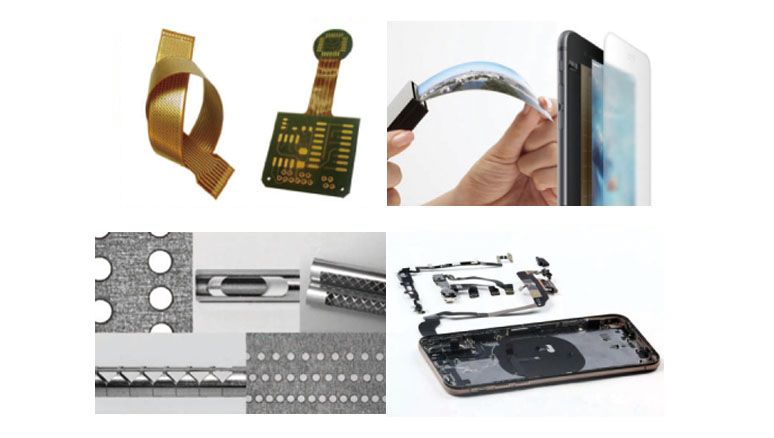
Typical processing materials include glass, sapphire, ceramics, metals, polymers, semiconductor materials, OLED films, PCB materials and other high-value substrates where precision and controlled thermal impact are important.
Key Features and Specifications:
- Pulse Energy: >2 mJ
- Power: >300 W @ IR, >80 W @ Green, >30 W @ UV
- Pulse Duration: <600 fs @ IR, <500 fs @ Green, <500 fs @ UV
- Beam Quality: M²≤1.3; Beam Circularity: 90% (both near and far fields)
How to Choose the Right Femtosecond Laser
Choosing an industrial femtosecond laser should not be based on average power alone.
The correct model depends on how wavelength, pulse energy, repetition rate and pulse duration interact with the material and required production speed.
| Selection Parameter | What It Affects |
|---|---|
| Wavelength | Material absorption, optical resolution and process window |
| Average Power | Potential production throughput |
| Pulse Energy | Energy delivered by each pulse and achievable ablation strength |
| Repetition Rate | Pulse spacing, heat accumulation and processing speed |
| Pulse Duration | Material interaction and thermal diffusion |
| Beam Quality | Focused spot quality and feature consistency |
| Burst Mode | Process efficiency and material-removal optimization |
| Triggering | Synchronization with galvo scanners, stages and production lines |
| Power Stability | Long-duration process consistency |
| Cooling | Installation, machine design and continuous operation |
A higher-power laser does not automatically produce the best process result. For precision applications, the laser should be selected around the actual material, feature dimensions, process depth, cycle time and required edge quality.
1030nm IR vs 515nm Green vs 343nm UV Femtosecond Laser
1030nm IR Femtosecond Laser
The IR range provides the highest currently published JCZ output power and pulse energy.
Current configurations include 10W, 50W, 80W and 300W, with the 300W model providing up to 2mJ pulse energy at 1MHz.
Consider IR when your application requires:
- Higher material-removal throughput.
- High pulse energy.
- Glass or sapphire processing.
- Ceramic micromachining.
- Metal drilling, texturing or ablation.
- Industrial cutting or scribing.
- High-volume production where throughput is a priority.
515nm Green Femtosecond Laser
Current Green models provide 30W and 80W output power, with pulse energy up to 400μJ.
Green wavelengths can be evaluated when the target material responds more efficiently at visible wavelengths or when the process requires a different balance of optical absorption, feature size and throughput.
Typical projects may include:
- Semiconductor materials.
- Copper-related structures.
- Thin-film processing.
- OLED/display manufacturing.
- Photovoltaic applications.
- Precision electronic components.
343nm UV Femtosecond Laser
The current UV configuration provides 30W at 343nm, with a published pulse duration below 500fs and pulse energy of 30μJ.
UV femtosecond processing can be evaluated for:
- Fine-feature micromachining.
- PCB/FPC materials.
- Thin polymer films.
- Semiconductor structures.
- OLED and display materials.
- Precision glass or sapphire applications.
- Materials where shorter wavelength processing offers a useful process window.
Final wavelength selection should be validated with actual material samples because absorption, coating structure, thickness, optics and required surface quality can significantly change the result.
Femtosecond Laser for Glass and Sapphire Micromachining
Glass and sapphire are important ultrafast-laser applications because conventional mechanical and longer-pulse processes can produce cracking, chipping or excessive thermal effects.
Industrial femtosecond lasers can be evaluated for:
- Glass cutting.
- Glass drilling.
- Internal modification.
- Glass marking.
- Sapphire dicing.
- Sapphire drilling.
- Precision scribing.
- Microchannel fabrication.
EKSPLA also positions industrial femtosecond lasers for glass drilling, milling, cutting, scribing and internal modification, demonstrating that glass processing is a core commercial search intent for this product class.
Semiconductor, OLED and Electronics Processing
The JCZ femtosecond laser range is also positioned for precision electronics and semiconductor manufacturing, including:
- Wafer dicing.
- Thin-film patterning.
- OLED film cutting.
- Flexible material cutting.
- PCB processing.
- LCP 5G antenna cutting.
- LTCC drilling.
- Micro-hole drilling.
- Semiconductor surface processing.
JCZ’s existing Semiconductor & Display solution already identifies femtosecond laser cutting and scribing as suitable processes for wafers, glass panels, flexible displays and thin films.
Battery and New Energy Micromachining
Femtosecond lasers can also be considered for precision processes involving thin battery and photovoltaic materials.
The current JCZ product page identifies applications including:
- Laminated power-battery positive electrode plates.
- Photovoltaic panel scribing.
- Thin-film processing.
When evaluating these applications, confirm material stack, foil thickness, required kerf width, burr tolerance, debris level and production speed before selecting the wavelength and power.
Reduced Heat-Affected Zone for Precision Processing
Femtosecond pulses deposit energy over an extremely short time scale, which can reduce heat diffusion into surrounding material compared with longer-pulse processing.
This is useful when the process requires:
- Fine edges.
- Reduced melting.
- Reduced burr formation.
- Reduced micro-cracking.
- Small feature sizes.
- Controlled processing of heat-sensitive materials.
However, femtosecond processing should not be described as universally “heat-free” or “zero thermal damage.”
The final heat-affected zone depends on:
- Material.
- Wavelength.
- Pulse energy.
- Repetition rate.
- Spot size.
- Pulse overlap.
- Scanning strategy.
- Processing depth.
Process testing should therefore be performed before production parameters are finalized.
Industrial Femtosecond Laser vs Fiber Femtosecond Laser
JCZ currently offers a separate Femto Series Fiber Femtosecond Laser product line.
The two pages should not target exactly the same search intent.
| Product Direction | This Industrial High-Power Series | Femto Series Fiber Femtosecond Laser |
|---|---|---|
| Published architecture | Optical fiber seed + solid-state amplification | Fiber femtosecond laser |
| Primary positioning | High-power industrial micromachining | Fiber femtosecond laser source |
| Fundamental wavelength | 1030nm | 1035 ±5nm |
| Current maximum power | 300W IR | 100W |
| Current maximum pulse energy | 2mJ | 1mJ |
| Green / UV variants | Separate 515nm and 343nm configurations | Product-series dependent |
| Best SEO intent | Industrial Femtosecond Laser | Femtosecond Fiber Laser |
The dedicated Fiber Femto Series should be used when the buyer specifically requires a fiber femtosecond laser architecture.
Frequently Asked Questions
What is the maximum output power?
The current IR series provides up to 300W at 1030nm. The Green series provides up to 80W at 515nm, while the UV configuration provides 30W at 343nm.
Does every model provide 2mJ pulse energy?
No. The published 2mJ value applies to the 300W IR model. Other IR, Green and UV models have different pulse-energy specifications.
Which wavelength should I use for my material?
There is no universal wavelength for every material. Selection depends on absorption, thickness, required feature size, throughput and desired surface quality. Sample testing is recommended before production deployment.
Why choose a femtosecond laser instead of a nanosecond or picosecond laser?
Femtosecond pulses can reduce thermal diffusion and support smaller features and cleaner processing on materials where longer pulses create unacceptable melting, chipping, burrs or heat-affected zones. However, the actual advantage depends on the material and process.
Can the laser be integrated with a galvo scanner?
Yes. The current platform provides PSO, POD, Gate and TTL triggering plus external power control for project-based integration. Final scanner, controller, motion-stage and synchronization compatibility should be confirmed for the actual machine architecture.
Does it support Burst Mode?
Yes. Current specifications list Burst Mode 1–5. The exact burst frequency, pulse spacing and burst-energy control should be confirmed for the selected model.
Can one unit output 1030nm, 515nm and 343nm simultaneously?
The current product range presents separate IR, Green and UV configurations. Confirm whether your project requires one fixed wavelength or a customized multi-wavelength configuration.
Is femtosecond laser processing completely heat-free?
No. Femtosecond pulses can significantly reduce thermal effects compared with longer-pulse laser processes, but heat accumulation and HAZ still depend on pulse energy, repetition rate, wavelength, overlap and material.
Is this a complete micromachining machine?
This product is primarily an industrial femtosecond laser source/platform. A complete machine may also require a galvo scanner, optics, motion stage, controller, process software, vision system, extraction, enclosure and laser safety system.
How to Choose the Right Wavelength for Your Application
Selecting the perfect femtosecond laser 1030nm 515nm 343nm option depends on your material and process:
- IR (1030nm): Deep penetration for metals, ceramics, and thick substrates – perfect for high-volume ablation.
- Green (515nm): Superior absorption in polymers, copper, and semiconductors – ideal for fine patterning.
- UV (343nm): Highest precision on transparent materials like glass, sapphire, and OLED films – enables true cold ablation with zero thermal damage.
All models support burst mode (1–5 pulses), high repetition rates (up to 2 MHz), and external triggering for seamless integration into automated lines.
Maximize Your Production Efficiency with Our Industrial Femtosecond Lasers
Take advantage of high-performance femtosecond lasers for your cutting and marking needs. Contact us today for a quote, wholesale pricing, or to discuss customized solutions. Our factory in China offers direct sales, ensuring competitive pricing and fast delivery.

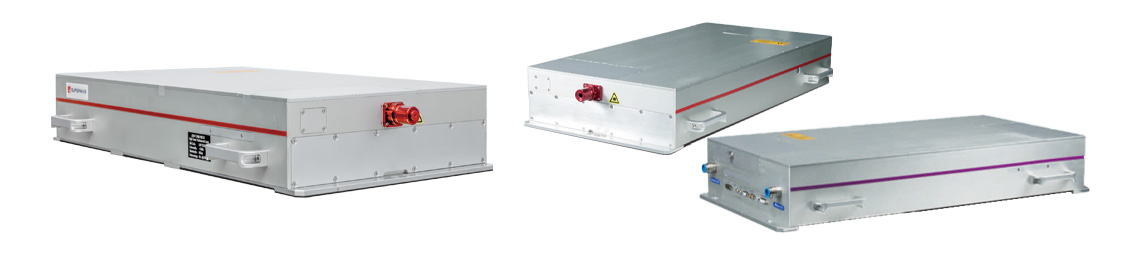
Product Pictures
Product Applications