| Parameter | |||||
| Product Model | SEAL-355-3 | SEAL-355-5 | SEAL-355-10S | SEAL-355-15S | |
| Central Emission Wavelength | 355nm | ||||
| Average Power | >3W@30kHz | >5W@40kHz | >10W@60kHz | >15W@60kHz | |
| Pulse Duration | <15ns@30kHz | <15ns@40kHz | 18ns@60kHz | ||
| Pulse Repetition Rate Range | 20kHz-150kHz | 40kHz-300kHz | |||
| Spatial Mode | TEM00 | ||||
| Beam Quality | M² ≤ 1.2 | ||||
| Beam circularity | >90% | ||||
| Beam Full Divergence Angle | ≤2mrad | ||||
| Beam Diameter | Non- expanding: 0.55±0.15mm | Non- expanding: 0.45±0.15mm | |||
| Polarization Ratio | > 100:1 | ||||
| Polarization Orientation | Horizontal | ||||
| Average Power Stability | RMS ≤ 3% @ 24hrs | ||||
| Pulse to Pulse Energy Stability | RMS ≤ 3% @30kHz | RMS ≤ 3% @40kHz | RMS ≤ 3% @60kHz | ||
| Operating Temperature | 0~40℃ | ||||
| Storage Temperature | -15~50℃ | ||||
| Cooling Method | Water- cooled | ||||
| Supply Voltage | DC 12V | DC 36V | |||
| Average Power Consumption | <350W | ||||
| Three- Dimensions (W×D×H) | 302 × 180 × 114mm | 337 × 180 × 114mm | |||
| Weight | 9.26kg | 13.2kg | |||
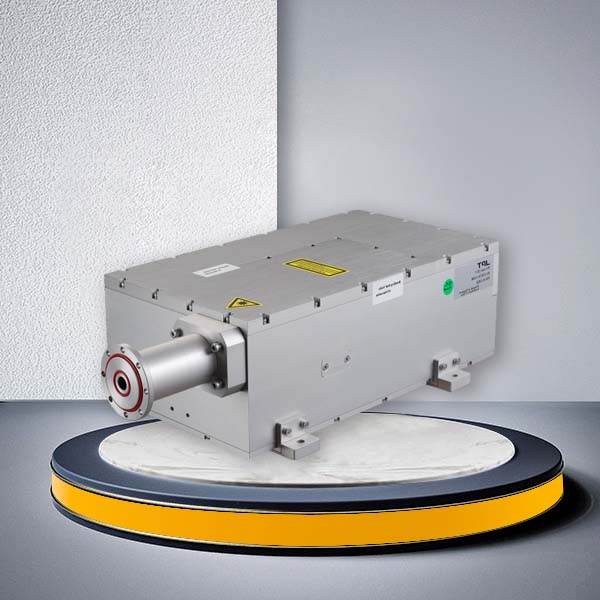
355nm Water-Cooled UV Laser | Ezcad JPT SEAL
The JPT SEAL 355nm water-cooled UV laser is designed for precision laser machine builders and system integrators that require stable ultraviolet output, compact integration and reliable operation in industrial environments.
Available on this page in 3W, 5W, 10W and 15W configurations, the SEAL-355 Series uses a fully sealed optoelectronic structure and water cooling. The current models provide TEM00 spatial mode, M² ≤1.2 beam quality and beam circularity above 90%, making the series suitable for precision marking and micromachining applications where beam quality and process control are important.
Why Use a 355nm UV Laser?
A 355nm UV laser provides a shorter wavelength than conventional infrared laser sources. For machine manufacturers, this creates additional possibilities when the equipment must process materials or features that require a smaller focused spot and more controlled energy input.
JPT positions the SEAL 355 series for precision processes including glass marking, plastic marking, cover-film cutting and thin-film drilling.
Typical machine applications can include:
- Plastic product marking
- Electronic component identification
- Glass marking
- Cover-film processing
- Thin-film drilling
- Fine QR and Data Matrix marking
- Precision cutting of suitable thin materials
- Other UV micromachining systems
Material response varies considerably, particularly for polymers, coatings and glass. Sample testing is recommended before the laser source is finalized for a production machine.
3W vs 5W vs 10W vs 15W: Which UV Laser Should You Choose?
Do not select the UV laser from wattage alone.
The appropriate power depends on:
- Material
- Processing type
- Required mark quality
- Processing depth
- Feature size
- Production speed
- Optical field
- Cycle time
3W SEAL-355-3
The 3W model is a practical starting point when the machine is intended primarily for fine UV marking and precision processing where high average power is not the main requirement.
It should be evaluated when your project prioritizes fine features and controlled processing over maximum throughput.
5W SEAL-355-5
The 5W version provides additional processing capacity while retaining the same 355nm SEAL platform.
For many general-purpose industrial UV marking machines, 5W is worth evaluating when you require a balance between fine processing and production efficiency.
10W SEAL-355-10S
The 10W model extends the SEAL platform into higher-power UV processing.
Compared with the lower-power models on this page, the SEAL-355-10S has a published 40–300kHz repetition-rate range and is better suited to projects where processing capacity and cycle time become more important.
15W SEAL-355-15S
The 15W model provides the highest average output power among the four configurations currently listed by EZCAD.
It should be evaluated for machine projects where higher UV power is required to meet the target production rate or processing requirement.
Higher wattage is not automatically the better choice. Always compare actual sample results before specifying the final laser source.

Beam Quality for Precision UV Processing
For an equipment manufacturer, average power is only one part of UV laser selection.
The current JPT SEAL models listed by EZCAD provide:
- Wavelength: 355nm
- Spatial Mode: TEM00
- Beam Quality: M² ≤1.2
- Beam Circularity: >90%
- Beam Full Divergence Angle: ≤2mrad
- Polarization Ratio: >100:1
- Average Power Stability: RMS ≤3% over 24 hours
These parameters are particularly relevant when your machine must produce small characters, fine codes, narrow processing features or repeatable precision results.
When comparing UV laser sources, do not compare wattage alone. Beam quality, stability, pulse characteristics and the complete optical system can materially affect the final process.
Why the JPT SEAL Series Uses Water Cooling
The products on this page are specifically water-cooled UV laser configurations.
Water cooling provides controlled heat removal for the laser source and should therefore be treated as part of the machine design rather than as an optional accessory.
Before integrating the laser, your engineering team should confirm:
- Required cooling capacity
- Chiller compatibility
- Water temperature range
- Flow requirements
- Water quality requirements
- Hose routing
- Condensation prevention
- Electrical cabinet layout
- Ambient operating conditions
JPT officially identifies both the SEAL 355-3/5 and higher-power SEAL355-10/15/20/30 platforms as water-cooled laser systems.
If your machine architecture requires an air-cooled UV source instead, a different JPT series such as LARK should be evaluated rather than assuming that cooling methods are interchangeable. JPT currently identifies the LARK 355 series as air-cooled.
Fully Sealed Design for Industrial Machine Integration
The JPT SEAL Series uses an integrated optoelectronic design in which the optical path and external drive circuitry are incorporated into one structure.
The enclosure is fully sealed to reduce the influence of dust and moisture, while the integrated structure is intended to improve resistance to electromagnetic interference. JPT also emphasizes compact dimensions for easier equipment integration.
For laser machine manufacturers, these characteristics matter because the laser source must operate inside an actual industrial machine environment where it may be exposed to:
- Electrical interference
- Dust
- Humidity
- Continuous production cycles
- Restricted cabinet space
- Other electrical and motion-control components
The complete cabinet, cooling and electrical layout should still be engineered around the operating requirements of the selected model.
Applications of the JPT SEAL 355nm UV Laser
Plastic Marking
355nm UV processing is widely evaluated for plastics where conventional infrared processing may produce excessive thermal effects or an unsuitable mark.
Potential machine applications include electronic housings, plastic components, packaging components and product traceability.
Because polymer formulations differ, physical sample testing should be completed before a machine configuration is standardized.
Glass Marking
JPT lists glass marking among the SEAL 355 application directions.
For machine development, confirm the glass type, thickness, desired appearance and whether the process requires surface or internal modification before determining power and optics.
Film Cutting and Drilling
Cover-film cutting and thin-film drilling are also listed by JPT as SEAL 355 applications.
For these applications, provide material thickness, cut width, feature dimensions and required production speed when requesting a laser-source recommendation.
Electronics and Precision Components
A 355nm UV source can also form the laser core of equipment used for fine identification and micromachining of electronics-related components.
In these machines, laser selection should be evaluated together with positioning accuracy, galvo performance, optics and motion architecture rather than independently.
Water-Cooled SEAL vs Air-Cooled UV Laser
Cooling method is an important machine-design decision.
| Requirement | Water-Cooled JPT SEAL | Air-Cooled UV Laser |
|---|---|---|
| External chiller | Required | Generally not required |
| Machine plumbing | Required | Simpler |
| Cabinet/system complexity | Higher | Lower |
| Thermal management | Dedicated water circuit | Air-based |
| SEAL models on this page | 3W / 5W / 10W / 15W | — |
| Alternative JPT direction | — | LARK 355 series |
JPT currently positions SEAL 355 as water cooled and LARK 355 as air cooled.
The correct choice depends on the machine size, duty cycle, target power, operating environment and overall system architecture.
Frequently Asked Questions
Is the JPT SEAL a 355nm UV laser source?
Yes. The SEAL models shown on this page operate at a central emission wavelength of 355nm. JPT categorizes SEAL 355 as a UV DPSS laser platform.
Is the JPT SEAL 355 air cooled or water cooled?
The SEAL 355 models covered here are water cooled. If air cooling is required, evaluate a different JPT 355nm series such as LARK.
Which powers are available from EZCAD on this page?
The current EZCAD product page lists SEAL-355-3, SEAL-355-5, SEAL-355-10S and SEAL-355-15S, corresponding to 3W, 5W, 10W and 15W-class configurations.
Is 15W always better than 5W?
No. Select power according to the material, process, required result and production speed. Fine marking does not automatically require the highest available average power.
Can I use the same optical system as a 1064nm fiber laser?
Do not assume so. Galvo scanners, lenses and other optical components should be selected and coated for the required wavelength. Confirm 355nm compatibility throughout the optical path.
Can JCZ help configure a complete UV marking system?
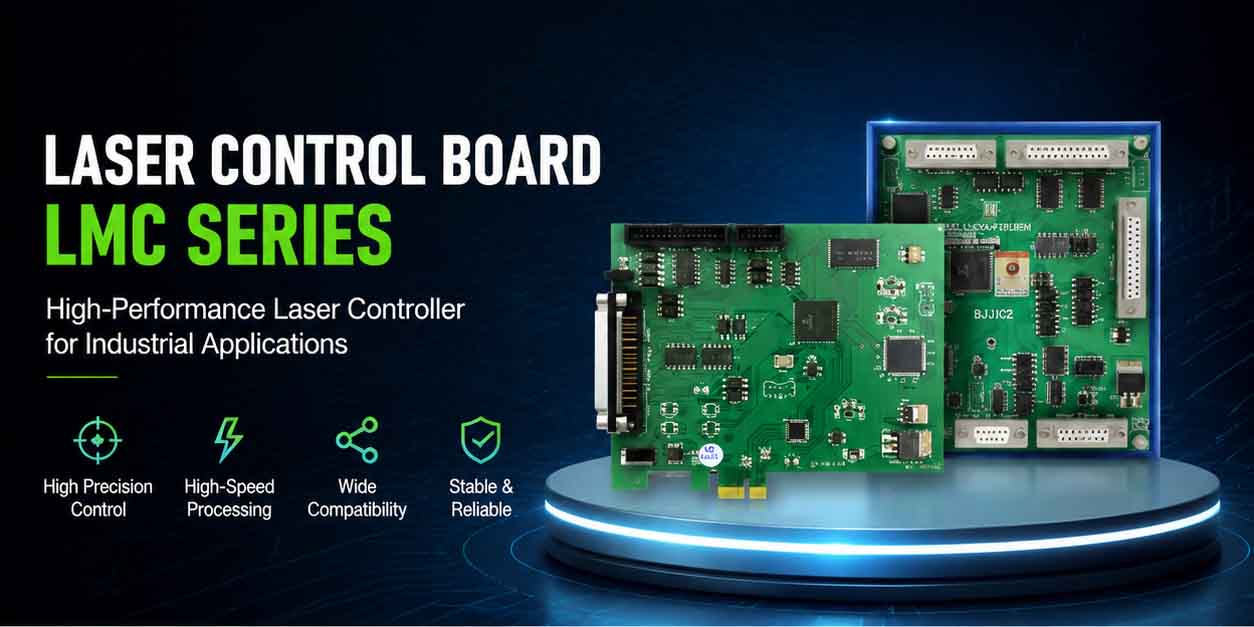
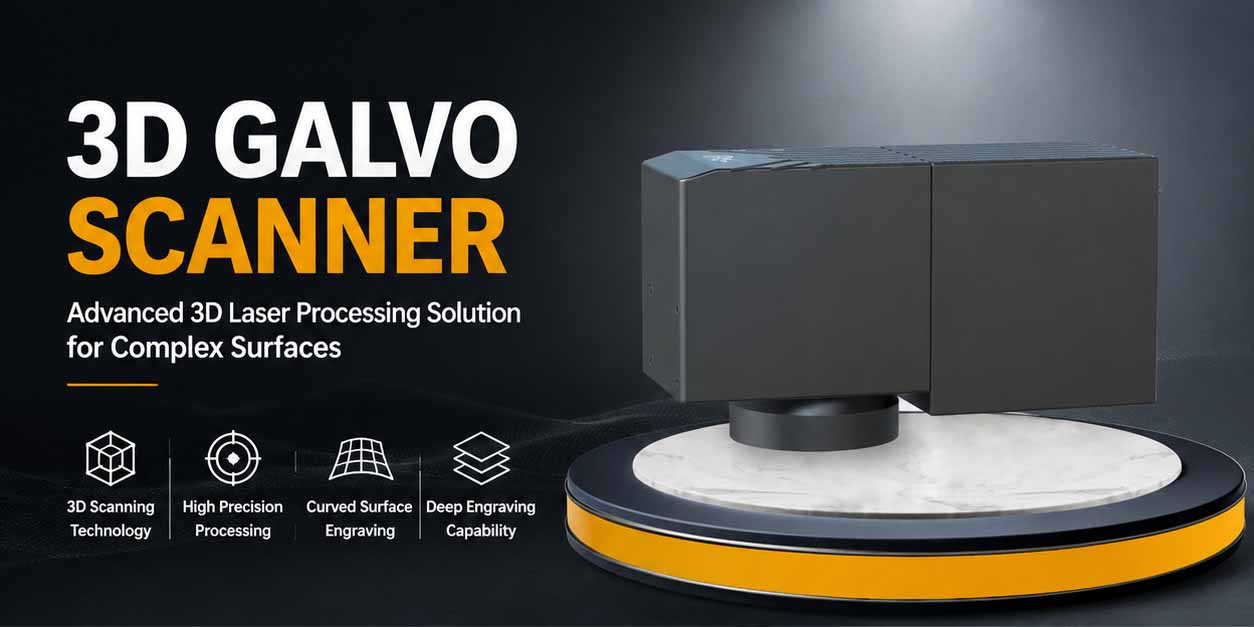
JCZ supplies laser-control products including controllers, EZCAD software and galvo scanners in addition to laser-source products. The final system should be configured according to the exact laser, scanner, optics, I/O and machine architecture.
Configure the Right JPT SEAL 355nm UV Laser for Your Machine
The right 355nm water-cooled UV laser should be selected around the process you need to deliver—not simply from the highest available wattage.
For fine marking, plastic processing, glass applications, film processing or other UV micromachining projects, provide your material, required result, processing field and cycle time.
JCZ can then help you compare the JPT SEAL 355-3, 355-5, 355-10S and 355-15S configurations and evaluate the laser together with the controller, galvo and optical system required for your machine.
Contact JCZ with your application and machine specifications for a configuration recommendation.