| Unit | Parameter | ||
| Product Model | YDFLP-C-20-M7-S-R | YDFLP-E-30-M7-S-R | |
| M2 | <1.4 | ||
| Armored Cable Length | m | 2 | |
| Nominal Average Output Power | W | >20 | >30 |
| Maximum Pulse Energy | mJ | 0.8 | |
| Pulse Repetition Rate Range | kHz | 1 ~ 4000 | |
| Pulse Duration | ns | 2 ~ 350 | |
| Output Power Stability | % | <5 | |
| Cooling Method | Air Cooled | ||
| Supply DC Voltage (VDC) | V | 24 | |
| Maximum Power Consumption | W | <110 | <150 |
| Environmental Supply Current | A | >5 | >7 |
| Central Emission Wavelength | nm | 1064 | |
| Emission Bandwidth@3dB | nm | <15 | |
| Polarization Orientation | Random | ||
| Anti-high Reflection | Yes | ||
| Output Beam Diameter | mm | 7±0.5 | |
| Output Power Tuning Range | % | 0 ~ 100 | |
| Operation Temperature | ℃ | 0 ~ 40 | |
| Storage Temperature | ℃ | -10 ~ 60 | |
| N.W | KG | 3.75 | 4.25 |
| Size(L×W×H) | mm | 245 × 200 × 65 | |
| Unit | Parameter | ||
| Product Model | YDFLP-E2-60-M7-M-R | YDFLP-E2-100-M7-M-R | |
| M2 | <1.5 | <1.6 | |
| Delivery Cable Length | m | 3 | |
| Nominal Average Output Power | W | >60 | >100 |
| Maximum Pulse Energy | mJ | 2 | 1.5 |
| Pulse Repetition Rate Range | kHz | 1 ~ 4000 | |
| Pulse Duration | ns | 2~500 | |
| Output Power Stability | % | <5 | |
| Cooling Method | Air Cooled | ||
| Supply DC Voltage (VDC) | V | 24 | |
| Power Supply | W | <330 | <440 |
| Environmental Supply Current | A | >13 | >18 |
| Central Emission Wavelength | nm | 1064 | |
| Emission Bandwidth@3dB | nm | <15 | |
| Polarization Orientation | Random | ||
| Anti-high Reflection | Yes | ||
| Output Beam Diameter | mm | 7±0.5 | |
| Output Power Tuning Range | % | 0 ~ 100 | |
| Operation Temperature | ℃ | 0 ~ 40 | |
| Storage Temperature | ℃ | -10 ~ 60 | |
| N.W | KG | 4.1 | 8.5 |
| Size(L×W×H) | mm | 205 × 253.3 × 75 | 336 × 255 × 90 |
| Unit | Parameter | |||
| Product Model | YDFLP-200-M7-M-R | YDFLP-350-M7-M-R | YDFLP-500-M7-M-R-W | |
| M2 | <1.6 | <1.7 | ||
| Armored Cable Length | m | 5 | ||
| Nominal Average Output Power | W | >200 | >350 | >500 |
| Maximum Pulse Energy | mJ | 1.5 | 1.5 | |
| Pulse Repetition Rate Range | kHz | 1 ~ 4000 | ||
| Pulse Duration | ns | 2 ~ 500 | 3 ~ 500 | |
| Output Power Stability | % | <5 | ||
| Cooling Method | Air Cooled | Water Cooled | ||
| Supply DC Voltage (VDC) | V | 48 | ||
| Maximum Power Consumption | W | <800 | <1200 | <1700 |
| Environmental Supply Current | A | >16 | >25 | >35 |
| Central Emission Wavelength | nm | 1064 | ||
| Emission Bandwidth@3dB | nm | <20 | <30 | <20 |
| Polarization Orientation | Random | |||
| Anti-high Reflection | Yes | |||
| Output Beam Diameter | mm | 7±0.5 | 7±1 | |
| Output Power Tuning Range | % | 0 ~ 100 | ||
| Operation Temperature | ℃ | 0 ~ 40 | 10 ~ 40 | |
| Storage Temperature | ℃ | -10 ~ 60 | ||
| N.W | KG | 24.8 | 30 | 19.8 |
| Size(L×W×H) | mm | 430 × 351 × 133 | 436 × 430 × 133 | 482 x 470 x 70 |
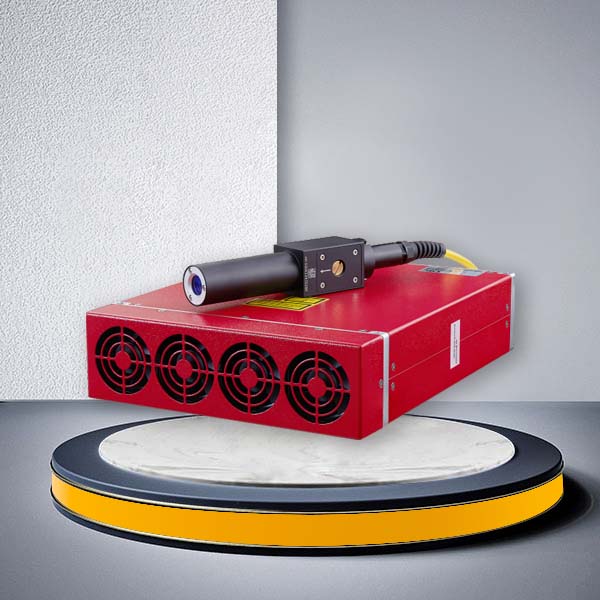
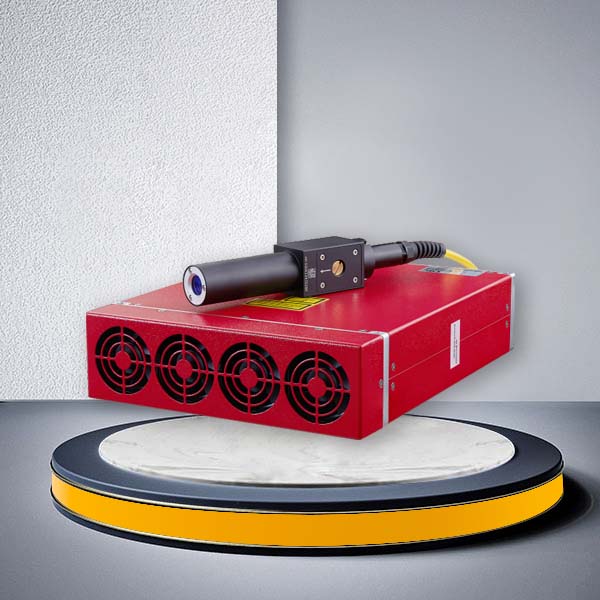
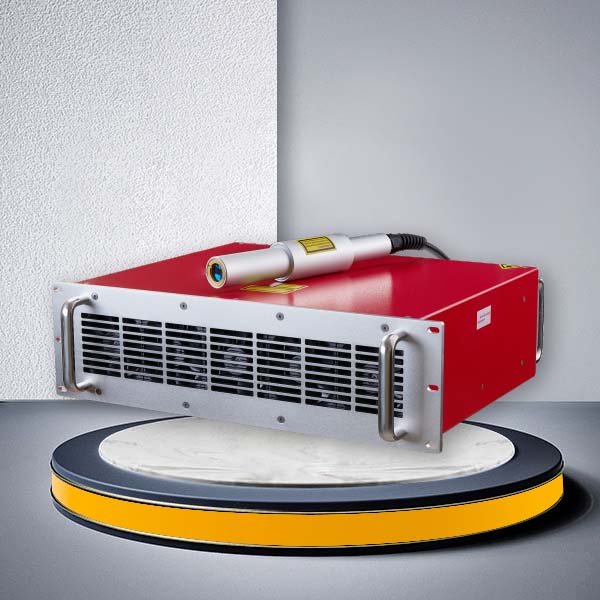
JPT M7 series high poweredpulsed fiber lasers make use of master oscillator power amplifier (MOPA) configuration, and show excellent laser performance as well as high level of temporal pulse shaping controllability. As compared to the Q-switching technology, the pulse repetition frequency (PRF) and pulse width can be controlled independently in MOPA configuration, through adjusting different combination of the above parameters, the peak power of laser can be well maintained. And enable JPT laser suitable for more material processing which Q-switch limited.The higher output power makes its advantages especially in high speed marking applications.
Main purchasing features:
- Adjustable pulse width for application-specific processing
- Wide repetition-frequency range
- 1064 nm central emission wavelength
- MOPA pulse-shaping capability
- Air-cooled configurations across the current 20W–300W range
- 20W, 30W, 60W, 100W, 200W and 300W current model families
- Models for precision marking and higher-throughput industrial processing
- Integration with suitable laser controllers, galvo scanners and optical systems
Why MOPA Pulse Control Matters
Conventional fixed-pulse or limited-adjustment laser sources may provide sufficient performance for straightforward identification marking. However, they offer less flexibility when the same machine must process materials with significantly different thermal and optical behavior.
The M7 architecture enables pulse width and repetition frequency to be controlled independently. By changing the combination of these parameters, you can adjust how laser energy is delivered to the workpiece.
This flexibility can help when your process requires:
- Reducing excessive heat input
- Improving edge definition
- Controlling oxidation or discoloration
- Creating high-contrast marks
- Adjusting surface texture
- Balancing speed and engraving depth
- Processing thin or heat-sensitive components
- Switching between precision and high-throughput work
- Developing different parameter sets for multiple materials
The current 20W–300W M7 families provide pulse-width ranges of 2–500 ns and repetition-rate ranges of 1–4000 kHz, with exact performance and operating requirements varying by model.
Available M7 Power and Model Options
Current official product information groups the series into 20W–100W and 200W–300W families. The model selection should be based on more than average output power. Pulse energy, beam quality, power supply, cable length, module size and processing objective must also be considered.
| Power | Representative Model | Maximum Pulse Energy | Typical Selection Direction |
|---|---|---|---|
| 20W | YDFLP-E2-20-M7-S-R | 1 mJ | Fine marking, detailed graphics, material testing and compact OEM systems |
| 30W | YDFLP-E2-30-M7-S-R | 1 mJ | General precision marking with more production capacity than a 20W source |
| 60W | YDFLP-E2-60-M7-M-R | 2 mJ | Faster marking, deeper engraving and applications needing higher pulse energy |
| 100W | YDFLP-E2-100-M7-M-R | 1.5 mJ | Higher-throughput production, deeper material removal and versatile industrial processing |
| 200W | YDFLP-E2/E3-200-M7 variants | 1.5 or 2 mJ depending on configuration | High-efficiency engraving, surface treatment, cleaning and selected thin-sheet processing |
| 300W | YDFLP-E/E3-300-M7 variants | Model-dependent | High-output industrial systems requiring greater processing capacity |
The table provides selection direction rather than guaranteed processing results. Your material, marking field, focal length, scan speed, hatch spacing, pulse settings and thermal limits must be tested together.
How to Choose the Right Power
Choose 20W or 30W When Detail Is the Priority
Lower-power models are generally suitable when you prioritize:
- Fine characters and graphics
- Small components
- Detailed identification marks
- Controlled heat input
- Compact machine construction
- Product development and parameter testing
- Lower overall power demand
A 30W source provides additional average output compared with a 20W version, but the correct choice still depends on the required cycle time and material response.
Choose 60W When You Need More Pulse Energy
The YDFLP-E2-60-M7-M-R has a listed maximum pulse energy of 2 mJ, compared with 1 mJ for the current 20W and 30W models. It can be considered when you need more material-removal capability while retaining the adjustable-pulse advantages of the M7 platform.
Typical purchasing priorities include:
- Faster production marking
- Deeper engraving
- More aggressive surface processing
- Increased capacity for varied contract-manufacturing work
- A balance between detail and output
Choose 100W for Higher-Throughput, Multi-Process Equipment
The YDFLP-E2-100-M7-M-R is frequently searched by its exact model number because buyers may be sourcing it for new machine construction or replacement.
This model can be evaluated when your project requires:
- Higher production throughput
- Deep engraving
- Faster surface removal
- More demanding industrial marking
- A broader processing range within one machine
- Integration into production equipment rather than a light-duty workstation
The current official model has a nominal output of 100W, a maximum pulse energy of 1.5 mJ, a 1–4000 kHz repetition range and a 2–500 ns pulse-width range.
Choose 200W or 300W for High-Efficiency Industrial Processing
Higher-power M7 sources are more relevant when processing speed and material-removal capacity are central to the purchasing decision.
Potential applications include:
- High-speed deep engraving
- Industrial surface treatment
- Precision cleaning
- Coating removal
- High-throughput marking
- Selected thin-metal cutting or welding
- Automated production-line processing
These models generally require 48 V DC power architecture and have different power-consumption, module-size and cable configurations from lower-power models. The exact installation drawing and full model suffix must be confirmed before machine design.
Applications by Processing Objective
Precision and High-Contrast Marking
MOPA pulse adjustment can help process fine text, logos, identification codes and product information on suitable metals and industrial materials.
Potential industries include:
- Electronics
- Medical components
- Automotive parts
- Tools and hardware
- Jewelry and gifts
- Household appliances
- Battery and new-energy components
- Aerospace parts
- Industrial traceability systems
Color and Surface-Effect Development
On suitable stainless-steel or titanium surfaces, carefully controlled pulse parameters can be used to develop different oxidation and surface effects.
A processing sample should be completed before committing to a color-marking production specification.
Deep Engraving
Higher-power models can support deeper material removal and faster engraving, but depth should not be predicted from power alone.
Surface Treatment and Coating Removal
The M7 range can be evaluated for cleaning, paint or coating removal, oxide treatment and texture modification. The correct power should be selected according to the coating thickness, substrate sensitivity and required line speed.
On-the-Fly Marking
The source can be integrated into a fly-marking system for variable codes, product identification and continuous-line processing.
The laser source alone does not determine the maximum production-line speed.
Frequently Asked Questions
Is the M7 product a complete fiber laser marking machine?
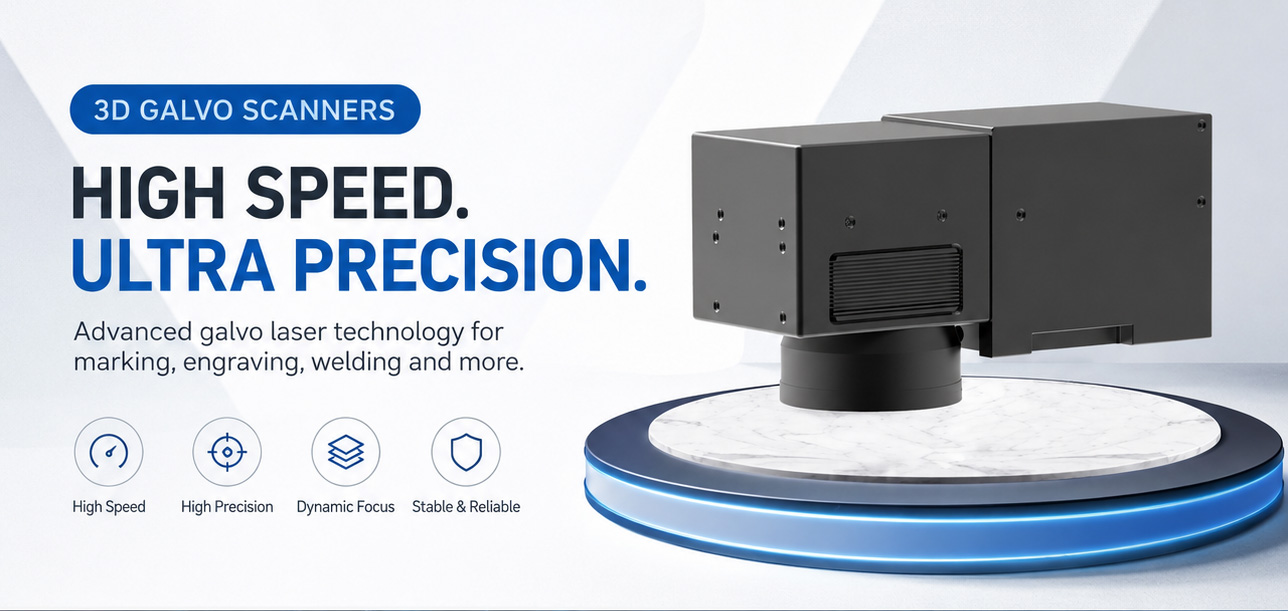
No. It is a pulsed fiber laser source installed inside a complete machine. A complete marking system also needs a controller, galvo scanner, lens, power supply, computer, software, mechanical structure and safety system.
What is the difference between an M7 MOPA source and a conventional Q-switched source?
MOPA architecture allows pulse width and repetition frequency to be adjusted independently. This provides more flexibility when controlling heat input, contrast, surface finish, peak power and material response. A conventional Q-switched source generally offers a more limited pulse-control range.
Can the M7 series create color marks?
It can support color and surface-effect development on suitable metals when the complete system and parameters are properly configured. Results depend on the material, surface condition, pulse width, frequency, speed, hatch spacing, power and focus.
Can I replace a 100W source with any other 100W MOPA source?
Not without verification. The complete model number, voltage, dimensions, mounting, cable, output configuration, interface and controller compatibility must match the machine design.
What does YDFLP-E2-100-M7-M-R identify?
It is a complete model designation for a specific 100W M7 configuration. Use the full code when requesting a replacement, because shortened descriptions such as “100W M7” may not identify all optical and mechanical requirements.
Does the M7 require water cooling?
The current official 20W, 30W, 60W, 100W, 200W and 300W models listed on the manufacturer’s pages are air cooled. Older or different high-power variants must be checked using their exact datasheet.
Can the source be used for metal cutting or welding?
Selected higher-power configurations can be evaluated for thin-sheet cutting and welding, but the result depends on the full optical system, motion method, material thickness, joint design and process parameters. It should not be treated as a substitute for a general-purpose continuous-wave sheet-metal cutting laser.
Which controller should be used?
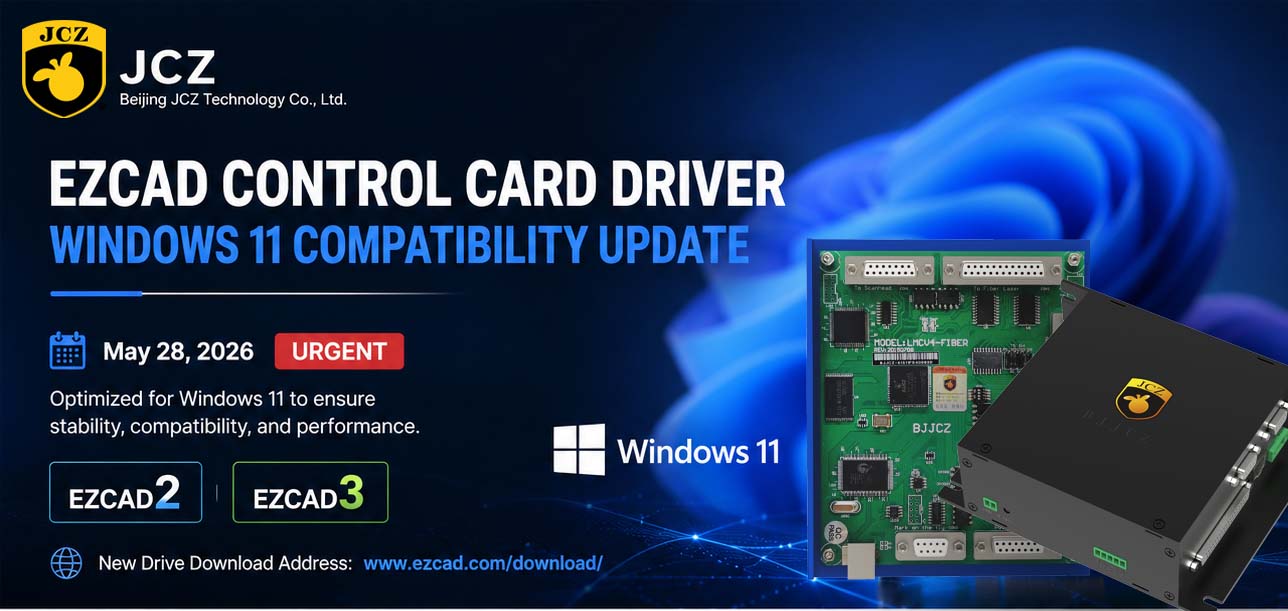
The controller must support the selected laser interface and MOPA parameter controls. Provide the laser model, galvo, software, I/O and application details so the complete control configuration can be reviewed.
How should I choose between 20W, 30W, 60W and 100W?
Choose according to detail level, engraving depth, production speed, pulse-energy requirement, thermal sensitivity and available power. Send your material, sample design and target cycle time for a more accurate recommendation.
Request a Model and Integration Review
Choose the JPT MOPA M7 fiber laser source according to the required material response, pulse energy, production speed and complete system architecture—not only the nominal wattage.
Send JCZ your material samples, desired processing result, current or planned machine configuration and exact YDFLP model requirement. The technical team can then review the laser source, controller, galvo scanner, optics and software as one coordinated solution.