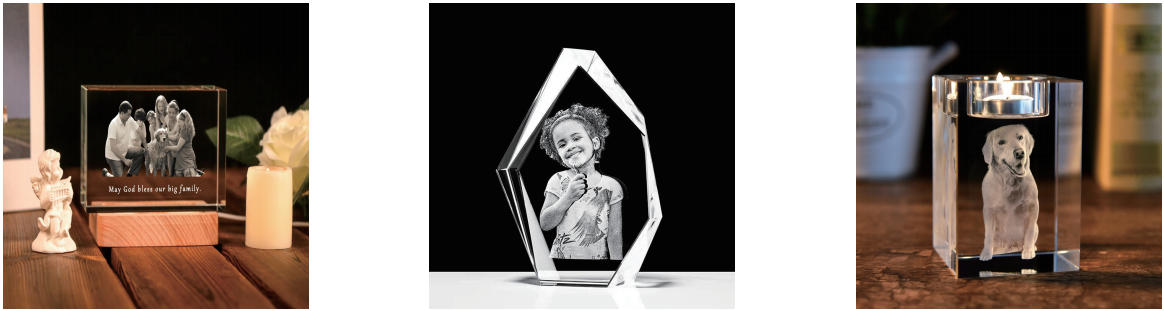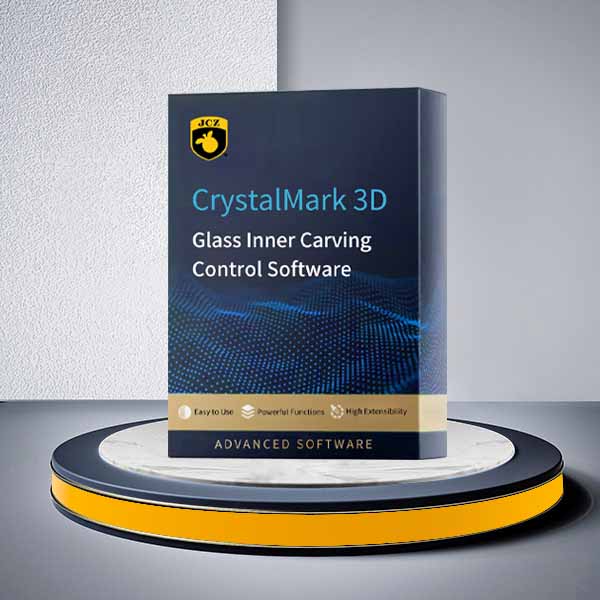
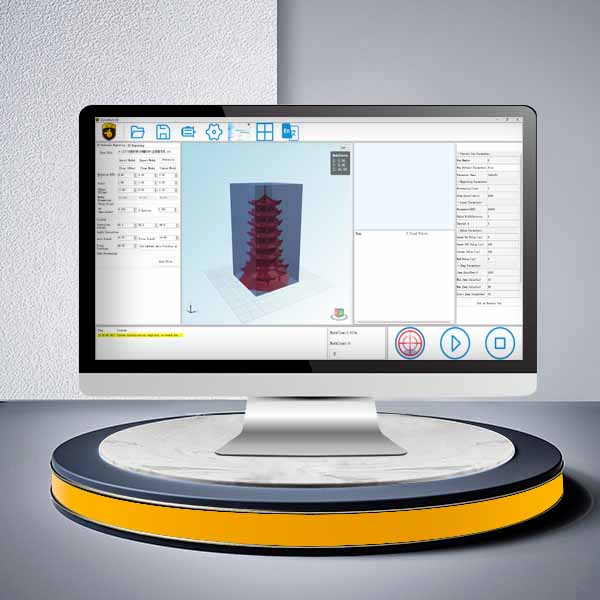
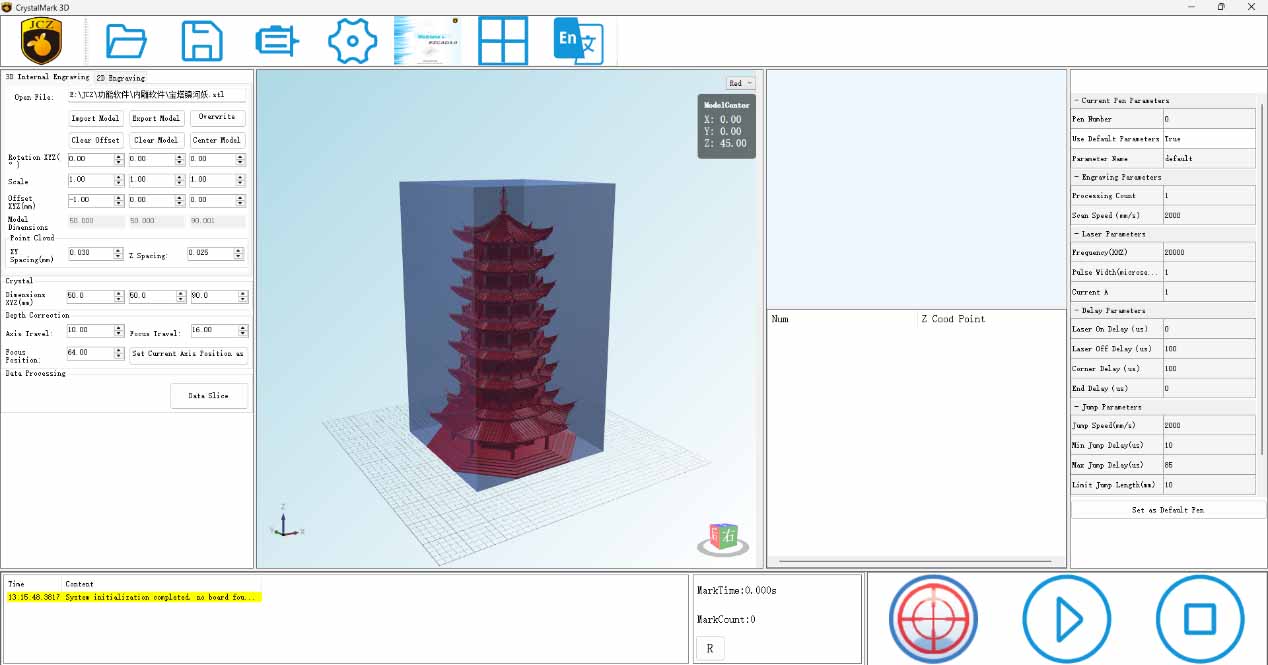
CrystalMark 3D is a specialized glass inner carving processing system used to achieve high-precision three-dimensional engraving inside glass. The software supports importing 3D models and allows users to set detailed processing parameters to ensure accurate and stable laser carving results.
With its advanced inner carving control technology, CrystalMark 3D ensures smooth data processing, precise laser positioning, and consistent engraving quality. It is widely used in art glass production, handicraft processing, decorative glass, and customized glass products, helping users easily achieve complex 3D inner engraving effects.
Compatible Hardware: DLC2-V4-MC4 and DLC2-V2
Product Pictures
Product Introduction
CrystalMark 3D is a specialized glass inner carving processing system used to achieve high-precision three-dimensional engraving inside glass. The software supports importing 3D models and allows users to set detailed processing parameters to ensure accurate and stable laser carving results.
With its advanced inner carving control technology, CrystalMark 3D ensures smooth data processing, precise laser positioning, and consistent engraving quality. It is widely used in art glass production, handicraft processing, decorative glass, and customized glass products, helping users easily achieve complex 3D inner engraving effects.
Key Features
Supports 3D model import for glass inner carving
High-precision control of 3D laser engraving equipment
Adjustable engraving parameters for different glass materials
Stable and reliable inner carving control technology
User-friendly operation for efficient production
A Processing Control System, Not Just 3D Design Software
Many buyers searching for 3D engraving software are actually comparing three different tools: CAD or modeling software, photo-to-point-cloud conversion software, and laser machine control software. These tools do not perform the same job.
CrystalMark 3D is positioned at the processing and machine-control stage. You can prepare or obtain the required model data first, then import the supported file into the software for visualization, slicing, positioning, parameter configuration, and laser-path execution.
This makes the 3D laser glass engraving software especially relevant when your purchasing decision depends on control-board compatibility, galvo coordination, focal-depth management, calibration, and repeatable engraving results—not simply on whether a file can be created or opened.
How to Select the Right Software for Your Glass Engraving Project
Selecting laser software should begin with the processing position, material, file format, and machine architecture—not simply with the word “3D.” Different software categories may all support three-dimensional files, but they do not control the same production process.
Software Selection Comparison
| Your Processing Requirement | Recommended Software Direction | Is CrystalMark 3D Suitable? |
|---|---|---|
| Flat text, logos, barcodes, or serial numbers on a material surface | Standard 2D laser marking software | No. A conventional marking solution is normally more appropriate. |
| Surface relief engraving on metal, plastic, or coated materials | 2.5D or 3D surface marking software | Not as the first choice. CrystalMark 3D is developed for engraving inside transparent materials. |
| Three-dimensional images or patterns inside glass or crystal | Glass inner engraving control software | Yes. This is the primary application of CrystalMark 3D. |
| Processing STL or point-cloud data for internal engraving | Software with model import, slicing, positioning, and focal compensation | Yes, subject to file and hardware compatibility confirmation. |
| Converting portraits or photographs into production-ready 3D data | Dedicated image or point-cloud data preparation software | CrystalMark 3D may control the engraving stage, but additional data-preparation software may be required. |
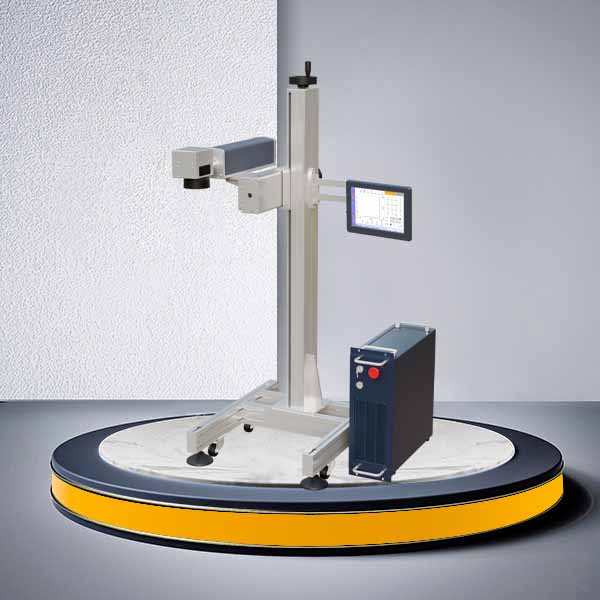
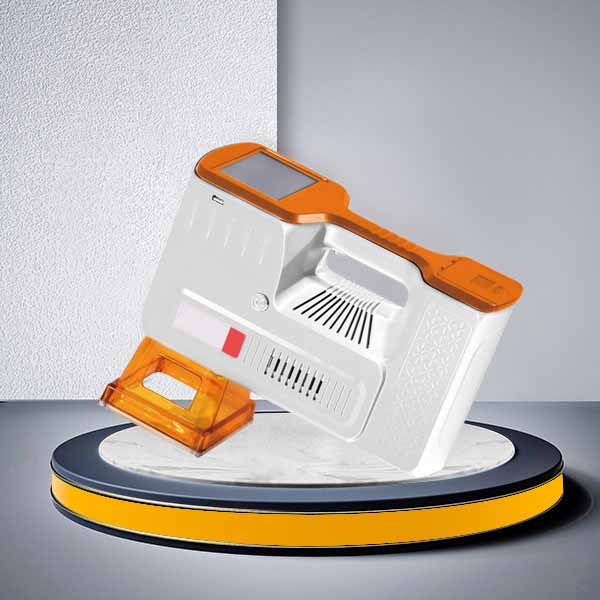
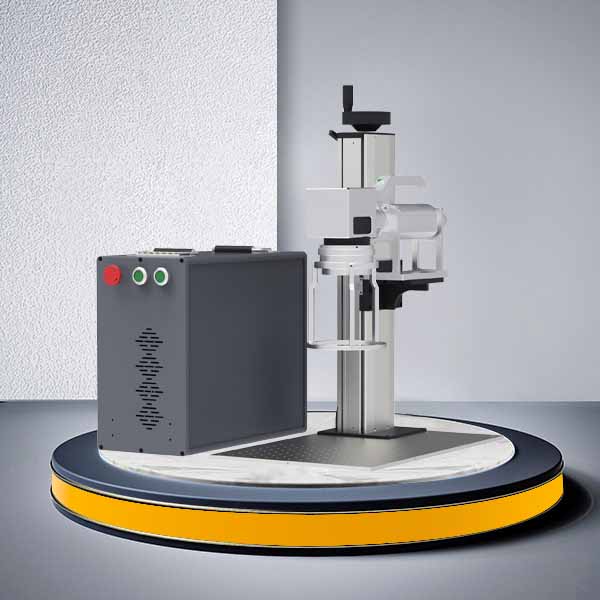
| Purchasing a complete ready-to-run engraving machine | Turnkey equipment including laser, galvo, controller, optics, software, enclosure, and safety system | No. CrystalMark 3D is software and control-system related, not a complete machine. |
| Upgrading an existing glass engraving machine | Compatible software and controller retrofit solution | Possibly. The existing laser, galvo, controller, interfaces, and machine structure must be reviewed first. |
| Developing a new OEM engraving machine | Software, controller, galvo, laser, I/O, and motion-system integration | Yes, when incorporated into a compatible machine architecture. |
CrystalMark 3D vs General 3D Design Software
General CAD and 3D modeling software is primarily used to create, edit, or convert models. It does not usually provide the functions required to execute glass inner engraving directly.
CrystalMark 3D focuses on the laser-processing stage and provides functions such as:
- Importing supported model or point-cloud data
- Positioning the design within a virtual glass volume
- Slicing the model into processable layers
- Calculating the laser-processing path
- Configuring engraving parameters
- Compensating for focal-position changes
- Coordinating processing through compatible control hardware
You may therefore use CAD software to create the original model and CrystalMark 3D to prepare and control the internal engraving process.
CrystalMark 3D vs Standard Laser Marking Software
Standard laser marking software is generally selected for flat or surface-based processing, including text, identification codes, logos, graphics, and vector files.
CrystalMark 3D should be considered when your project requires:
- Processing below the surface of transparent material
- Three-dimensional or layered internal images
- Accurate positioning through the material depth
- STL or point-cloud processing
- Focus compensation during internal engraving
- 3D visualization of the model and workpiece
- Positive or negative relief effects inside glass
Choosing inner engraving software for ordinary surface marking may add unnecessary complexity. Likewise, using conventional 2D marking software for a volumetric internal engraving project may not provide the required slicing, depth control, or visualization functions.
Applications
Art glass and decorative glass production
Handicraft and gift manufacturing
Customized crystal and glass products
Cultural and creative industries
Product Advantages
High-precision 3D inner carving inside glass
Excellent engraving quality with fine details
Simple operation with professional results
Suitable for both artistic creation and industrial applications
Frequently Asked Questions
What is CrystalMark 3D used for?
CrystalMark 3D is used to prepare and control three-dimensional or layered engraving inside transparent glass and crystal. It supports model visualization, data processing, slicing, positioning, parameter configuration, focus compensation, and compatible laser-control execution.
Is CrystalMark 3D a complete engraving machine?
No. It is software associated with a glass inner engraving control solution. A complete machine also requires a laser source, galvo scanner, optics, controller, electrical system, mechanical structure, enclosure, fixtures, calibration, and safety protection.
What is the difference between glass inner engraving and glass surface etching?
Glass inner engraving focuses laser energy below the surface of transparent material, creating dots, layers, patterns, or three-dimensional images within the workpiece. Surface etching changes the outer surface. The two processes require different optical setups, parameters, and control methods.
Can CrystalMark 3D process STL files?
The listed product functions include STL model support. Buyers should still submit representative files before purchasing because model complexity, geometry, size, and data quality can affect the processing workflow.
Does the software support both 3D and 2.5D engraving?
Yes. It can be evaluated for full 3D models and 2.5D relief-style processing, including positive and negative relief effects.
Why is focal compensation important?
When laser energy is focused at different depths inside glass, the optical focal position may change. Focal compensation helps maintain the intended processing position across different internal layers and engraving depths.
Can CrystalMark 3D improve engraving accuracy?
The software provides calibration, positioning, path-planning, and focus-related functions that contribute to process control. However, final accuracy also depends on the laser, galvo scanner, optics, machine structure, calibration method, material, and operating parameters.
Which controllers are compatible?
The current product information lists DLC2-V4-MC4 and DLC2-V2. The correct option must be selected according to the machine connection, laser, galvo, motion, I/O, and production requirements.
Can it be installed on an existing 3D glass engraving machine?
It may be possible, but compatibility cannot be determined from the machine name alone. The technical team must review the existing controller, laser source, galvo scanner, interfaces, motion structure, and calibration method.
What materials can be processed?
The software is intended for inner engraving applications in compatible transparent materials such as selected glass and crystal products. Actual material suitability must be tested because transparency, composition, internal stress, optical properties, and quality vary between materials.
Does the software automatically generate laser parameters?
Operators can configure processing parameters, but there is no single parameter set suitable for every material, model, depth, or laser system. Sampling and process testing are normally required before production.
Request a Compatibility Review
Choose CrystalMark 3D when you need 3D laser glass engraving software that connects model preparation with professional inner-engraving control. To receive a configuration recommendation, send your machine architecture, laser and galvo models, current controller, engraving size, material, file type, and target application.
Application Cases
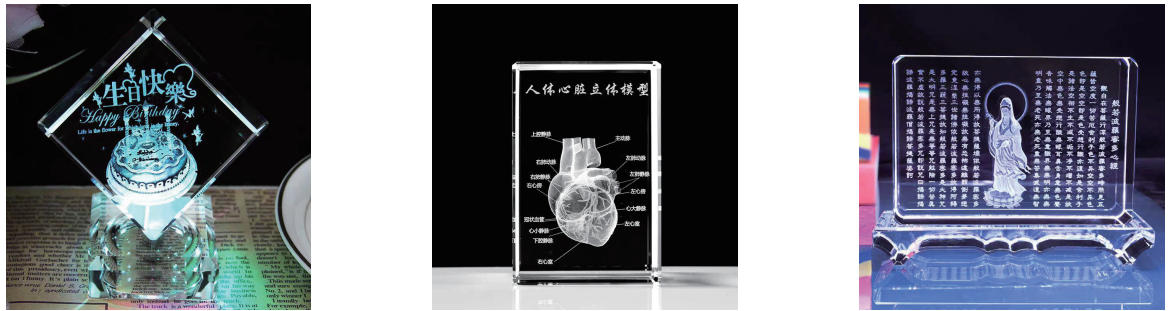
Artistic Creation
Producing glass artworks with three-dimensional effects, such as figurative sculptures and landscape ornaments.
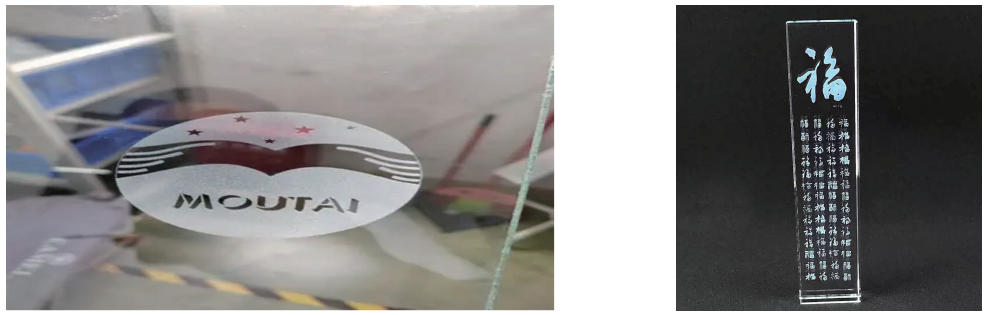
Industrial Applications
Used in fields such as home appliance panel texturing, architectural decorative glass, and anti-counterfeiting markings.
Personalized Customization
Supports photo-level precision for portrait and pattern internal engraving, ideal for the gift industry.